
Basic Math Skills Normal Word Problems Worksheets for 4-Year-Olds
3 filtered results
Difficulty Level
Grade
Age
-
From - To
Subject
Activity
Standards
Welcome to our engaging “Basic Math Skills Normal Word Problems Worksheets” for 4-year-olds! Our carefully designed worksheets promote early math literacy through fun and interactive word problems tailored specifically for preschoolers. These activities foster critical thinking, comprehension, and problem-solving skills as children navigate simple addition, subtraction, and counting exercises within relatable contexts. Each worksheet encourages young learners to visualize and engage with math in their daily lives, making learning enjoyable and effective. Explore our colorful and playful resources, perfect for at-home or classroom use, and watch your child develop confidence and a love for math!
Favorites
With answer key
Interactive
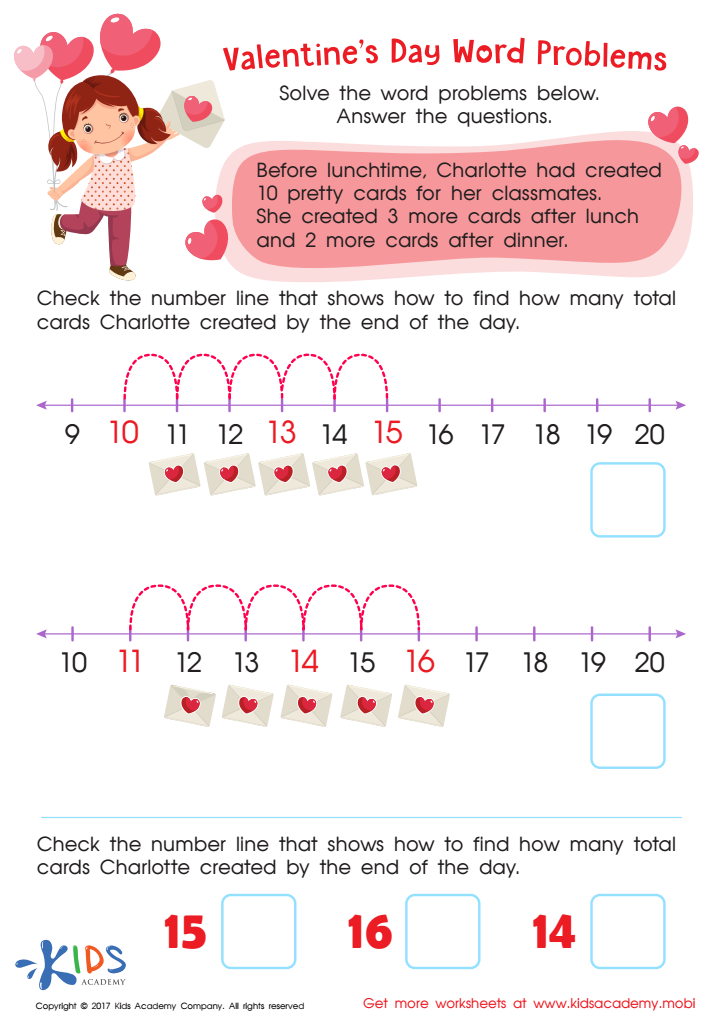
Valentines Day Word Problem Worksheet
This Valentine's Day worksheet will help your child practice using a number line to solve an addition problem. It's a great way to boost confidence and make solving word problems a breeze.
 Assign to My Students
Valentines Day Word Problem Worksheet
Worksheet
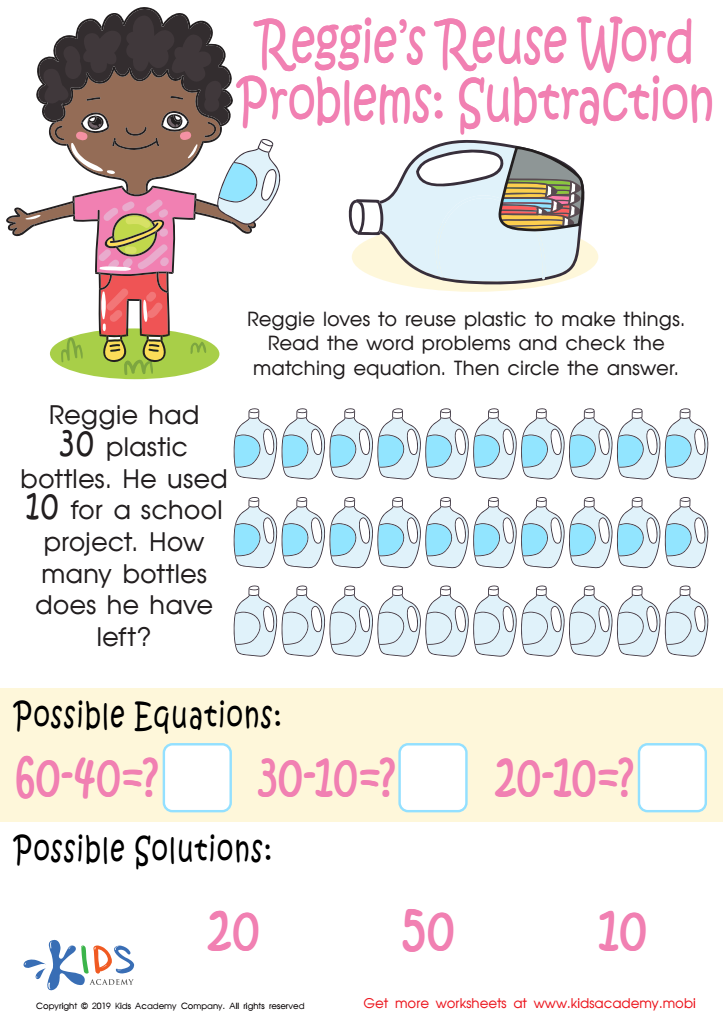
Reggie's Reuse Word Problems: Subtraction Worksheet
Kids can help pal Reggie become an eco-friendly friend! This PDF teaches kids subtraction and one-to-one number representation. They'll use pictures to solve word problems and find out how many plastic bottles Reggie can reuse. They'll also match number equations and solutions to get the right answer.
Reggie's Reuse Word Problems: Subtraction Worksheet
Worksheet
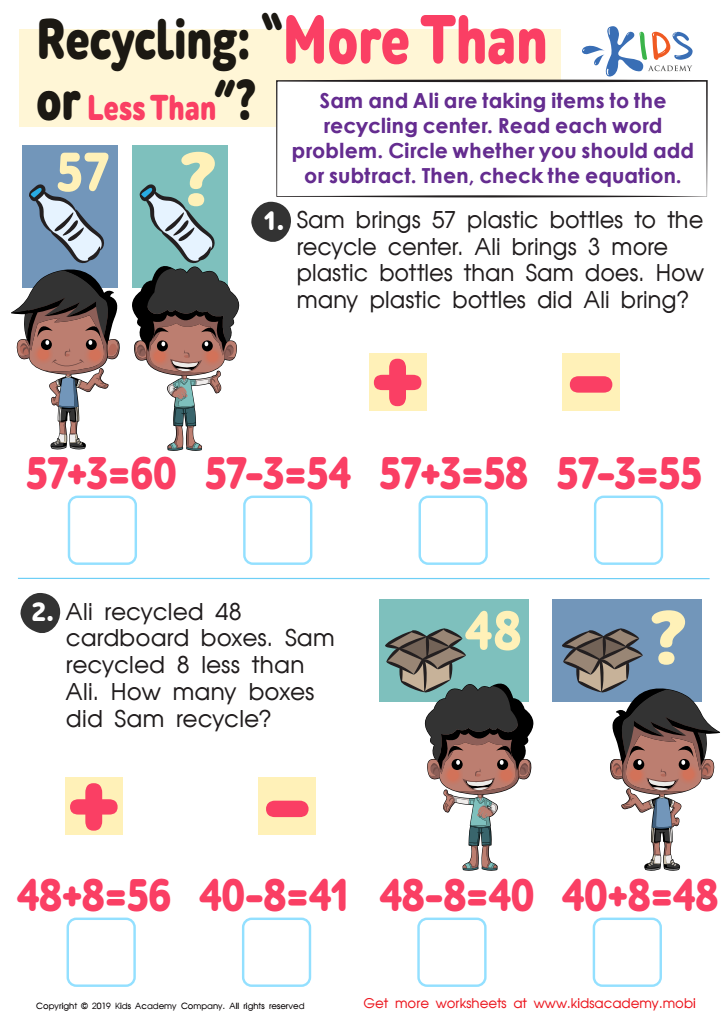
Recycling - More or Less Worksheet
Your child can compare numbers and solve word problems with this free worksheet. Help them understand what's being asked as Sam and Ali take items to the recycling center. They can choose the correct equation to match the word problem and apply their skills in reading and pulling out the appropriate information.
Recycling - More or Less Worksheet
Worksheet
Join Kids Academy for Free
Who is primarily going to use this learning content?








Basic math skills normal word problems are essential for 4-year-olds as they lay the foundation for future learning. At this age, children are naturally curious and eager to understand their environment. Engaging them with simple word problems helps develop critical thinking and problem-solving skills, which are fundamental in both math and everyday life.
Word problems encourage children to process information, identify relevant details, and develop reasoning abilities. When parents or teachers introduce relatable scenarios—like counting apples or sharing toys—they help young learners make connections between math concepts and real-life situations. This promotes numerical literacy early on, making math feel more relevant and enjoyable.
Additionally, practicing these skills fosters communication abilities. Children learn to express their thought processes and articulate problem-solving steps, enhancing their overall language development. By encouraging exploration and dialogue around math, parents and teachers can build a positive attitude towards math that will carry into later years.
Moreover, engaging with math at this early age can reduce anxiety about the subject, making children more confident as they progress in school. Supporting basic math skill development through word problems signifies a commitment to nurturing a well-rounded education, setting the stage for lifelong learning.








