Categorization skills Normal Science Worksheets for 4-Year-Olds
4 filtered results
-
From - To
Enhance your 4-year-old's cognitive development with our Categorization Skills Normal Science Worksheets. Designed specifically for preschoolers, these engaging worksheets make learning fun while teaching essential skills like sorting and grouping based on attributes such as color, shape, and size. Each activity is crafted to promote observational skills and critical thinking, ensuring a well-rounded educational experience. Our vibrant illustrations and age-appropriate challenges keep little learners motivated as they explore the world around them. Foster a love for science and learning through play with our easy-to-use printable resources, tailored for early education success. Start your child's discovery journey today!
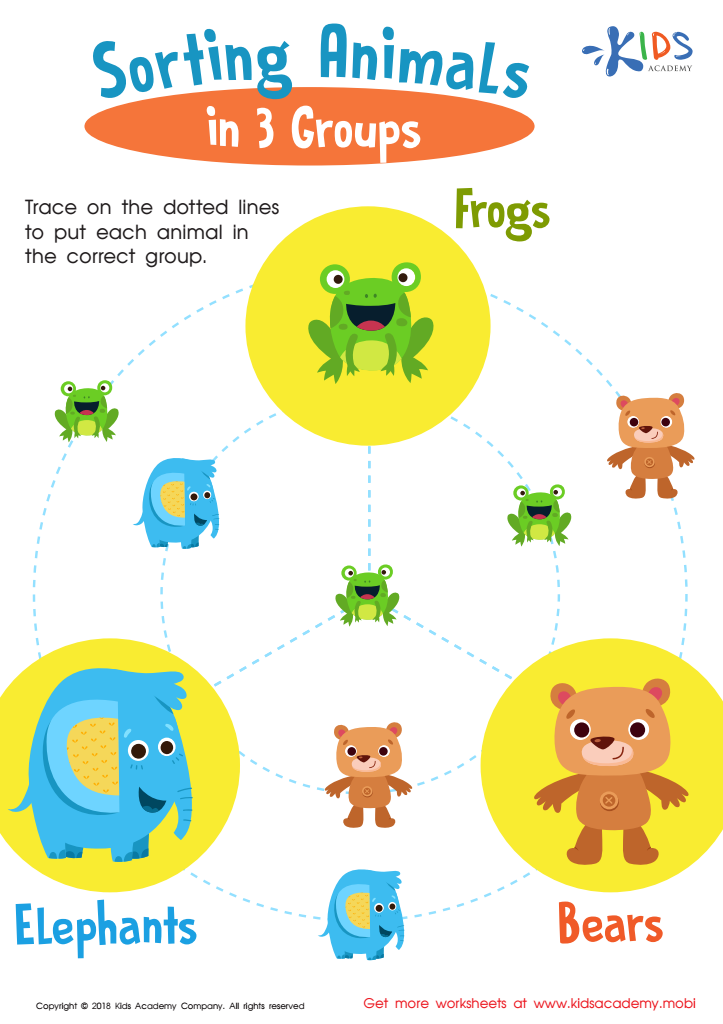
Sorting Animals in 3 Groups Worksheet
 Assign to My Students
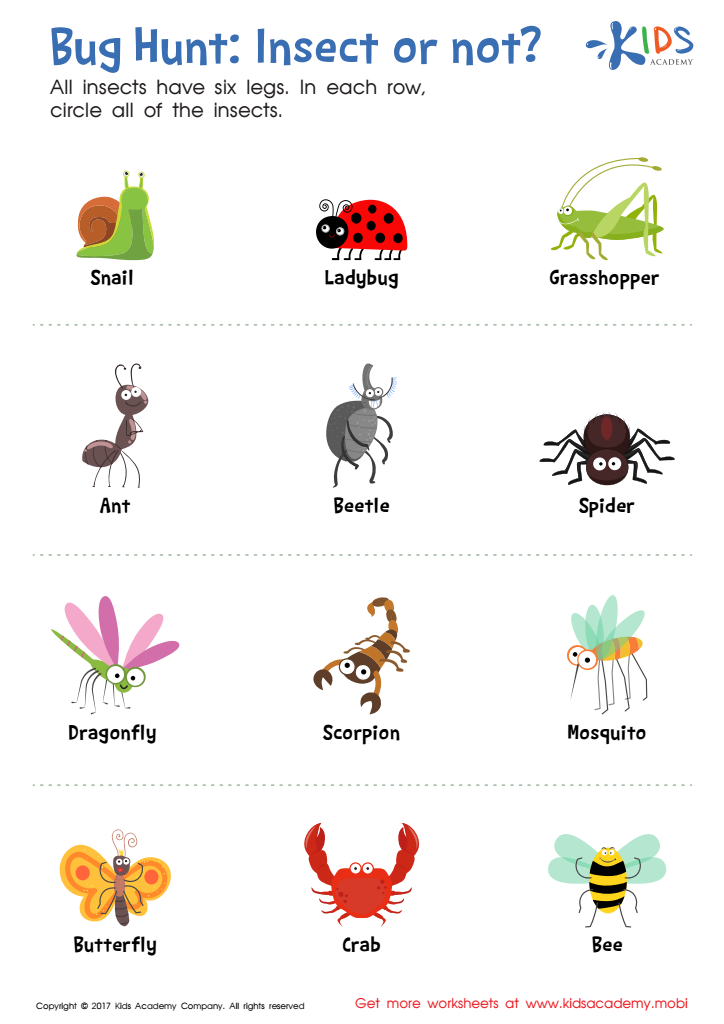
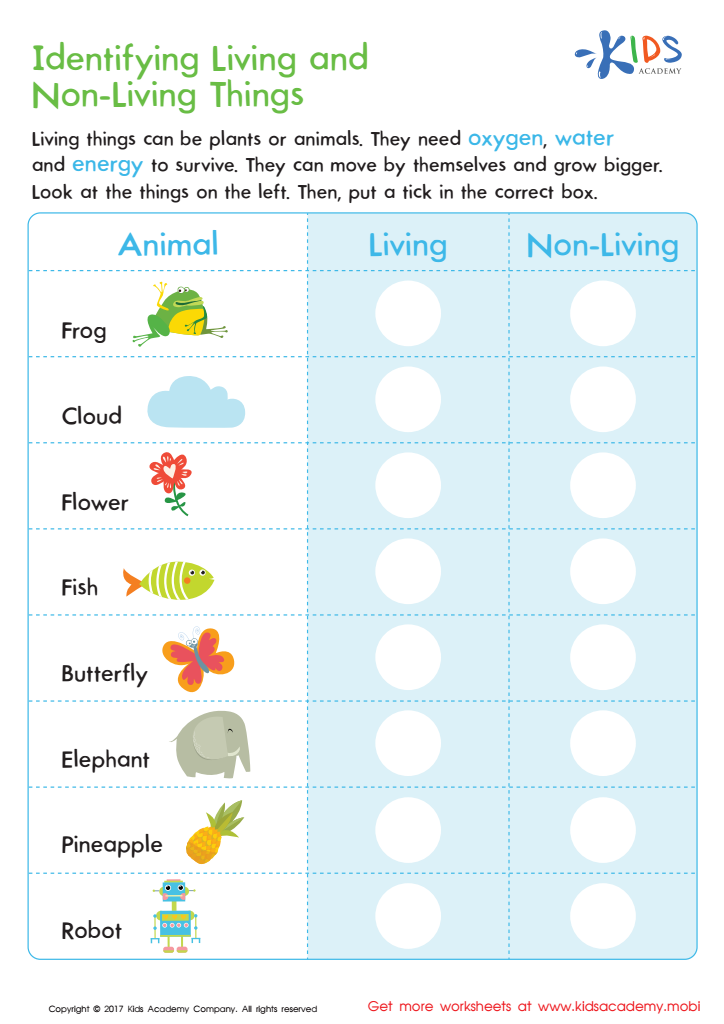
Identifying Living or Non–living Worksheet
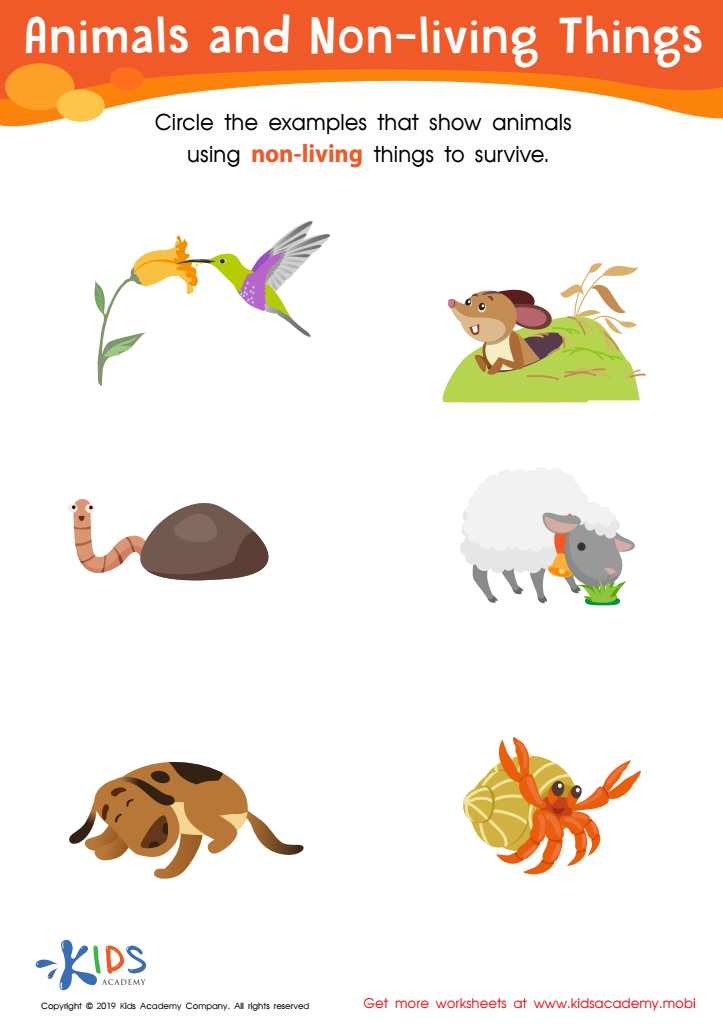
Animals and Non-Living Things Worksheet








Categorization skills are fundamental for the cognitive development of 4-year-olds, playing a crucial role in their overall learning process. These skills involve grouping similar items or concepts together, which helps children make sense of the world around them. Parents and teachers should care about fostering categorization skills as they are foundational for critical thinking, problem-solving, and language development.
At this stage, children engage in activities that involve sorting objects, understanding differences and similarities, and labeling items based on their characteristics. By encouraging these skills, caregivers support children's ability to classify animals, shapes, colors, and other concrete concepts, which are essential for later academic success. Furthermore, these skills lay the groundwork for mathematical reasoning, as recognizing patterns and categories is vital for understanding numbers and operations.
Additionally, promoting categorization helps enhance children's communication abilities, as discussing categories and groupings enriches vocabulary and language structure. When parents and teachers actively engage in supporting categorization skills through playful activities in a positive environment, they not only foster children's curiosity and exploration but also ensure they are better equipped for future learning challenges. Ultimately, nurturing these skills helps build a solid foundation for lifelong learning and adaptability.







