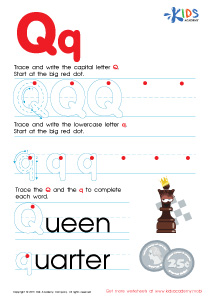
Letter recognition Normal ABC Coloring Pages Worksheets for Ages 5-6
7 filtered results
Difficulty Level
Grade
Age
-
From - To
Subject
Activity
Standards
Introduce your child to the world of letters with our "Letter Recognition ABC Coloring Pages" designed for ages 5-6! These engaging worksheets combine coloring fun with alphabet learning, helping young learners identify and memorize letters effortlessly. Each page features a different letter accompanied by charming illustrations, making education enjoyable. Perfect for building foundational reading skills, these coloring pages enhance hand-eye coordination and artistic expression. Parents and teachers will appreciate the seamless integration of play and learning. Nurture your child's creativity while fostering essential literacy skills. Explore our collection today and watch them fall in love with the ABCs!
Favorites
With answer key
Interactive
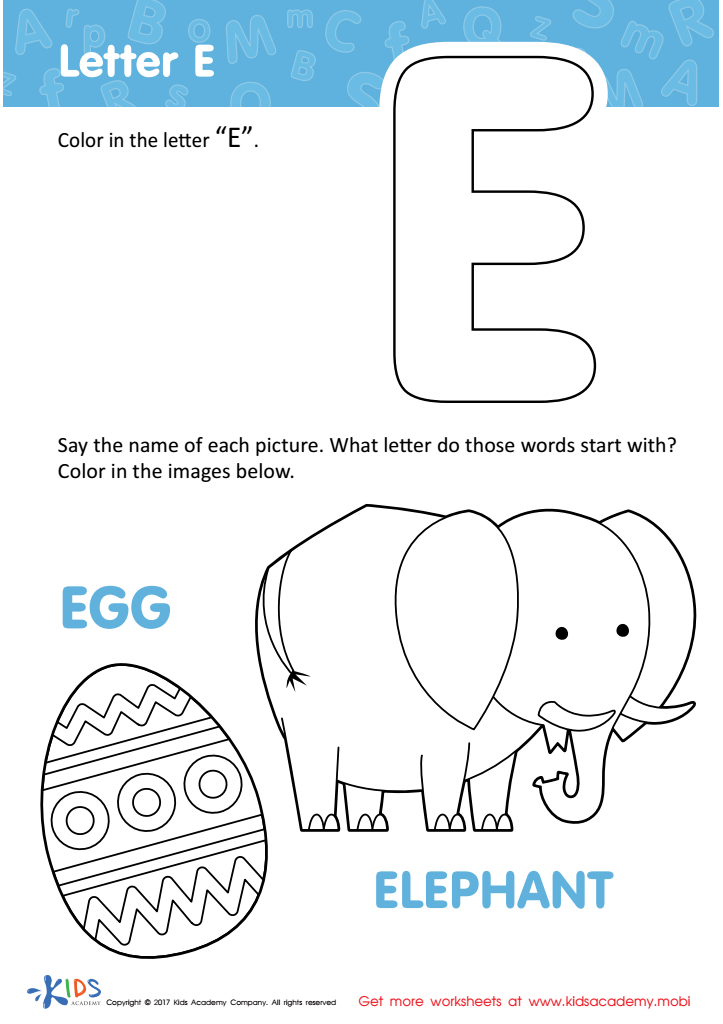
Letter E Coloring Sheet
Coloring pages are great for teaching kids the alphabet and words! This "E" page features a cute elephant and Easter egg. Kids will love it and learn the letter "E" at the same time. 80 words
Download (PDF)
 Assign to My Students
Assign to My Students
Letter E Coloring Sheet
Worksheet
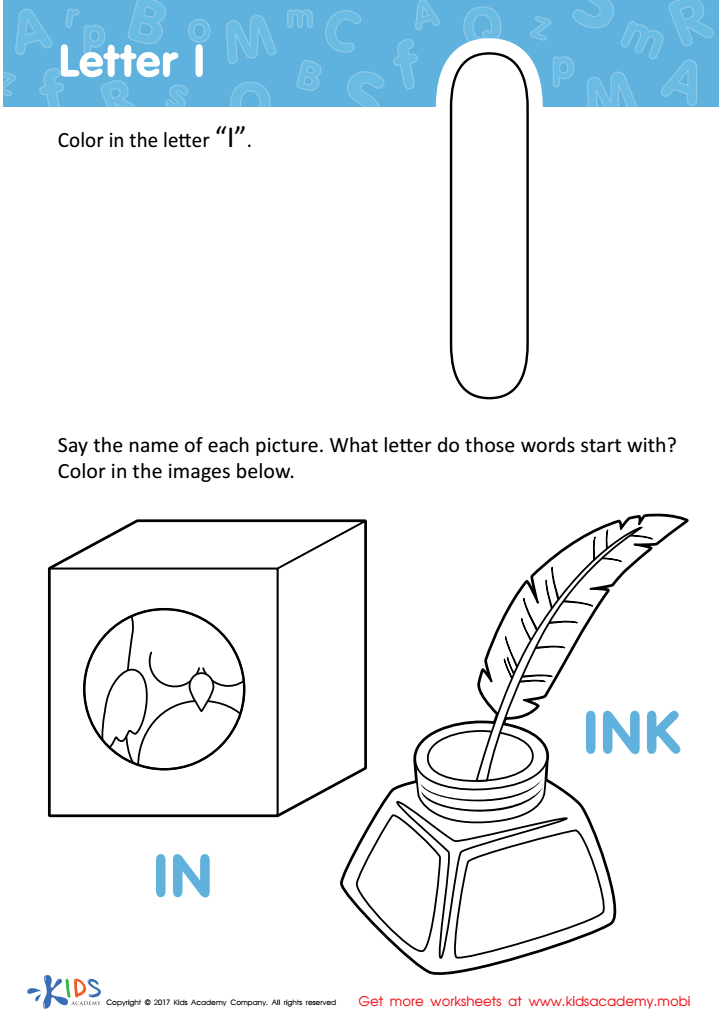
Letter I Coloring Sheet
This coloring page helps your child recognize the letter "I" and the positional word "in". It also introduces them to sight words, enhancing language skills. It's great for teaching parts of speech and boosting your little learner's confidence!
Download (PDF)
Assign to My Students
Assign to My Students
Letter I Coloring Sheet
Worksheet
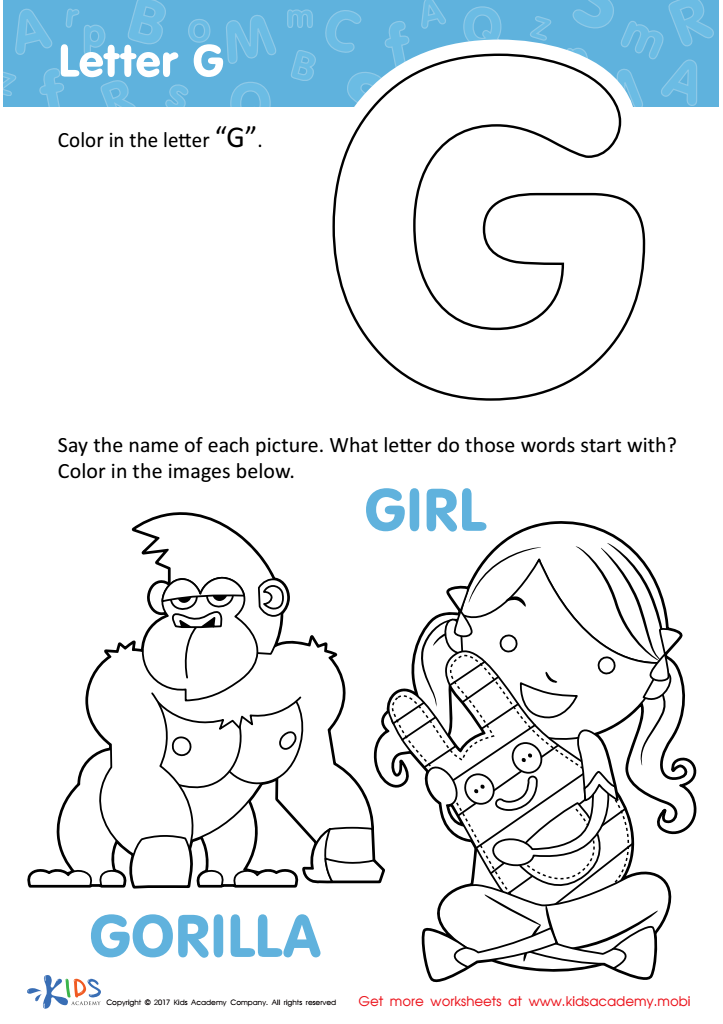
Letter G Coloring Sheet
This "G" coloring page encourages creativity and teaches kids the letter "G" sound. With its fun visuals and familiar words, it's sure to excite your child. Plus, you can talk about the letter’s sound with the pictures given.
Download (PDF)
Assign to My Students
Assign to My Students
Letter G Coloring Sheet
Worksheet
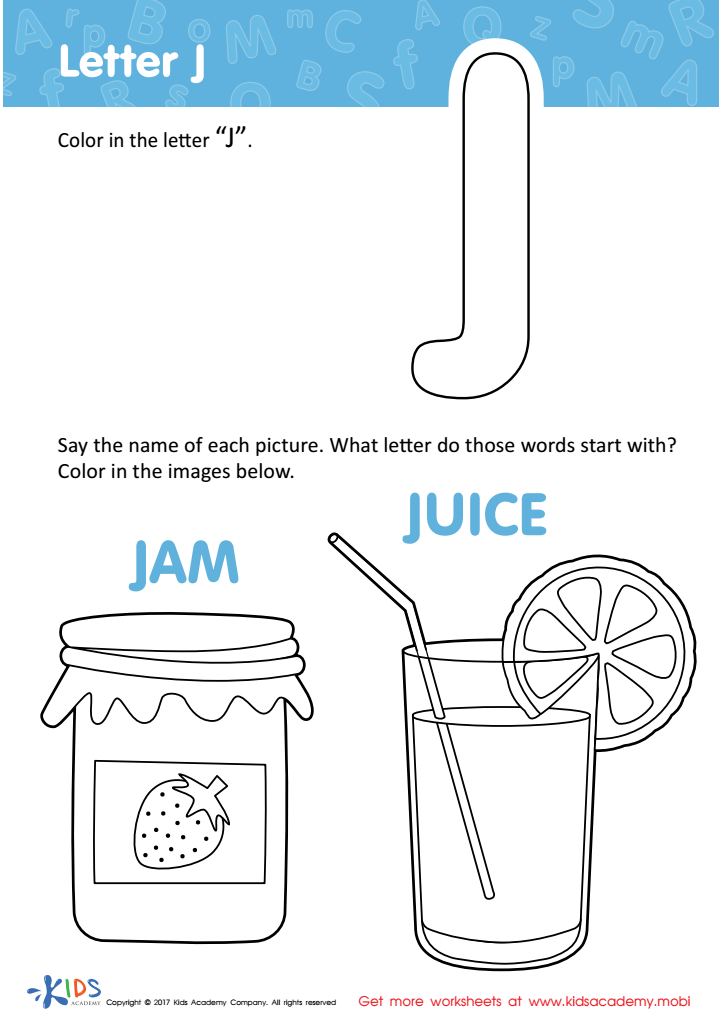
Letter J Coloring Sheet
Practice the letter 'J' with your little one with this fun coloring page! Pictures of jar, juice, jam and jelly make it an enjoyable experience for kids. Learning the letter and coloring is fun for even the youngest learners.
Download (PDF)
Assign to My Students
Assign to My Students
Letter J Coloring Sheet
Worksheet
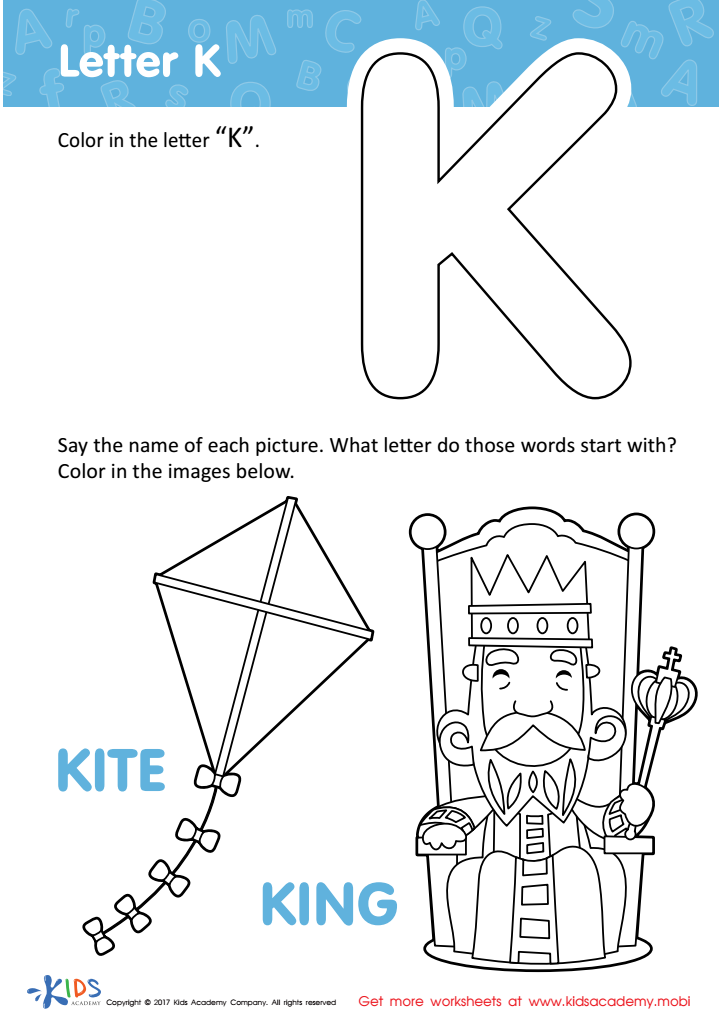
Letter K Coloring Sheet
This letter K coloring page captivates your child's creativity while learning the letter! Showcasing a king and kite, common words for their age group, it's sure to spark their imagination.
Download (PDF)
Assign to My Students
Assign to My Students
Letter K Coloring Sheet
Worksheet
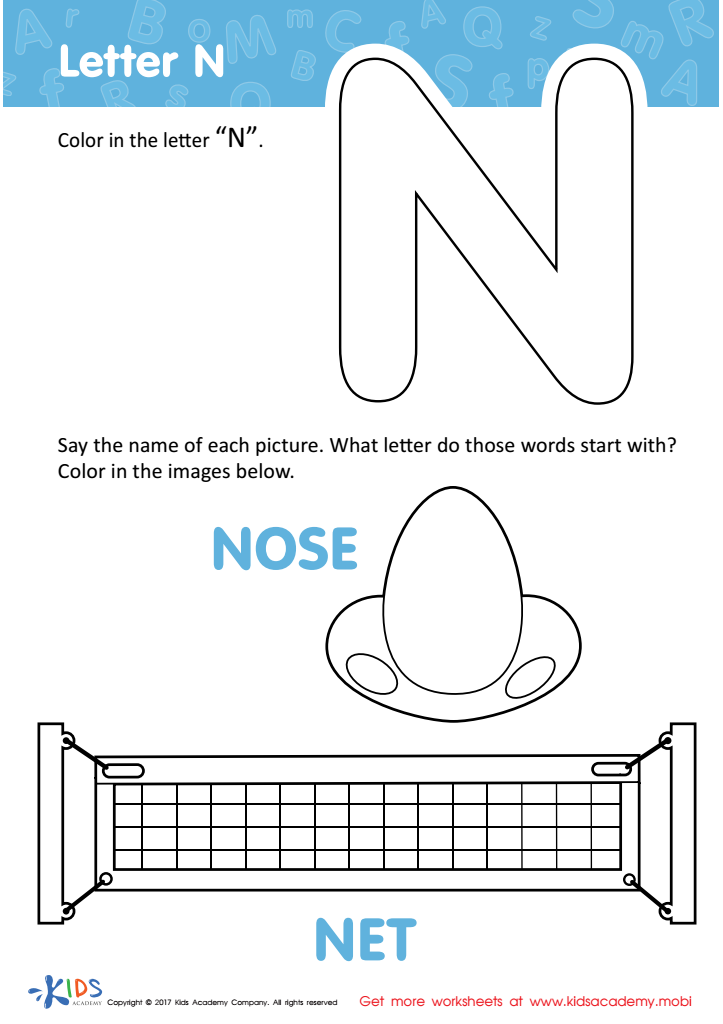
Letter N Coloring Sheet
Let your child get creative and learn the alphabet with this letter "N" coloring page! It's a fun way to recognize the letter, featuring a body part all kids know. Coloring and reinforcing recognition of "N" will help your child have fun while learning!
Download (PDF)
Assign to My Students
Assign to My Students
Letter N Coloring Sheet
Worksheet
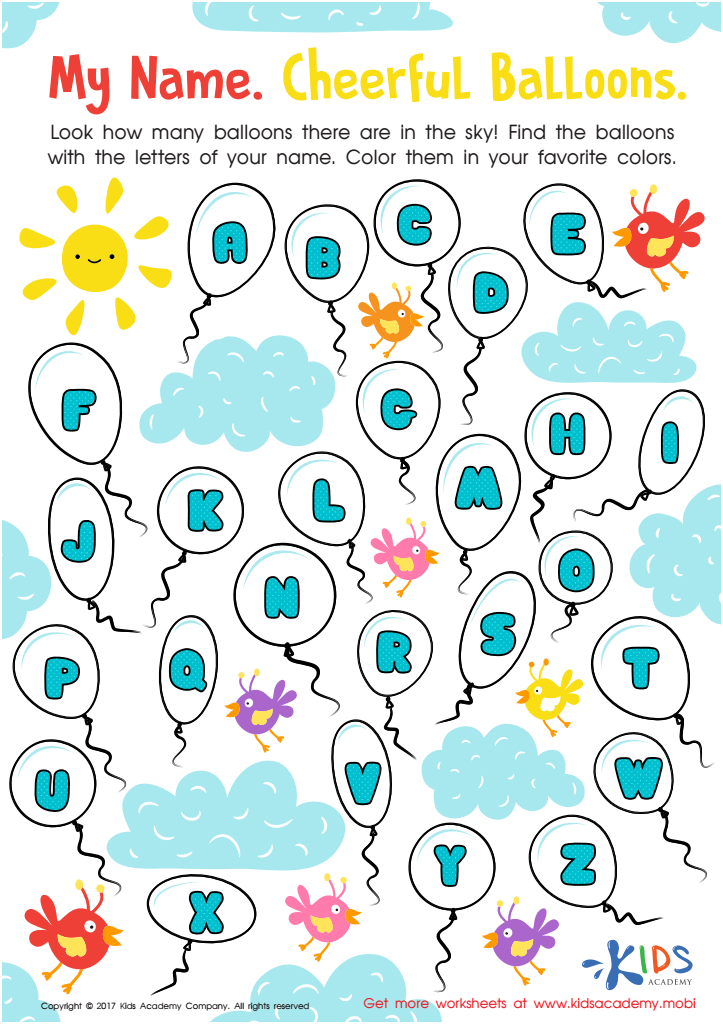
My Name: Cheerful Balloons Worksheet
Encourage toddlers and preschoolers to soar with this fun worksheet! Find the letters in the balloons and help your child find the letters of their name. Then, fill in each balloon with their favorite colors and turn the paper over to write their name on the back. A great way to give imaginations wings!
Download (PDF)
Assign to My Students
Assign to My Students
My Name: Cheerful Balloons Worksheet
Worksheet
Join Kids Academy for Free
Who is primarily going to use this learning content?



Letter recognition is a foundational skill that forms the basis for reading and writing. For children aged 5-6, Letter Recognition Normal ABC Coloring Pages can be an effective and enjoyable educational tool. These coloring pages serve multiple educational purposes that benefit early learners.
Firstly, they combine visual and tactile learning by allowing children to see the shape of the letters and physically interact with them by coloring. This multisensory approach reinforces letter shapes and improves fine motor skills, essential for writing. Secondly, turning learning into a fun activity makes children more engaged and eager to learn. Coloring pages can introduce letters in a non-threatening way that reduces learning anxiety and fosters a positive attitude toward schoolwork.
Additionally, while coloring, children often start to associate letters with sounds and words, enhancing phonemic awareness. This helps bridge the gap between recognizing letters and beginning to read. Parents and teachers can also use this time to introduce vocabulary words that start with each letter, further reinforcing letter recognition in a broader linguistic context.
In sum, Letter Recognition Normal ABC Coloring Pages offer a playful yet educational experience that can significantly support literacy development in young children. By incorporating such activities, parents and teachers provide a strong foundation for future academic success.