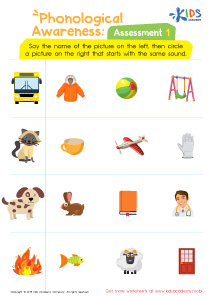
Phonics recognition Normal Consonants Worksheets for Ages 5-6
3 filtered results
-
From - To
Explore our engaging Phonics Recognition Worksheets designed specifically for children aged 5-6! These resources focus on normal consonants, helping young learners build foundational reading skills. Each worksheet is thoughtfully designed to improve phonetic awareness through fun and interactive activities. Kids will enjoy identifying consonants, recognizing sounds, and practicing letter formations. Perfect for homeschooling, classroom use, or extra practice, these worksheets support a child's literacy development while making learning enjoyable. Encourage your child's early reading success with our colorful and stimulating phonics worksheets, providing a solid understanding of consonants essential for future language growth. Let's make phonics fun and engaging!
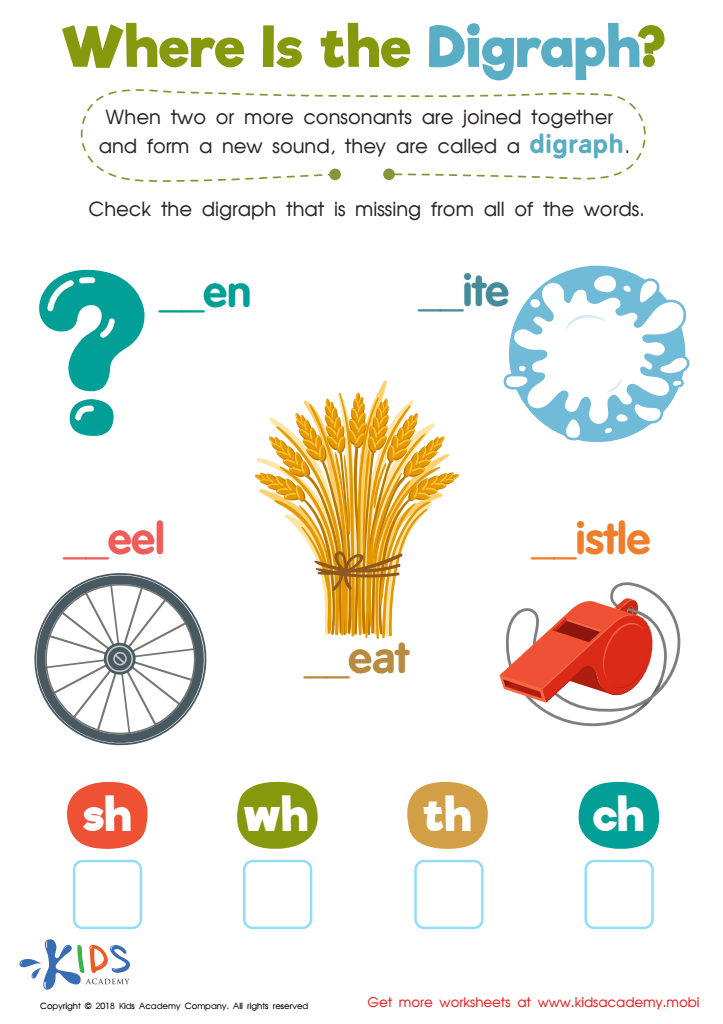
Where Is the Digraph? Worksheet
 Assign to My Students
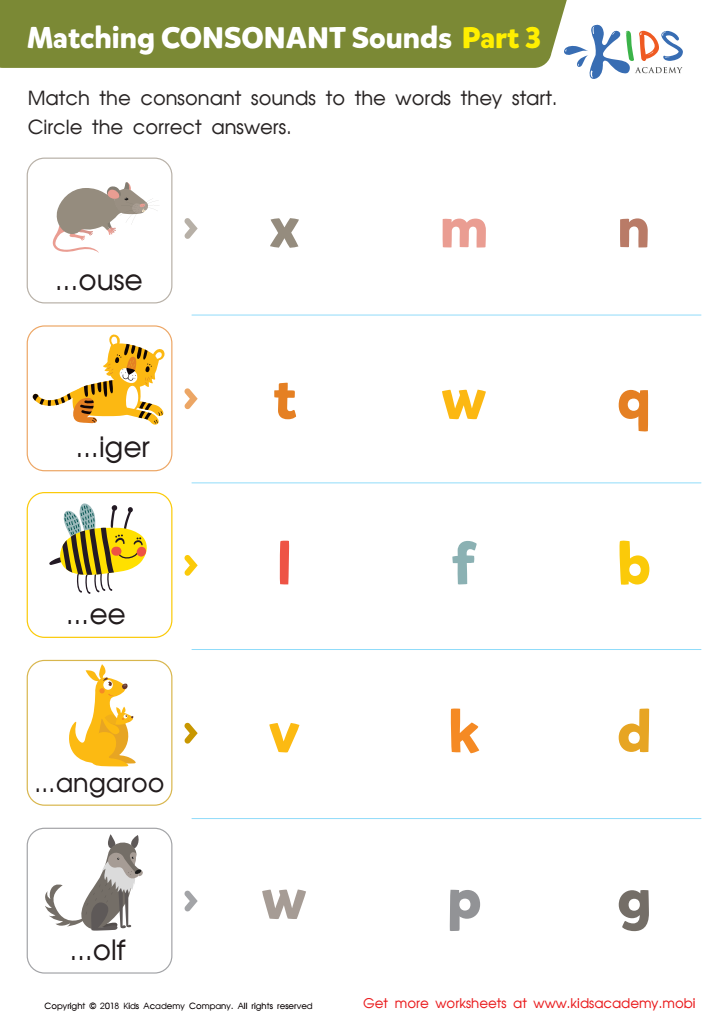
Matching Consonant Sounds: Part 3 Worksheet
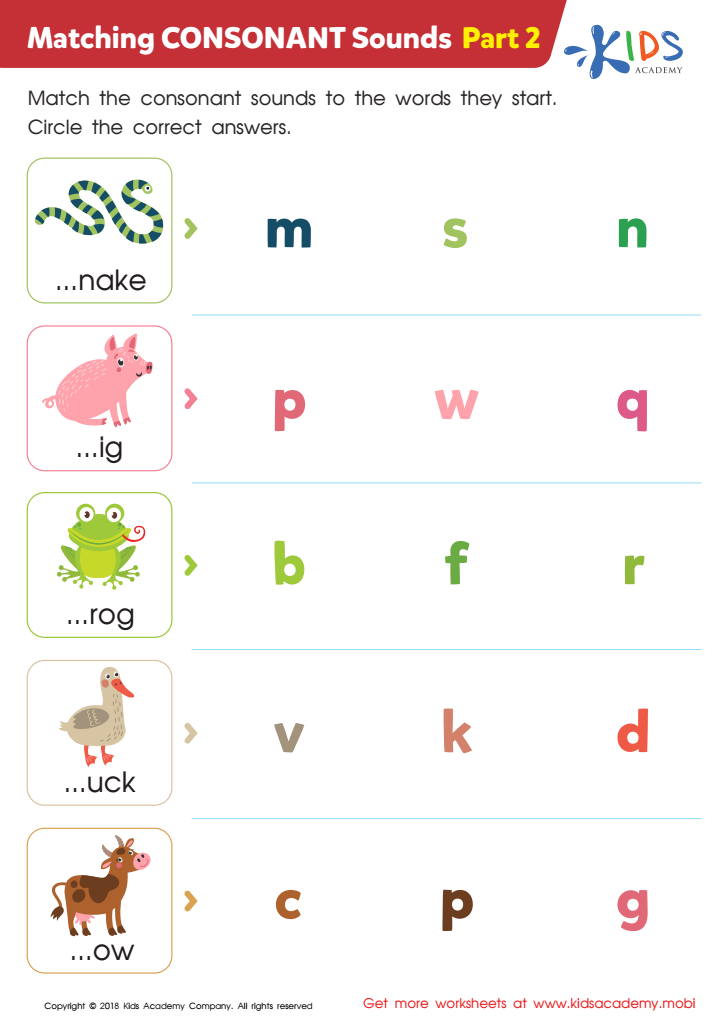
Matching Consonant Sounds: Part 2 Worksheet



Phonics is a crucial building block in early literacy development, particularly for children aged 5-6. Understanding normal consonants allows young learners to decode words and develop reading skills fundamental for academic success and lifelong learning. When children recognize consonants, they can sound out words, which enhances their reading fluency and comprehension.
For parents and teachers, focusing on phonics recognition promotes a strong foundation in literacy, leading to increased confidence and motivation in young readers. Mastering consonants may assist children in improving their spelling skills, enabling them to write accurately and expressively. As they progress, strong phonics skills can help them tackle more complex language tasks, paving the way for improved overall academic performance.
Additionally, engaging in phonics activities fosters critical thinking and cognitive development. Meaningful interactions with phonics through fun games and exercises can enhance parent-child bonding or teacher-student rapport, making learning enjoyable. In today’s learning environment, where reading proficiency is linked to success in various subjects, an early emphasis on phonics recognition ensures children are equipped with essential skills, helping them navigate their educational journey confidently. Ultimately, prioritizing phonics recognition in the early years sets the stage for future learning triumphs.