
Alphabet Learning Normal Alphabet Worksheets for Ages 5-6
4 filtered results
Difficulty Level
Grade
Age
-
From - To
Subject
Activity
Standards
In our "Alphabet Learning Normal Alphabet Worksheets for Ages 5-6," young learners embark on a fun and educational journey through the alphabet. Carefully designed for children aged 5-6, these printable worksheets foster letter recognition, writing skills, and phonemic awareness. Engaging activities, including tracing and coloring, ensure kids master each letter while developing fine motor skills. Ideal for both classroom and home use, our worksheets empower your child to become a confident reader and writer. Explore our collection to make learning the alphabet an enjoyable adventure for your little ones!
Favorites
With answer key
Interactive
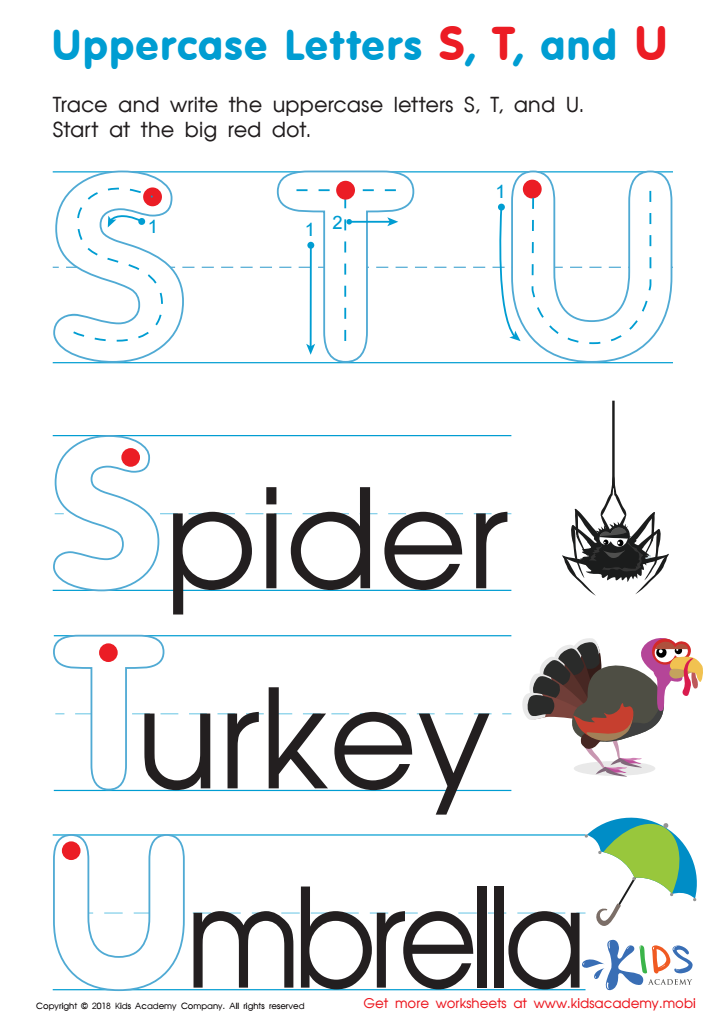
Uppercase Letters S, T, and U Worksheet
Help your kids learn to write upper-case letters with this fun tracing sheet. Start at the big red dot for each letter: S, T, and U. Show them the pictures and ask what letter each word starts with. Guide their hand and watch them learn!
 Assign to My Students
Uppercase Letters S, T, and U Worksheet
Worksheet
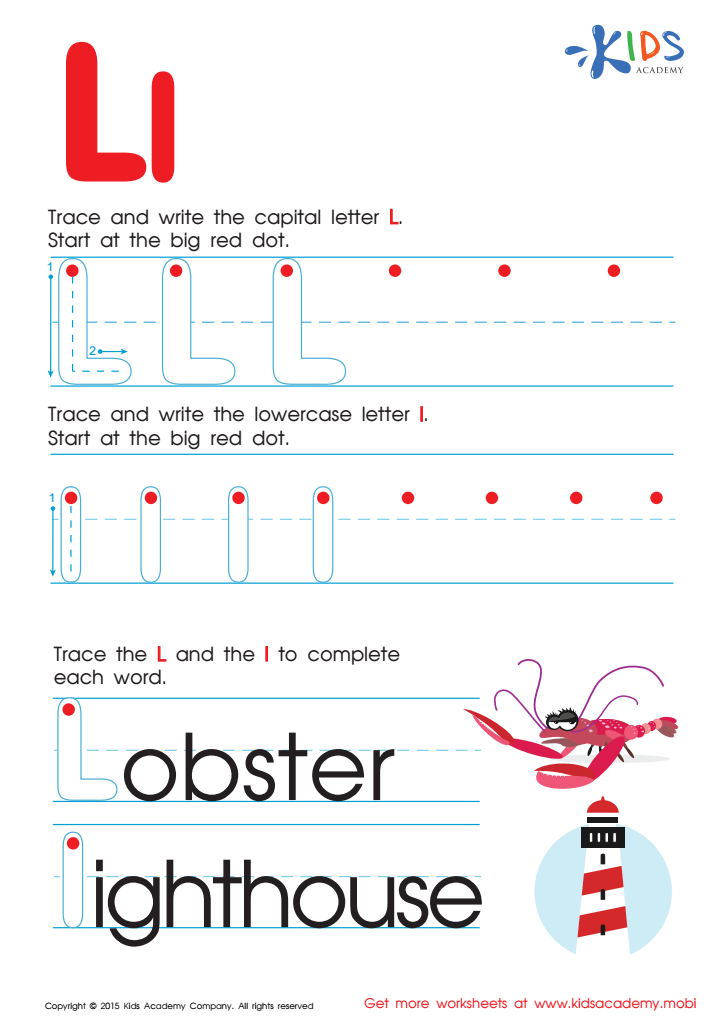
Letter L Tracing Page
Trace uppercase and lowercase letters to practice writing. Pay attention to the lowercase letters, like the "L", that are not as tall as an uppercase "I" or as short as a lowercase "i". Words like "lobster" and "lighthouse" are waiting to be completed. Enjoy!
Letter L Tracing Page
Worksheet
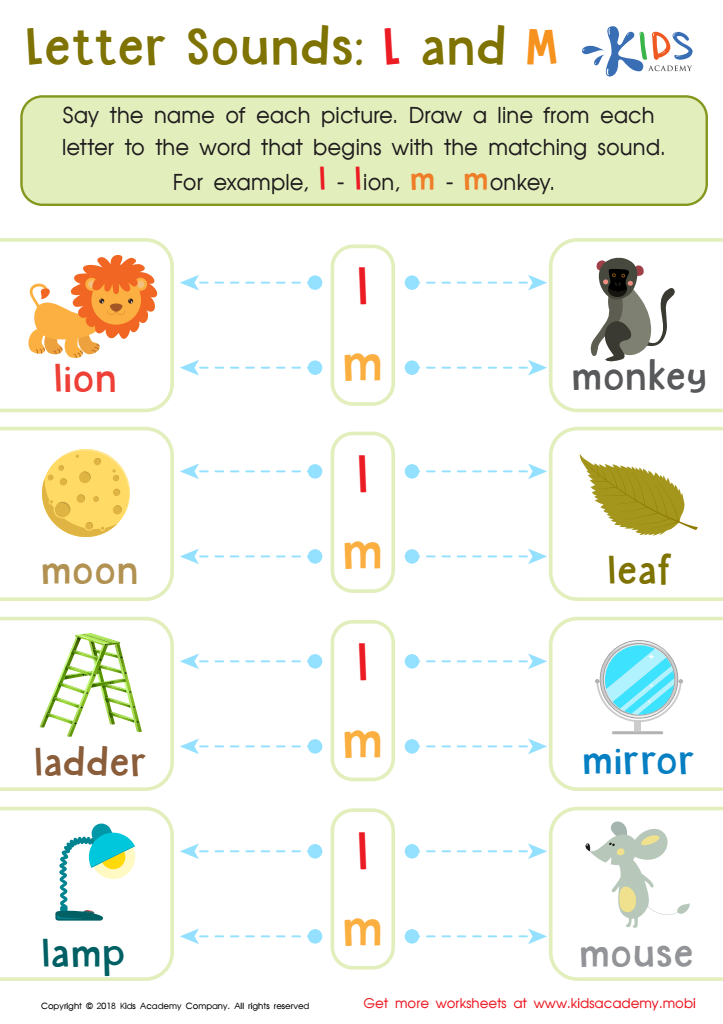
Letter l and M Sounds Worksheet
Our Kids Academy phonics practice pages give clear instructions and captivating pictures to pique children's interest. This fun worksheet helps kids identify a picture, then match its beginning sound. Listen and say each word - does it start with "L" or "M"? Trace the dotted line from the letter to the correct match and listen closely to the sound it makes.
Letter l and M Sounds Worksheet
Worksheet
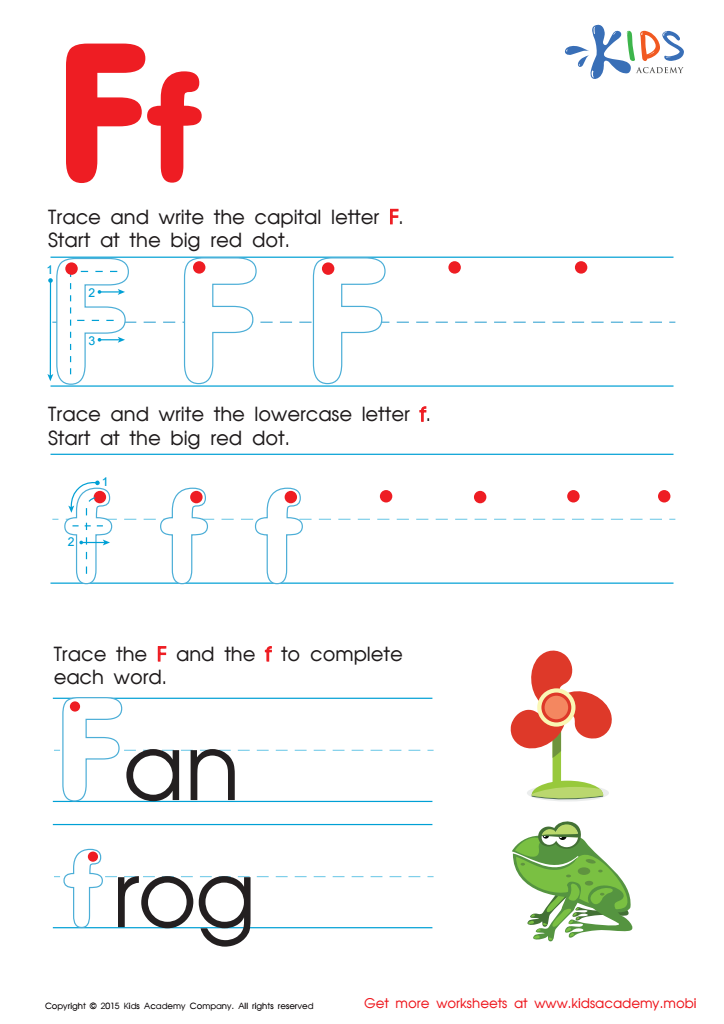
Letter F Tracing Page
Trace "F" with your pencil! Start at the red dot and draw lines — it's fun! Check it out — it looks great! Keep practicing to make it even better. Then, try completing words. Help out the broken fan and funny frog! Get free alphabet worksheets and activities for your kids. Come see our new tracing pages!
Letter F Tracing Page
Worksheet
Join Kids Academy for Free
Who is primarily going to use this learning content?








Alphabet learning is a foundational milestone for children aged 5-6, and understanding the normal alphabet accurately has significant implications for their overall educational development. During this critical period, children transition from recognizing to actively engaging with letters, which empowers them to build essential literacy skills.
Firstly, mastering the alphabet provides the key to reading. Each letter is a step towards decoding words, crucial for learning new information and expanding their intellectual horizons. It is during these early years that children exhibit remarkable plasticity; their capacity to absorb new concepts is heightened. Ensuring they have a solid grasp of the normal alphabet enhances cognitive development and prepares them for more advanced literacy tasks.
Secondly, learning the alphabet smoothly interlinks with writing skills. As children learn letter shapes and sounds, they begin to replicate them, fostering fine motor skills and coordination. These skills are vital for other forms of written expression and technical dexterity.
Lastly, an early proficiency in alphabet knowledge cultivates self-esteem and confidence. Engaging in activities that reinforce letter recognition, sounds, and writing leads to a sense of accomplishment, motivating continuous learning and curiosity.
Parents and teachers should invest time and resources into ensuring alphabet learning is enjoyable, comprehensive, and consistent, attuning educational strategies to this crucial developmental phase. This proactive approach lays an indispensable foundation for lifelong literacy and academic success.







