Visual discrimination Normal Alphabet Worksheets for Ages 5-6
4 filtered results
-
From - To
Discover the joy of learning with our Visual Discrimination Normal Alphabet Worksheets, specially designed for children aged 5-6. These engaging worksheets help young learners improve their ability to differentiate between letters and symbols, honing their visual recognition skills. With a variety of activities, including tracing, matching, and identifying letters, these worksheets make learning fun and interactive. Perfect for home or classroom use, they support early literacy development and enhance fine motor skills. Give your child a head start in reading and writing! Explore our collection today and watch them thrive as they familiarize themselves with the alphabet in an exciting way.
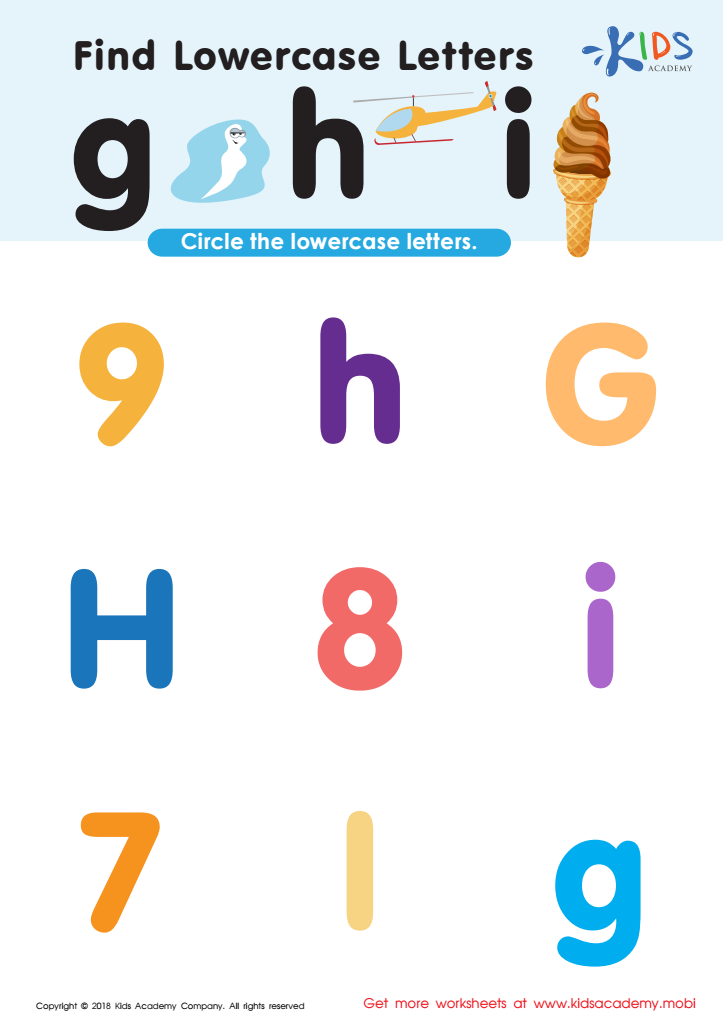
Find Lowercase Letters g h i Worksheet
 Assign to My Students
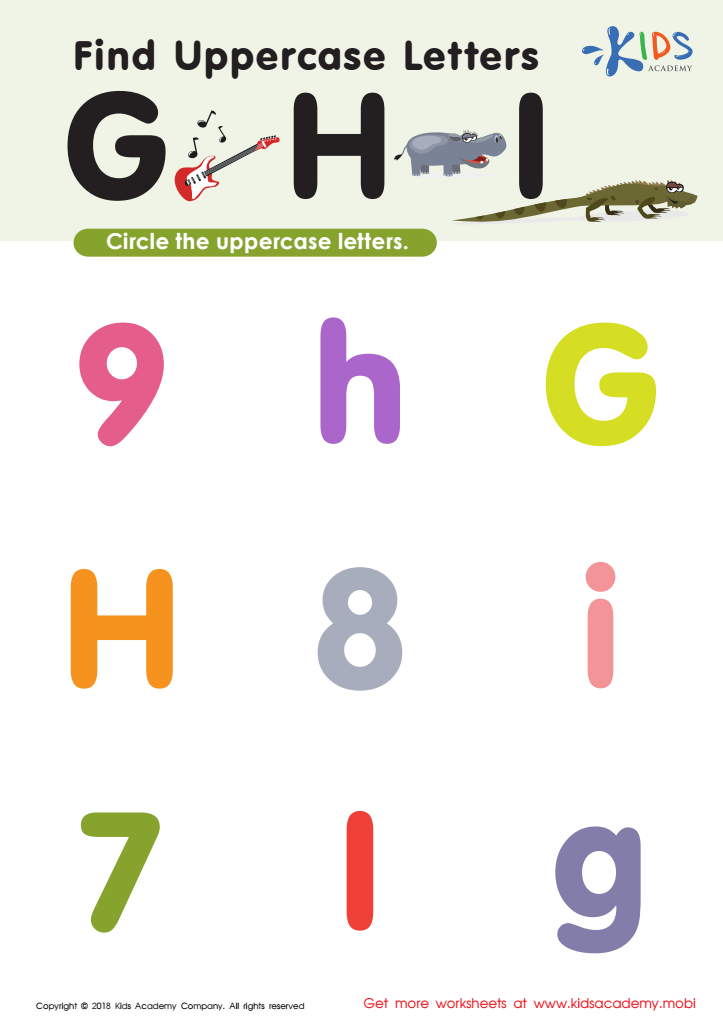
Find Uppercase Letters G, H, and I Worksheet
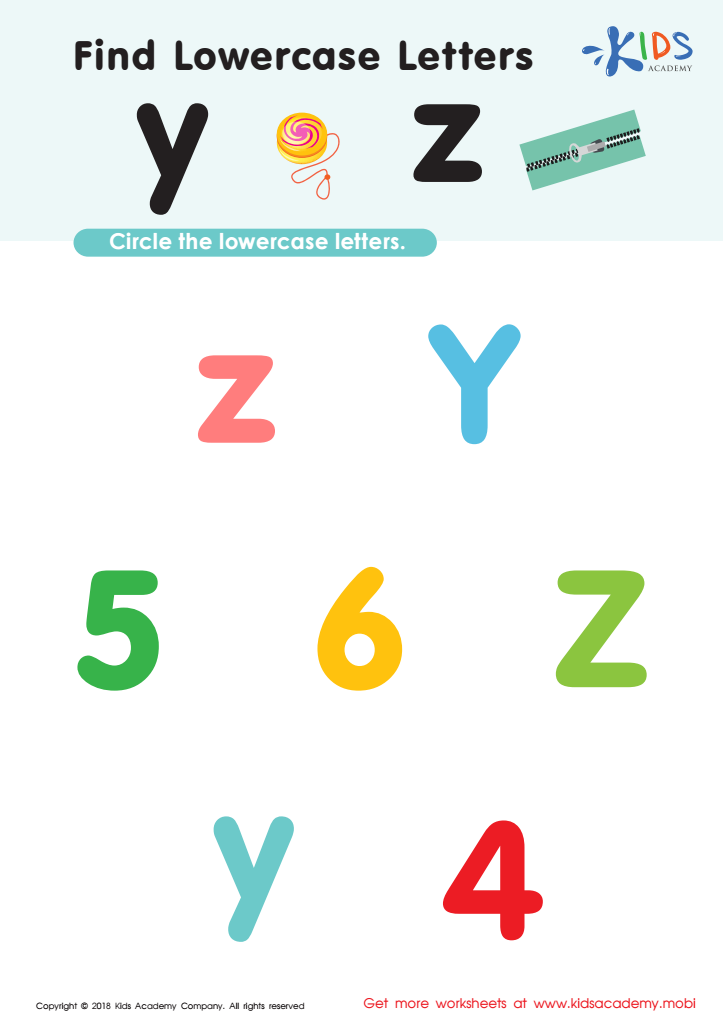
Find Lowercase Letters y z Worksheet
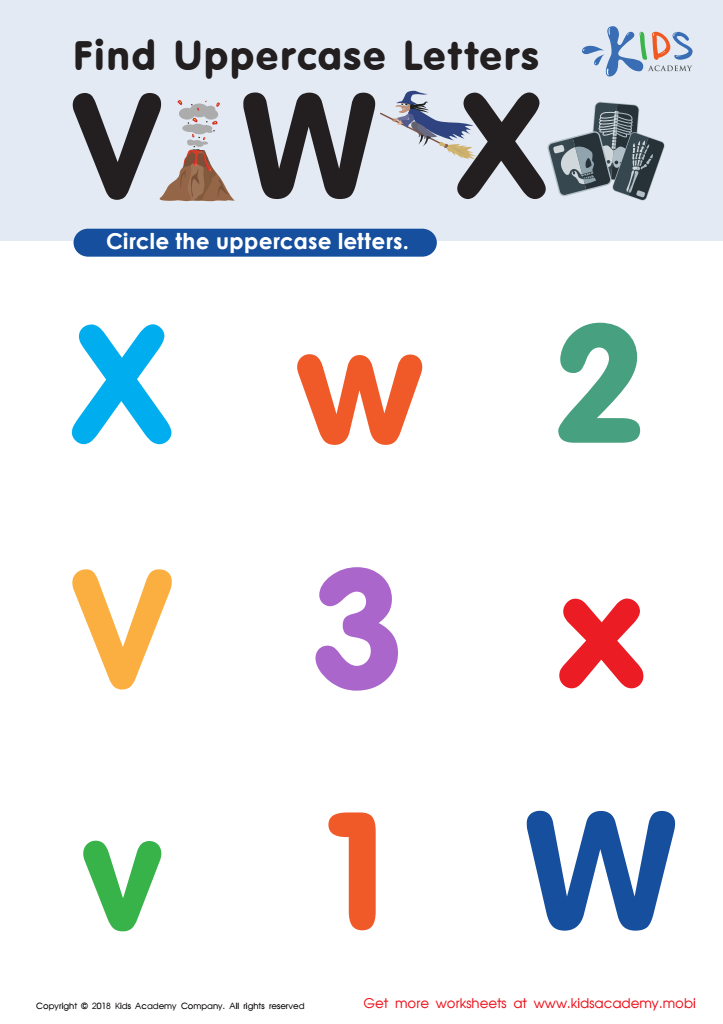
Find Uppercase Letters V, W, X Worksheet








Visual discrimination is a crucial skill for young learners, particularly for those aged 5 to 6, as it serves as the foundation for reading and writing. At this age, children are beginning to recognize letters and differentiate between similar looking characters, such as 'b' and 'd' or 'p' and 'q.' Developing strong visual discrimination skills helps children accurately identify letters, which is vital for phonics and spelling.
Parents and teachers should care about visual discrimination because it influences not only literacy but also overall academic success. A child's ability to differentiate between visually similar letters can reduce frustration during reading and writing activities, leading to greater confidence and enthusiasm for learning. Early intervention can prevent potential learning difficulties later on, making it essential for educators to incorporate visual discrimination activities into their lessons.
Moreover, in a world increasingly reliant on visual information, strong visual discrimination skills also aid in critical thinking and problem-solving. Engaging young learners in exercises, games, and activities that enhance their visual perception can ultimately promote a love for learning and set a strong foundation for future academic achievement. In summary, nurturing visual discrimination at this developmental stage is a vital investment in a child’s educational journey.







