Alphabet tracing Normal Letter Recognition Worksheets for Ages 5-6
5 filtered results
-
From - To
Unlock your child's full potential with our Alphabet Tracing Normal Letter Recognition Worksheets, designed especially for ages 5-6. These engaging printables foster early literacy by helping kids master letter recognition through fun and interactive tracing activities. Each worksheet focuses on both uppercase and lowercase letters, providing a strong foundation for reading and writing. With vibrant visuals and step-by-step instructions, children will build their confidence while developing fine motor skills. Ideal for classroom use or extra practice at home, our worksheets make learning enjoyable and effective. Download now and watch your child become an alphabet master! Perfect for parents and educators alike.
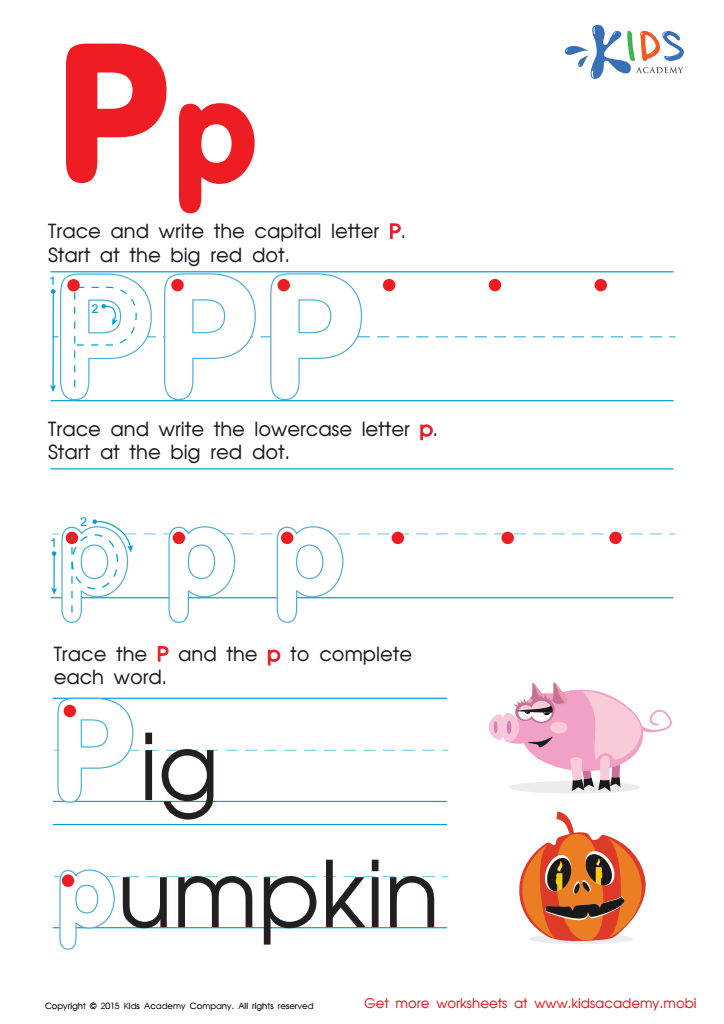
Letter P Tracing Page
 Assign to My Students
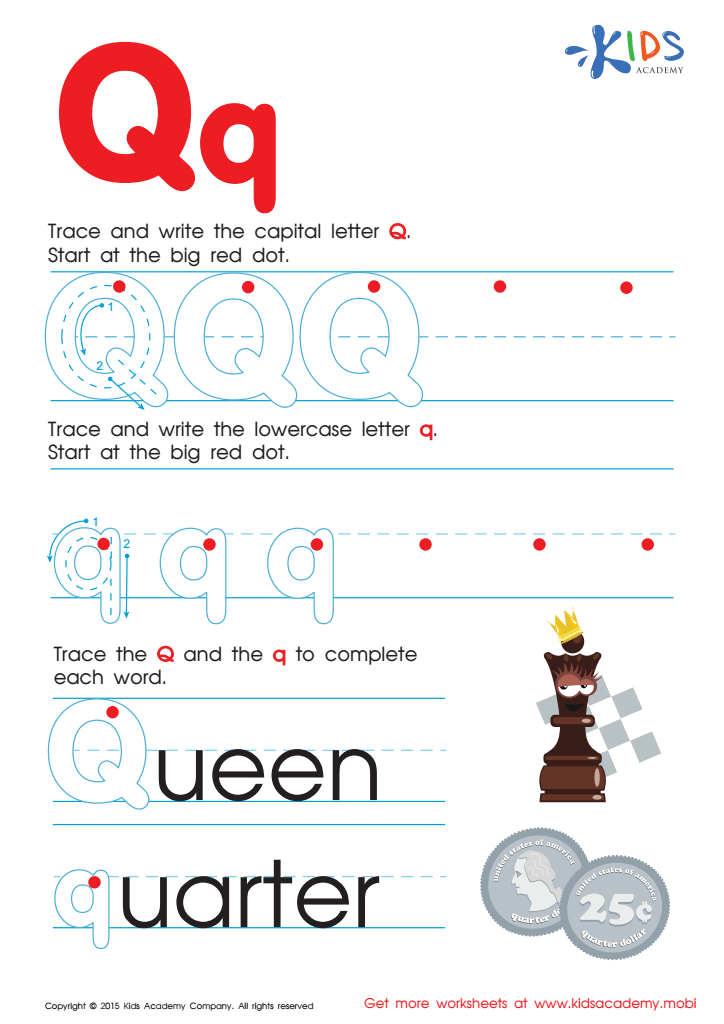
Letter Q Tracing Page

Letter H Tracing Page
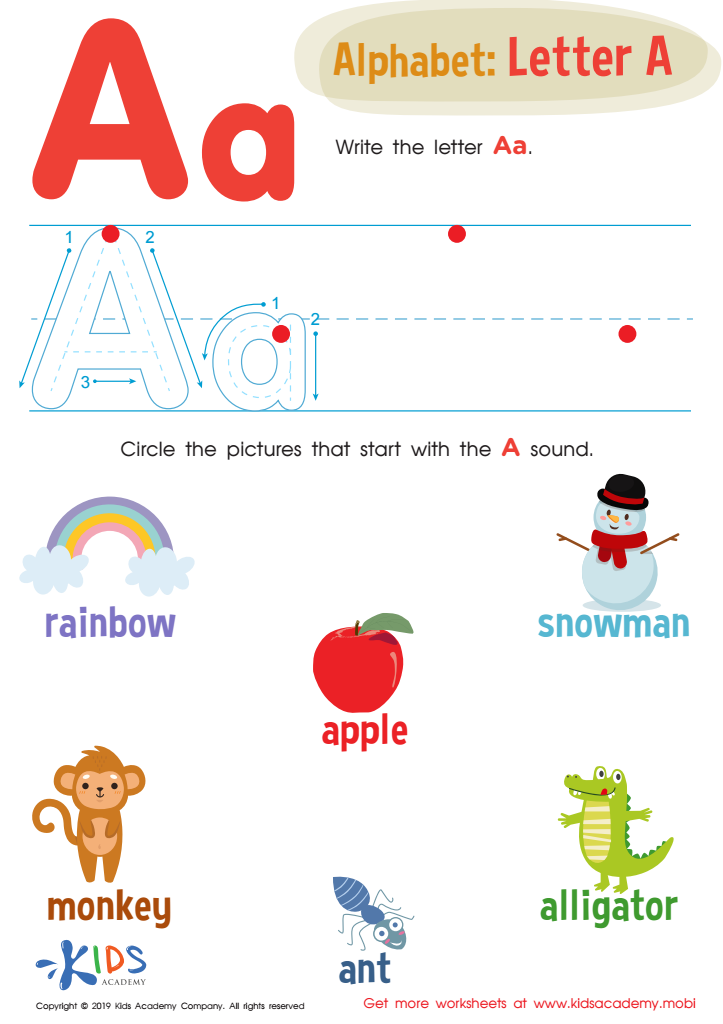
Letter A Tracing Worksheet
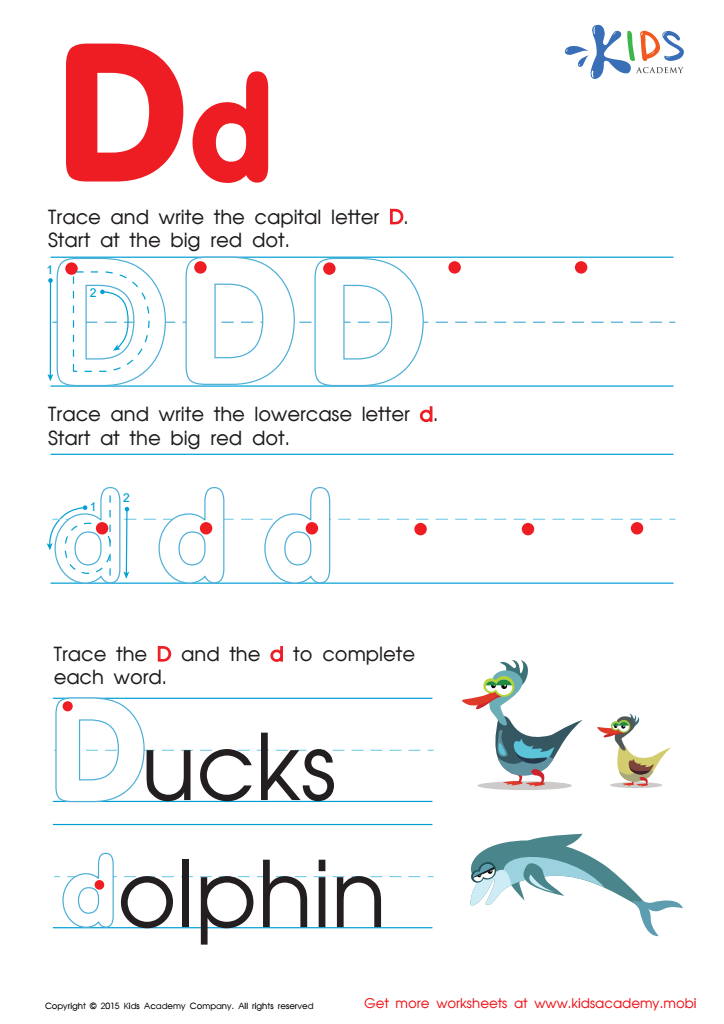
Letter D Tracing Page








Alphabet tracing and normal letter recognition are foundational skills for young children, especially those aged 5-6. For both parents and teachers, understanding the importance of these activities is crucial.
Firstly, these skills are essential for literacy development. Tracing helps children familiarize themselves with the shape and form of letters, which is the first step towards writing them independently. This motor skill practice is necessary for proper handwriting in the future. Developing fine motor control through tracing activities enhances overall hand-eye coordination.
Secondly, recognizing letters intuitively aids in reading fluency. When children can identify letters easily, they are more likely to enjoy reading and feel more confident in their abilities. Early mastery of these skills leads to improved word recognition skills and paves the way for richer vocabulary acquisition and better comprehension skills as they progress in school.
Additionally, these activities lay the groundwork for early numeracy development. Many number recognition skills also depend on the child’s ability to recognize and reproduce symbols.
Lastly, fostering a strong foundation in letter recognition and tracing habits inculcates patience, attention to detail, and perseverance. It also offers a routine that amalgamates learning with play, maintaining a balanced interest in academic progress.
Incorporating these exercises in early childhood ensures a smoother transition to more complex literacy and numeracy tasks, supporting academic success.








