
Letter-sound association Normal Letter Recognition Worksheets for Ages 5-6
5 filtered results
Difficulty Level
Grade
Age
-
From - To
Subject
Activity
Standards
Our "Letter-Sound Association Normal Letter Recognition Worksheets" are designed for children aged 5-6 to enhance their phonemic awareness and alphabet skills. These engaging worksheets focus on linking letters to their corresponding sounds, facilitating a deeper understanding of the alphabet. Children will enjoy interactive activities that promote letter recognition while building a strong foundation for reading and writing. Each worksheet features vibrant illustrations and age-appropriate exercises, guiding young learners through fun and educational tasks. Boost your child's confidence in literacy with our carefully crafted resources that simplify the learning process while making it enjoyable! Explore our collection and watch your child thrive!
Favorites
With answer key
Interactive
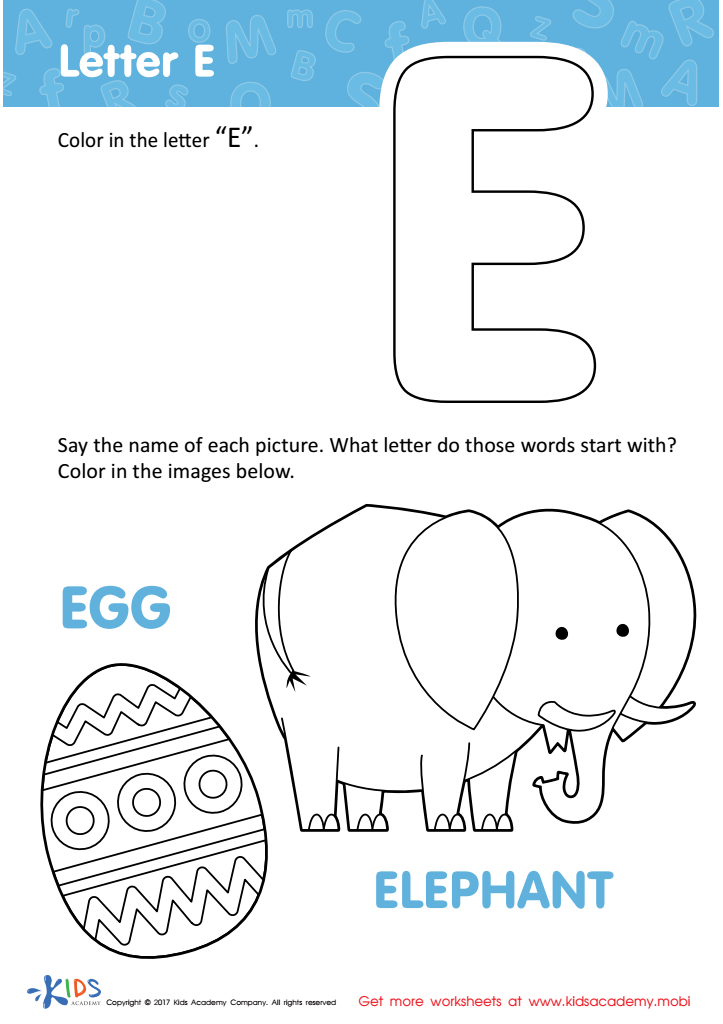
Letter E Coloring Sheet
Coloring pages are great for teaching kids the alphabet and words! This "E" page features a cute elephant and Easter egg. Kids will love it and learn the letter "E" at the same time. 80 words
Download (PDF)
 Assign to My Students
Assign to My Students
Letter E Coloring Sheet
Worksheet
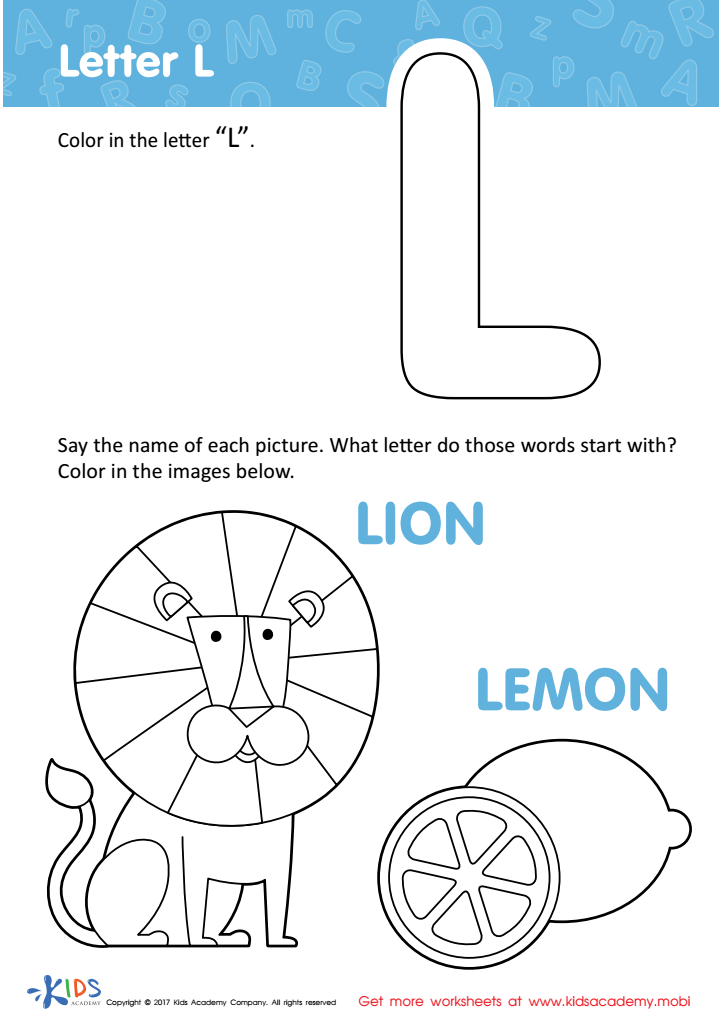
Letter L Coloring Sheet
Kids often struggle to say "L" and love it because so many things they love start with it! This coloring page combines the letter and fun images like a lemon and lion to teach and entertain!
Download (PDF)
Assign to My Students
Assign to My Students
Letter L Coloring Sheet
Worksheet
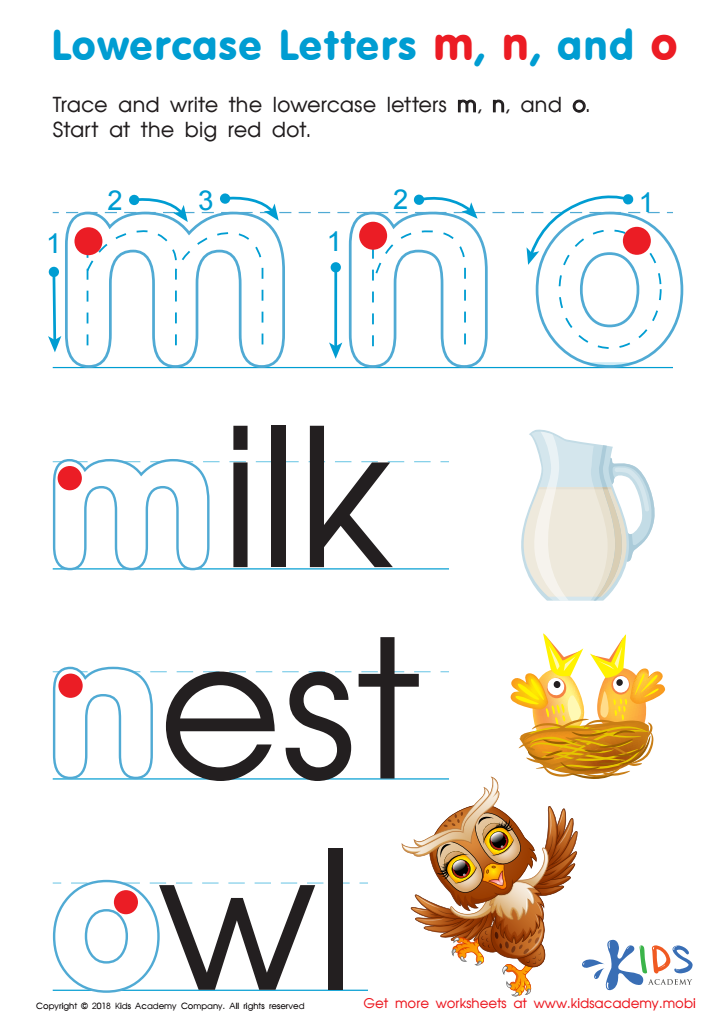
Lowercase Letters m n o Worksheet
Help your child learn the alphabet with letter tracing. Show them the difference between uppercase and lowercase letters by working through this free worksheet, tracing and writing lowercase m, n and o.
Lowercase Letters m n o Worksheet
Worksheet
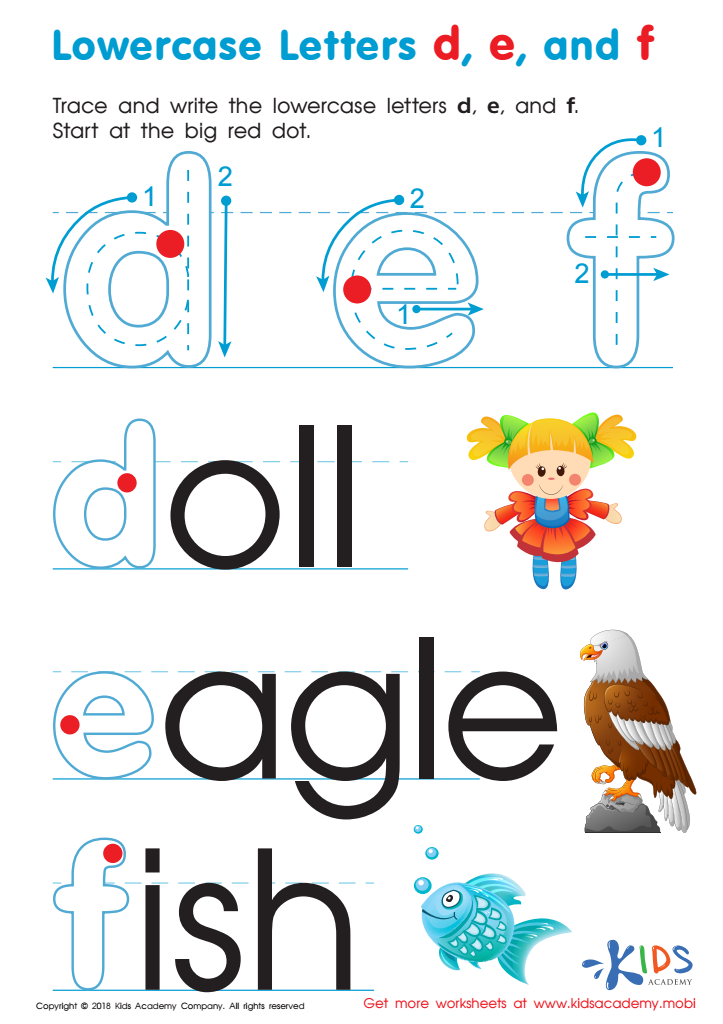
Lowercase Letters d e f Worksheet
Help your child learn the alphabet letters by tracing and writing the lowercase letters d, e, and f. Begin at the big red dot and follow the dots. This worksheet will help your little one gain a better understanding of the letters.
Lowercase Letters d e f Worksheet
Worksheet
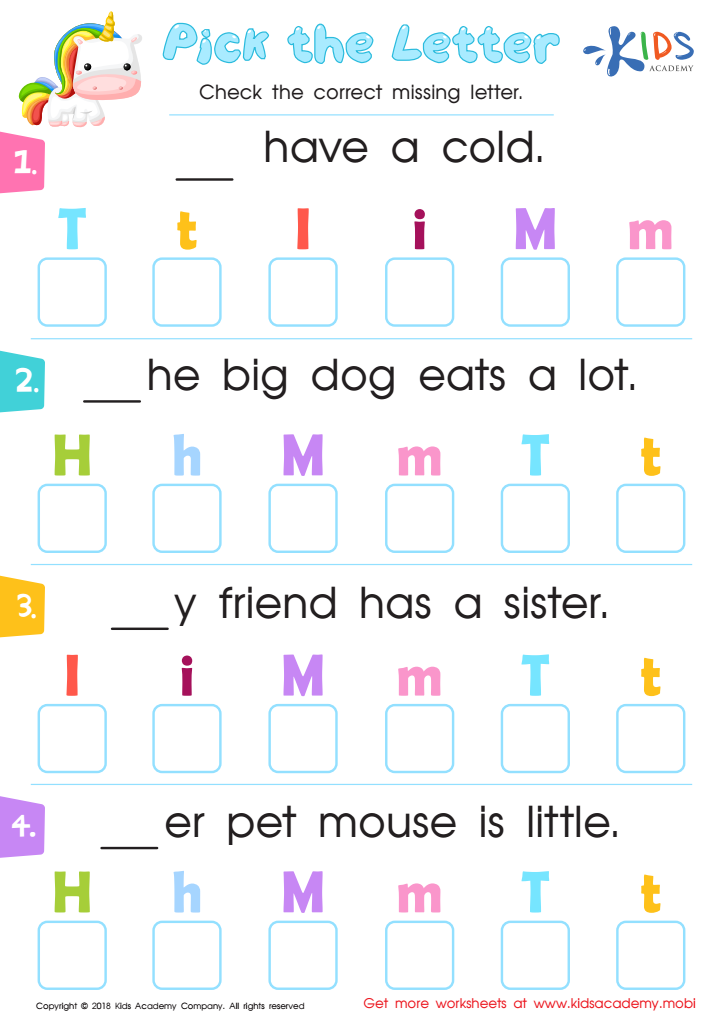
Pick the Letter Worksheet
Put your child's capitalization and reading skills to the test with this missing letter worksheet! Have them look at each sentence, note the blank and review the letters below. Find the uppercase letter that should start each sentence and check the boxes to complete. Fun and colorful, this worksheet is sure to keep your child engaged!
Pick the Letter Worksheet
Worksheet
Join Kids Academy for Free
Who is primarily going to use this learning content?








Letter-sound association and letter recognition are foundational skills in early literacy development, particularly for children aged 5-6. Understanding the relationship between letters and their corresponding sounds is crucial for reading and writing proficiency. This association helps children decode words, facilitating their transition from learning to read to reading to learn.
For parents and teachers, fostering these skills creates a strong base for future academic success. When children can recognize letters and associate them with sounds, they develop the confidence needed to tackle more complex reading materials in later grades. This cognitive groundwork not only supports literacy skills but also enhances vocabulary, comprehension, and overall communication abilities.
Moreover, recognizing letters can enhance children's engagement with books and texts, making reading a more enjoyable experience. Early encouragement in letter-sound associations also assists in the development of oral skills, helping children articulate their thoughts more clearly.
Investing time in these foundational skills can significantly influence a child’s educational journey, instilling a love of reading and learning. For parents and educators, prioritizing letter recognition and association sets children on a path toward academic achievement and lifelong learning.
In fostering these early literacy skills, adults play a crucial role in nurturing confident and capable readers.








