Handwriting practice Normal Letter Sounds Worksheets for Ages 5-6
4 filtered results
-
From - To
Improve your child’s handwriting and phonetic skills with our Handwriting Practice Normal Letter Sounds Worksheets designed for ages 5-6. These engaging worksheets from Kids Academy feature lively illustrations and an easy-to-follow format, making learning fun and effective. Your child will practice writing normal letter sounds while reinforcing their recognition through repetition. Perfect for young learners, these worksheets help kids develop fine motor skills, increase their confidence in writing, and build a strong foundation for reading. Set your child on the path to literacy success with our expertly crafted handwriting practice worksheets.
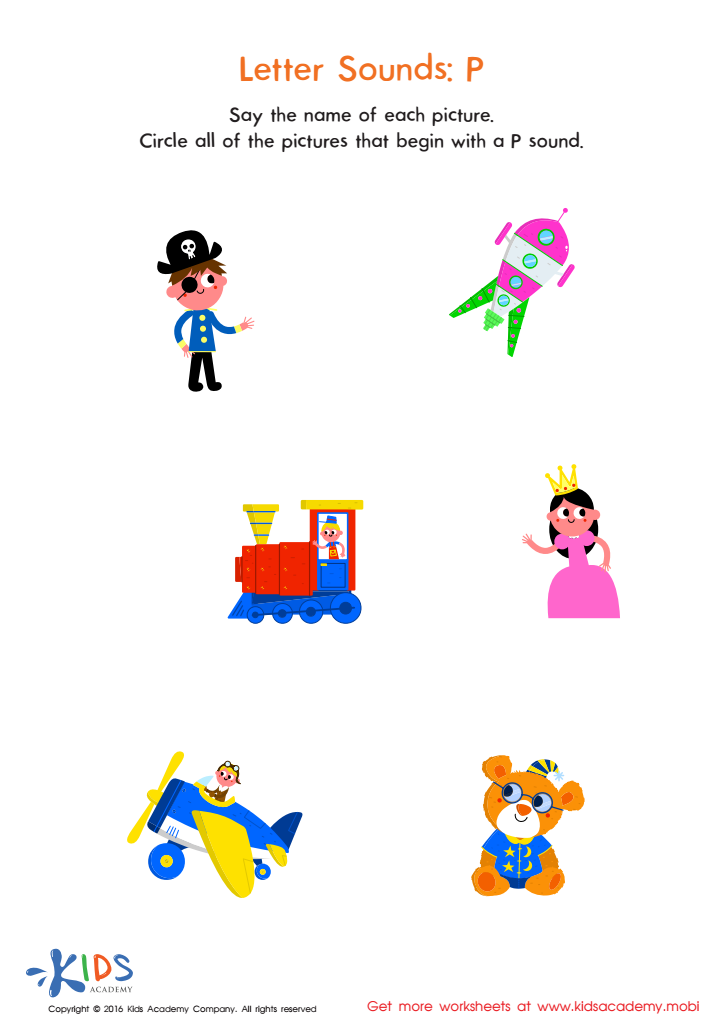
Letter P Sound Worksheet
 Assign to My Students
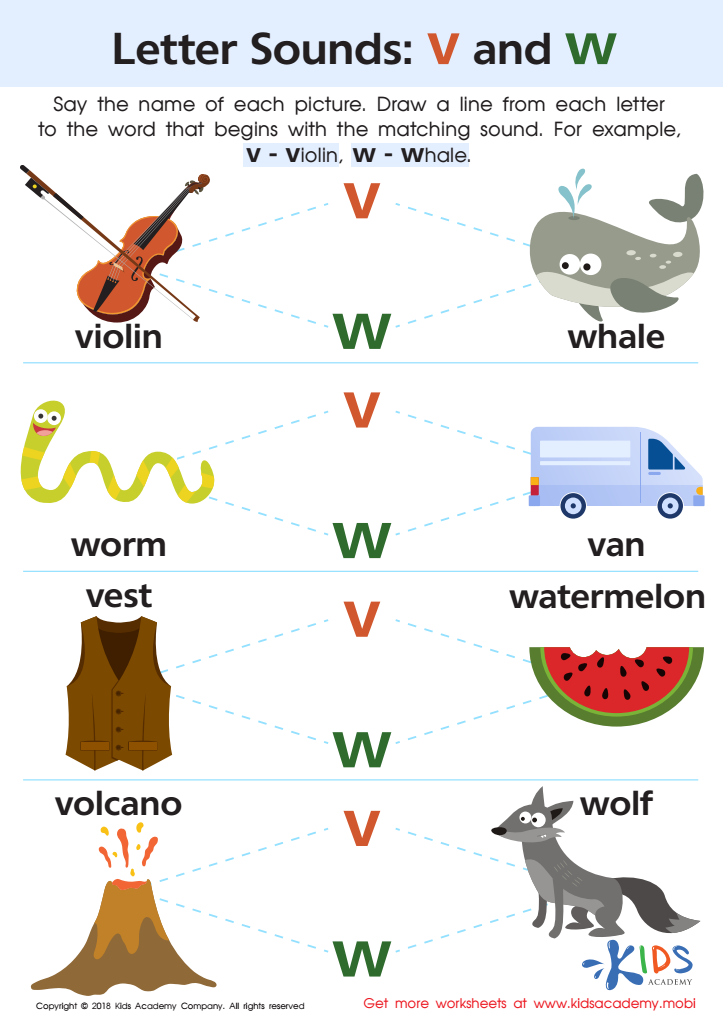
Letter V and W Sounds Worksheet
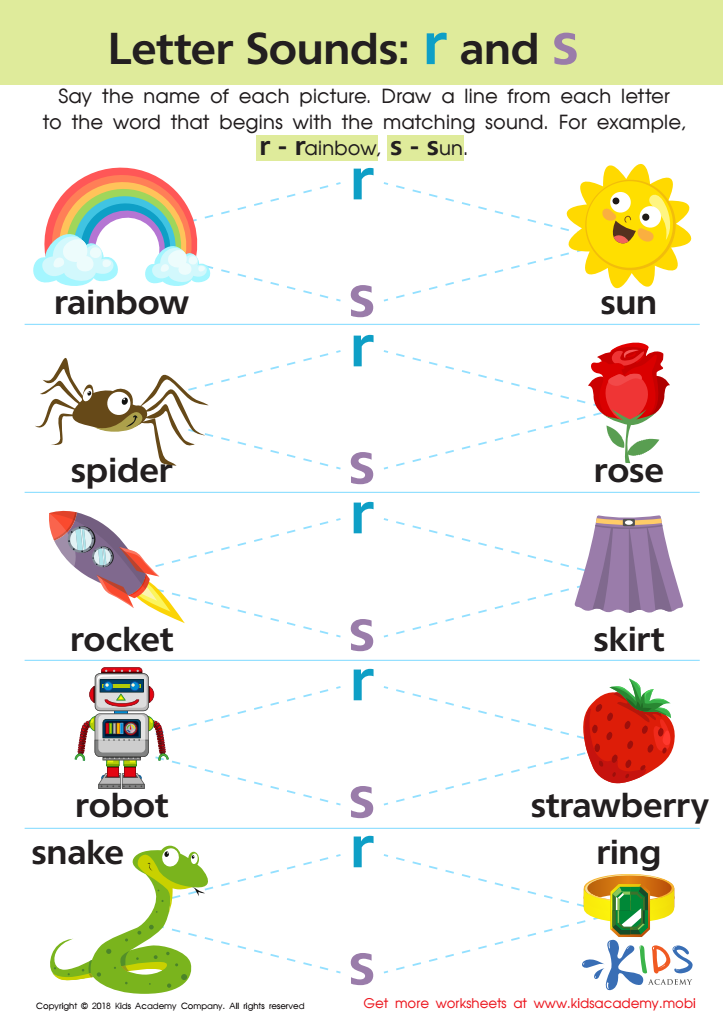
Letter R and S Sounds Worksheet
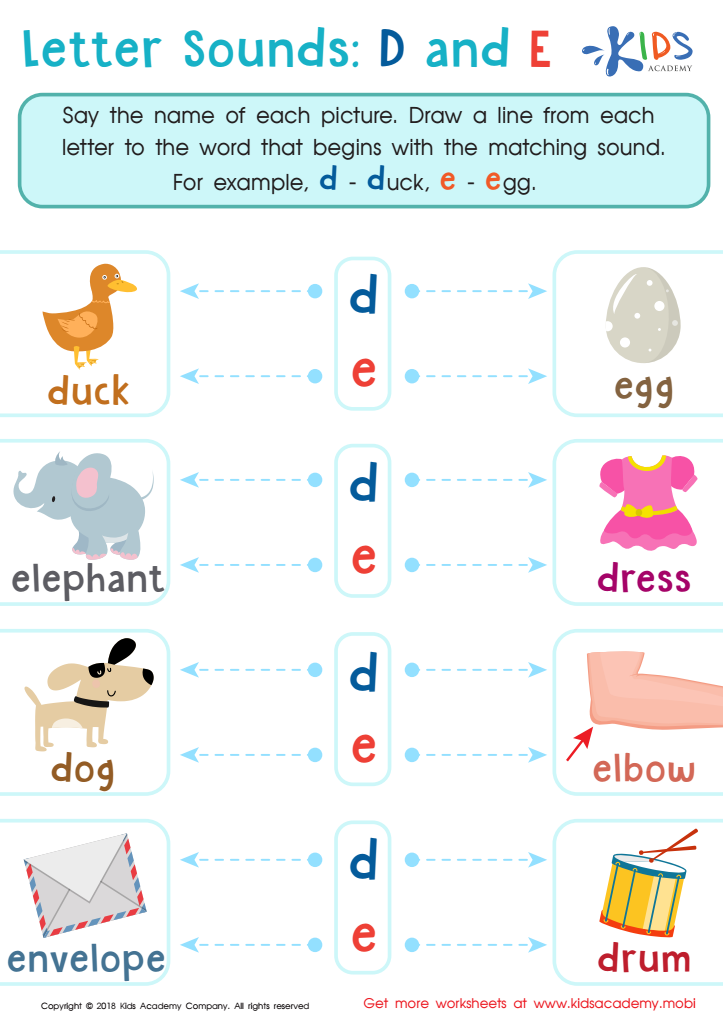
Letter D and E Sounds Worksheet








Handwriting practice and understanding normal letter sounds for children aged 5-6 are fundamental to their literacy development. At this age, children are in a critical period for acquiring essential skills that will support their academic success and lifelong learning.
Handwriting practice helps young learners develop fine motor skills, which are necessary for not only writing but also for other tasks requiring hand-eye coordination. Consistent practice improves pencil grip, control, and the formation of letters, making the writing process more fluent and automatic, which later allows children to focus on higher-level writing components like spelling and content.
Understanding normal letter sounds is crucial for word recognition and phonics, a method that teaches reading by correlating sounds with letters or groups of letters. When children grasp the phonetic basics, they can decode new words, enhancing reading ability, comprehension, and confidence. This connection between print and sound is vital for spelling, reading skills, and ultimately communication.
For parents and teachers, prioritizing these foundational skills supports a child’s academic journey, fosters a positive attitude towards learning, and enables children to engage more effectively and independently with their world. Early success in handwriting and phonics often translates to greater academic achievements, making it an indispensable component of early education curriculum.






