Fine Motor Skills Normal Phonics Worksheets for Ages 5-6
5 filtered results
-
From - To
Enhance your child's fine motor skills and phonetic awareness with our carefully crafted worksheets designed for ages 5-6. These Normal Phonics Worksheets merge engaging activities with critical learning, promoting the development of small muscle movements required for writing. Through interactive exercises and fun challenges, children improve their hand-eye coordination and fine motor control while mastering alphabet sounds, blending, and word formation. Ideal for early learners, these worksheets provide a solid foundation in literacy and are perfect for use at home or in the classroom. Help your child excel in reading and writing with our expertly designed phonics resources.
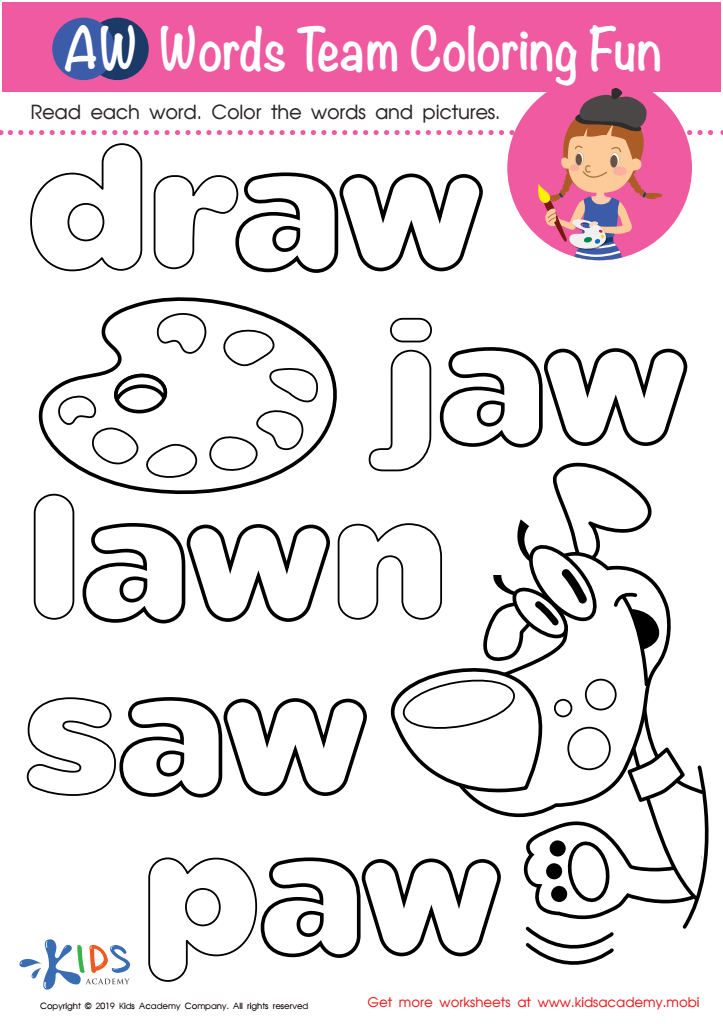
AW Words Team Coloring Fun Worksheet
 Assign to My Students

Long and Short U Worksheet
Assign to My Students
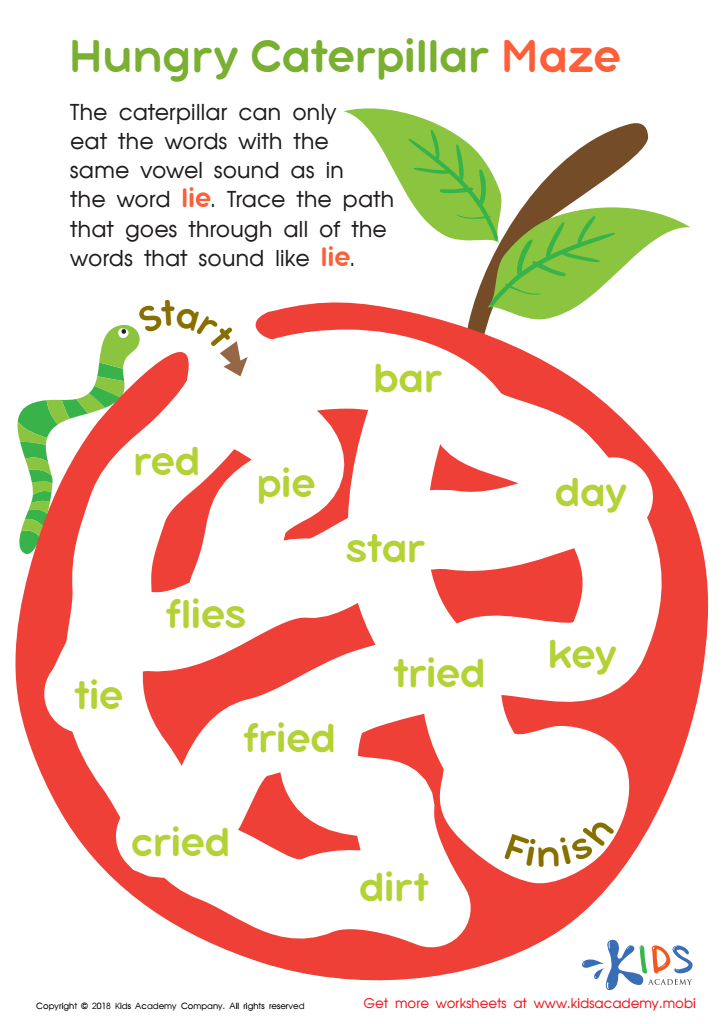
Hungry Caterpillar Maze Worksheet
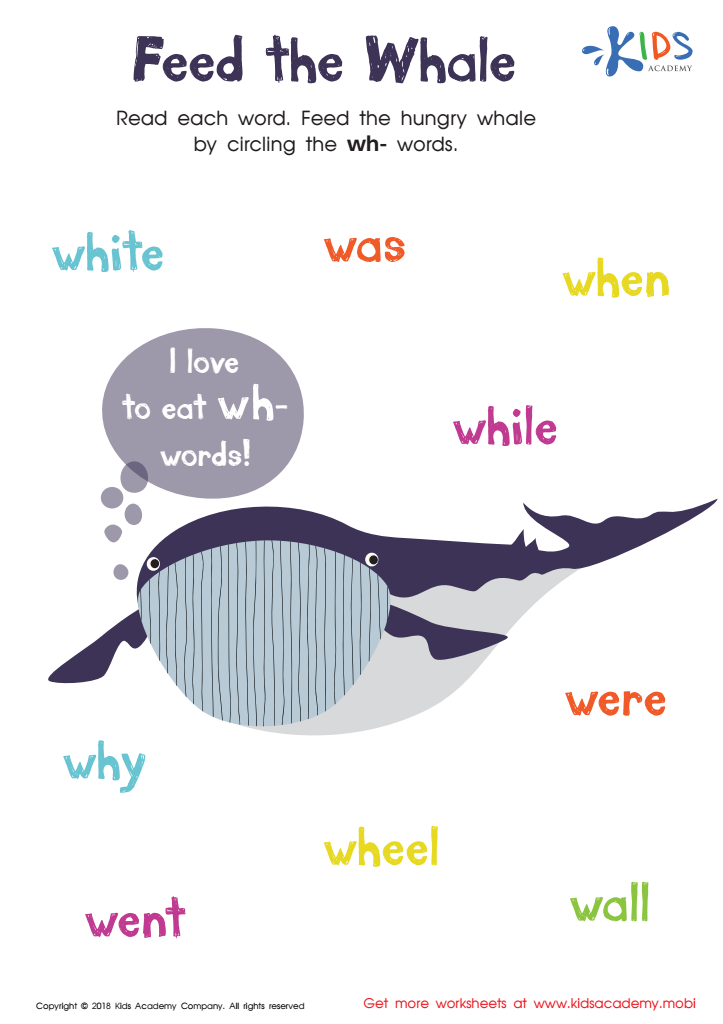
Feed the Whale Worksheet
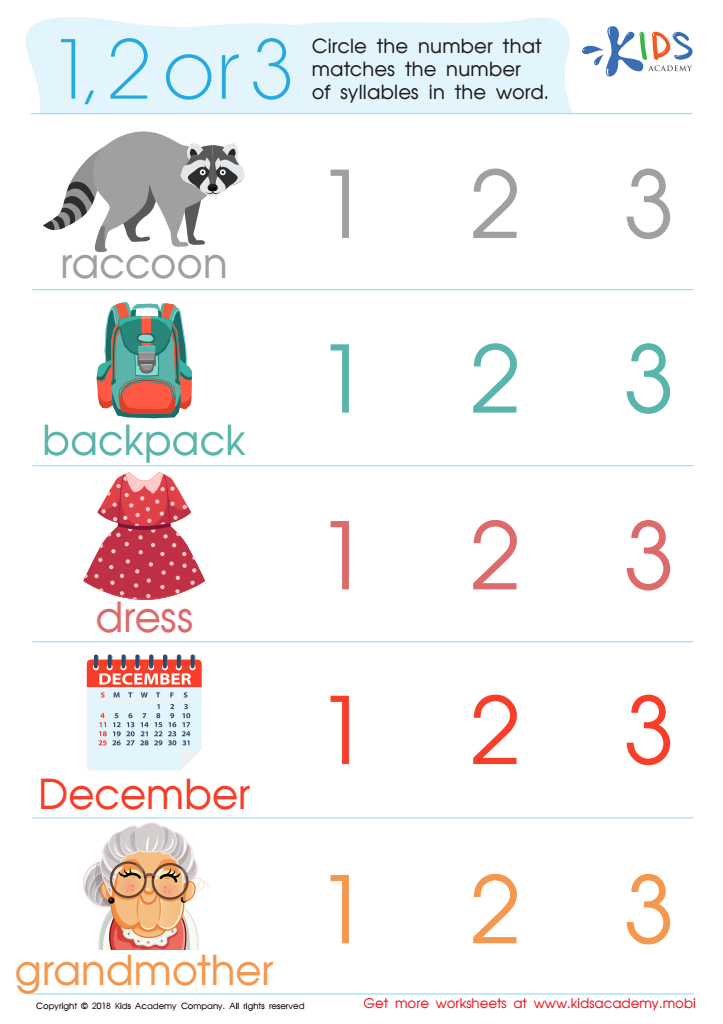
1, 2 or 3? Worksheet








Fine motor skills and phonics are fundamental building blocks for young children, especially between the ages of 5-6. For parents and teachers, understanding the importance of these skills is crucial for ensuring the children’s overall development and academic success.
Fine motor skills involve the coordination of small muscles in the hands and fingers, critical for tasks such as writing, buttoning clothes, and tying shoes. For 5-6-year-olds, developing these skills enhances their hand-eye coordination and dexterity, helping them perform daily activities with greater ease and independence. Practice with activities like cutting with scissors, drawing, and playing with building blocks not only refines these skills but also prepares them for more complex tasks in the future, like typing and keyboard use.
Phonics, on the other hand, is the foundation for reading and writing. Normal phonics development at this age means that children learn the relationships between letters and sounds, allowing them to decode new words, improve their reading fluency, and build a stronger vocabulary. A solid grasp of phonics sets the stage for better comprehension skills and a lifelong love of reading.
Caring about these developmental areas ensures children have a balanced and robust educational experience. It prepares them not merely for immediate academic tasks but sets them on a path of continued learning and success throughout their schooling years.







