
Phonics development Normal Phonics Worksheets for Ages 5-6
3 filtered results
Difficulty Level
Grade
Age
-
From - To
Subject
Activity
Standards
Boost your child's reading skills with our "Phonics Development Normal Phonics Worksheets for Ages 5-6." These engaging worksheets are designed to make phonics learning fun and effective. Aligned with learning standards, each sheet focuses on fundamental skills such as alphabet recognition, letter sounds, and word formation. Perfect for young learners, our worksheets incorporate vibrant visuals and interactive exercises to keep kids interested while enhancing their phonemic awareness and reading capabilities. Give your child the tools they need to succeed in early literacy with our expertly crafted phonics worksheets, ideal for home or classroom use.
Favorites
With answer key
Interactive
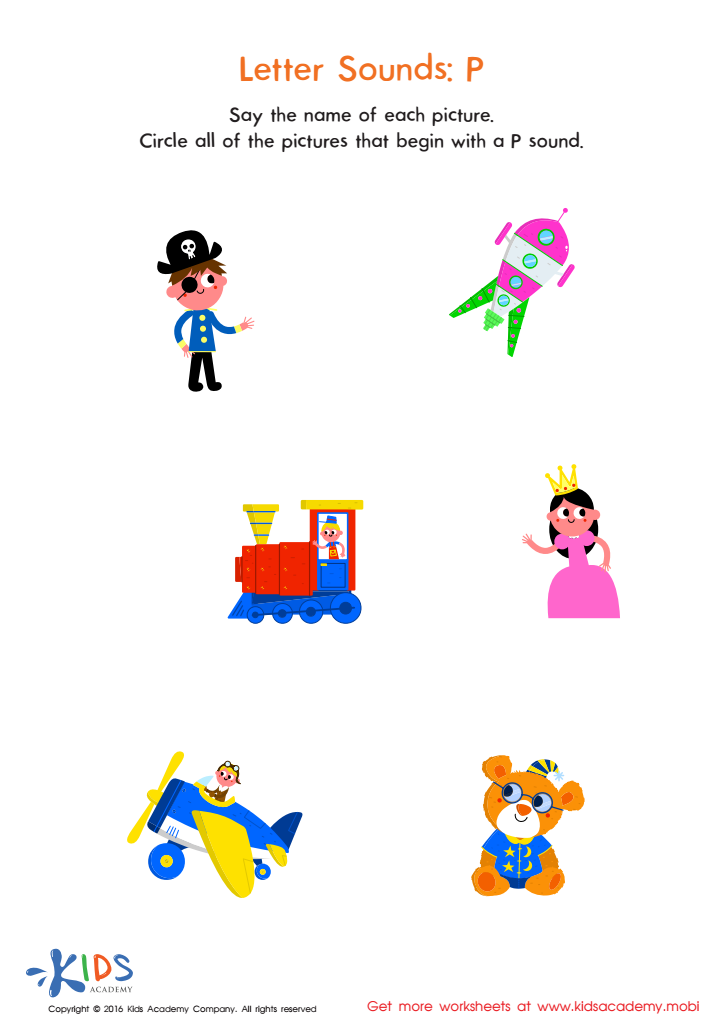
Letter P Sound Worksheet
Think P! Kids practice phonics with this fun letter P worksheet. With delightful illustrations, they'll sound out simple words and get closer to reading.
 Assign to My Students
Letter P Sound Worksheet
Worksheet
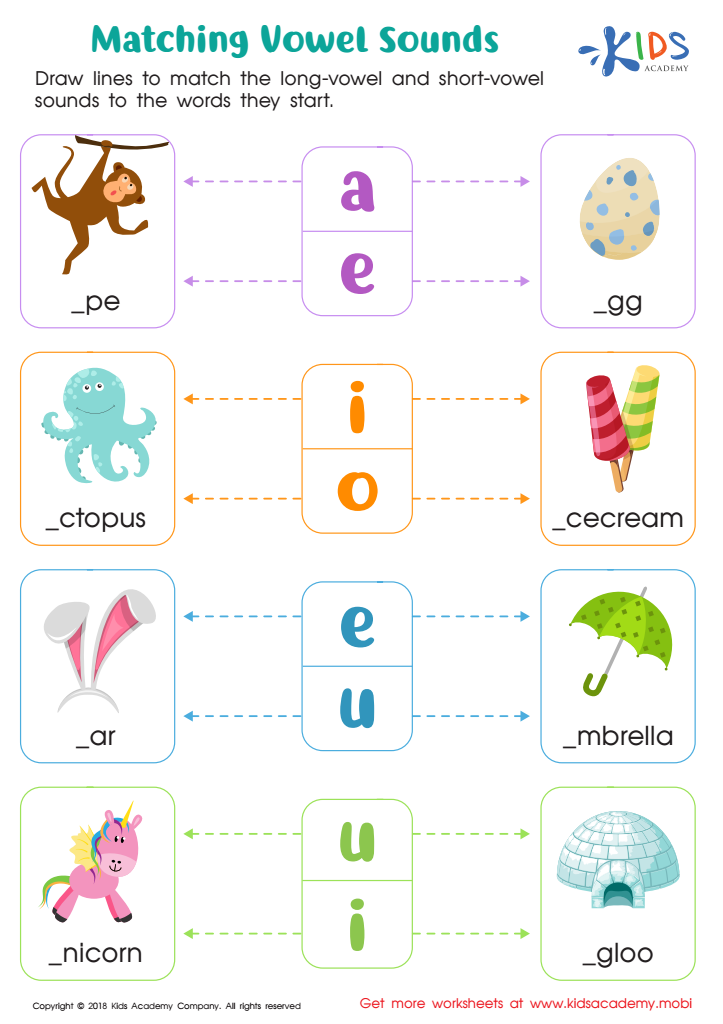
Matching Vowel Sounds Worksheet
Teach your child phonics with a fun worksheet! Ask your child to name a vowel sound and listen if it's long or short. Differentiating between long and short vowel sounds can be tricky, but this matching worksheet makes it easy for kids to understand. Have fun and master phonics - the worksheet will help them understand the difference between long and short vowel sounds!
Matching Vowel Sounds Worksheet
Worksheet
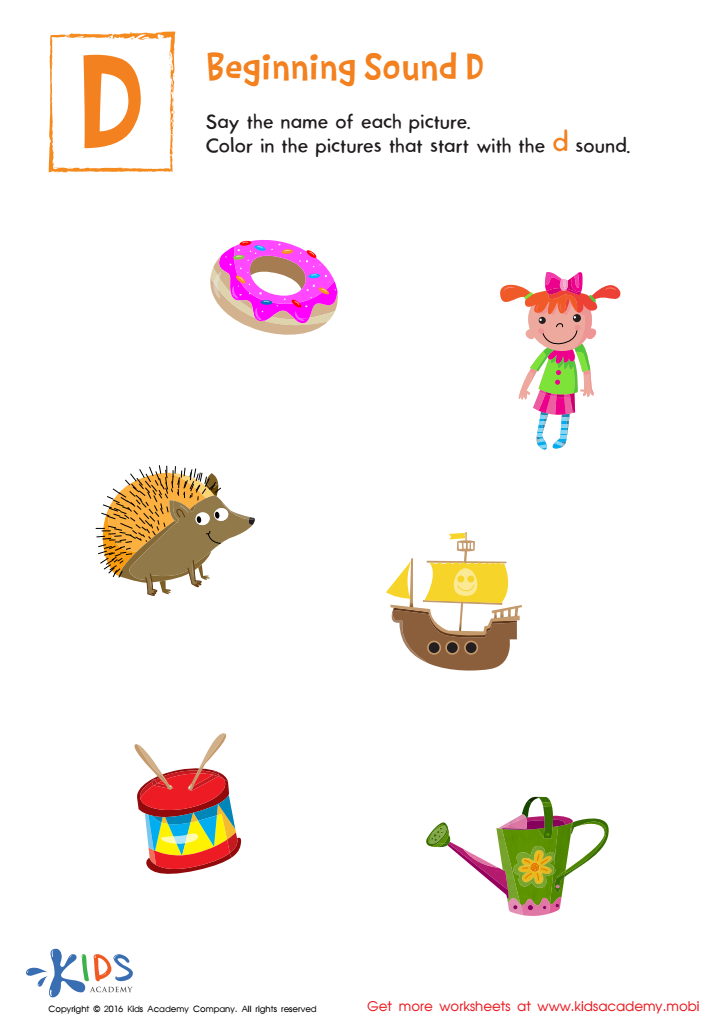
Beginning Sound D Worksheet
Reinforce phonics with this vibrant beginning sound d worksheet! Pictures help kids identify words beginning with 'd' and develop early reading skills. Sounding out each word increases literacy!
Beginning Sound D Worksheet
Worksheet
Join Kids Academy for Free
Who is primarily going to use this learning content?








Phonics development is essential for children aged 5-6 as it lays the foundation for successful reading and writing. Phonics refers to the relationship between sounds and their corresponding letters or groups of letters in a language. At this critical age, children are typically beginning their formal education and are at a developmental stage where they are receptive to learning these key skills.
For parents and teachers, focusing on phonics is crucial because strong phonics skills lead to improved literacy outcomes. Children who understand the relationship between sounds and letters can decode new words more easily, which boosts their reading confidence and fluency. Fluency, in turn, allows them to focus on comprehension, rather than getting stuck on individual words.
In addition to reading, a solid grasp of phonics aids in spelling and writing. When children understand how letters and sounds correspond, they can better encode words for writing. This skill set, cultivated early, makes learning more complex literacy skills in later grades much smoother.
Moreover, early phonics instruction can prevent reading difficulties. Since reading is the cornerstone of most learning, early intervention ensures that children develop a positive attitude toward education and cultivate a lifelong love for reading. Neglecting phonics at this stage can lead to gaps that may hinder academic success and confidence later on.







