Spelling practice Normal Phonics Worksheets for Ages 5-6 - Page 2
27 filtered results
-
From - To
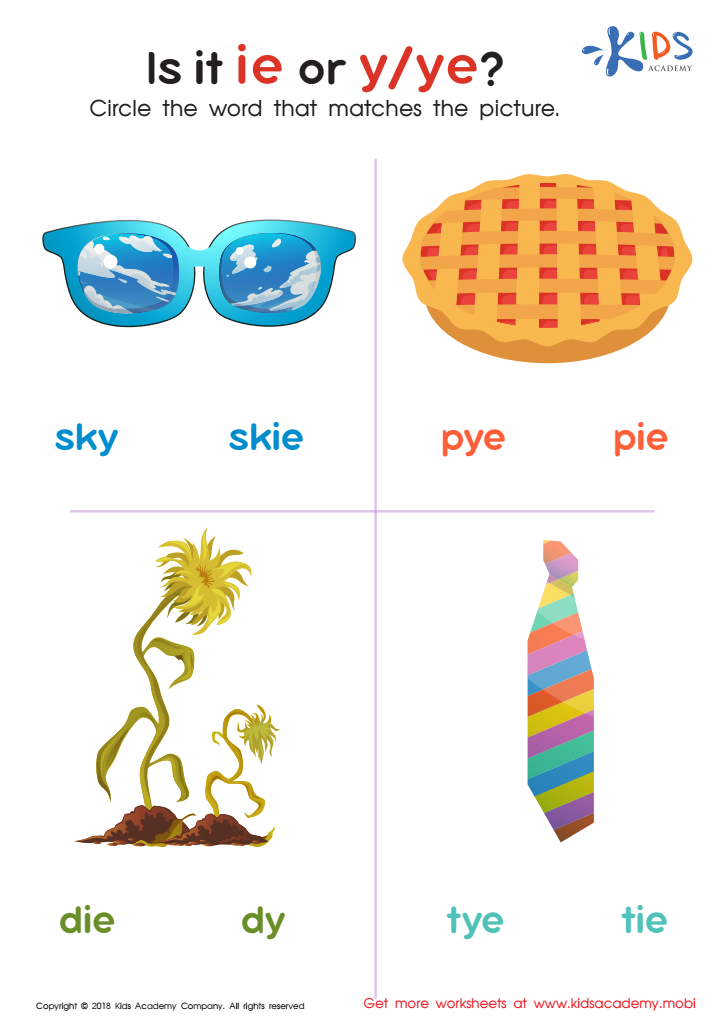
Is It IE or Y/Ye? Worksheet
 Assign to My Students
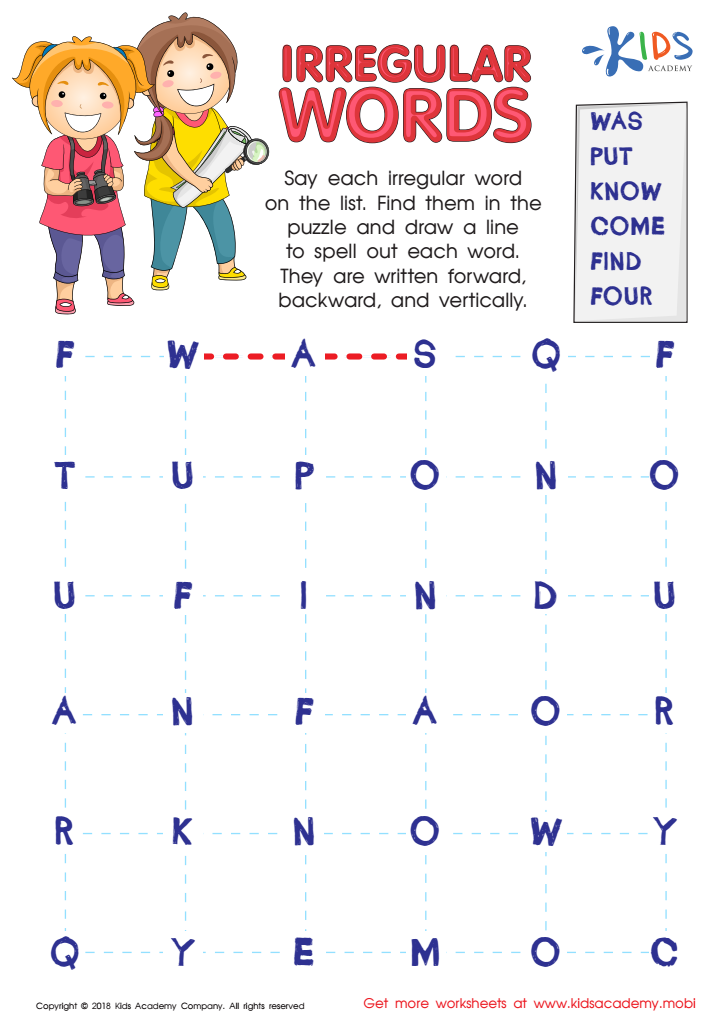
Irregular Words Worksheet
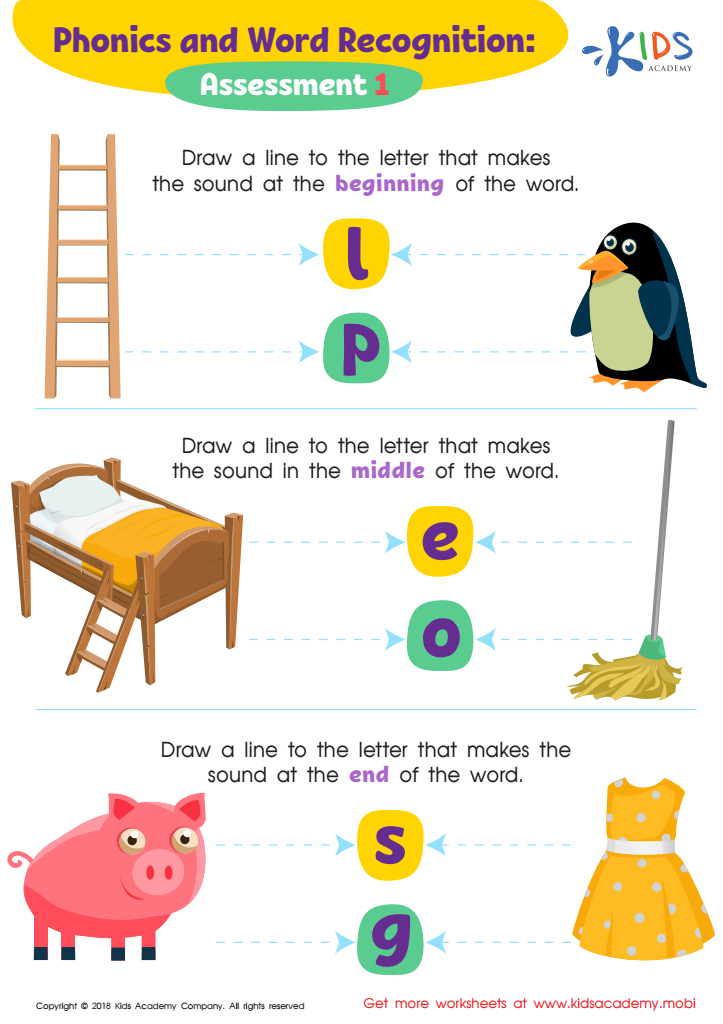
Phonics and Word Recognition: Assessment 1 ELA Worksheet








Spelling practice through techniques like Normal Phonics is crucial for children ages 5-6 as it lays the foundation for effective reading and writing skills. In early childhood, phonemic awareness is essential, as it helps children understand the relationship between sounds and letters. Normal Phonics focuses on systematic and progressive phonetic instruction, making it easier for young learners to decode and spell words accurately.
Regular spelling practice encourages cognitive development by helping children recognize patterns in language. These skills increase their vocabulary, enabling them to express themselves more clearly and confidently as they communicate thoughts and ideas. Moreover, engaging in spelling activities enhances fine motor skills through writing, further supporting overall learning.
For parents and teachers, investing in phonics-based spelling practice is integral to a child’s educational journey. It nurtures a love for reading and writing, fostering a lifelong learning attitude. Early mastery of spelling contributes to academic success, as fluency in reading and writing becomes instrumental in understanding more complex concepts in later grades. Therefore, incorporating Normal Phonics in a child's learning routine is a vital step in building strong literacy skills that will serve them throughout their academic careers and beyond.







