Rhyming skills development Normal Rhyming Worksheets for Ages 5-6
4 filtered results
-
From - To
Boost your child's rhyming skills with our engaging Normal Rhyming Worksheets designed specifically for ages 5-6. These interactive worksheets feature colorful illustrations and fun activities that make learning enjoyable and effective. By exploring various rhyming words, children will enhance their phonemic awareness, develop language skills, and improve their reading comprehension. Each worksheet encourages creativity while building confidence in language use. Ideal for both classroom settings and homeschooling environments, our comprehensive resources help young learners master the art of rhyming. Unlock your child's potential and make learning a joyful adventure with our rhyming worksheets today!
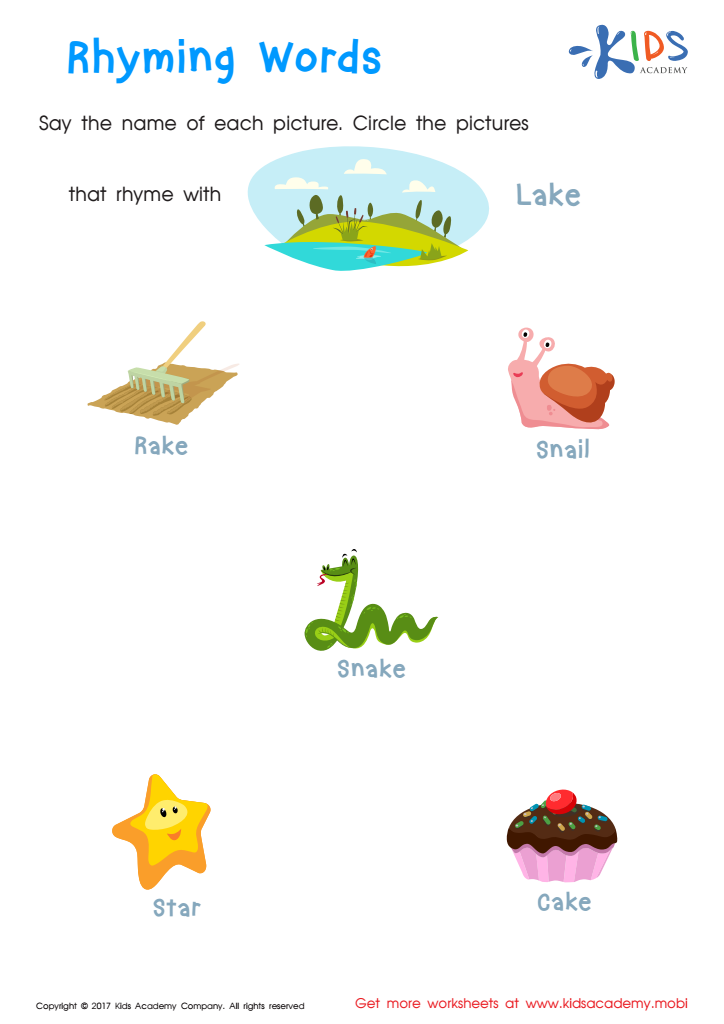
Rhyming Words Rhyming Worksheet
 Assign to My Students
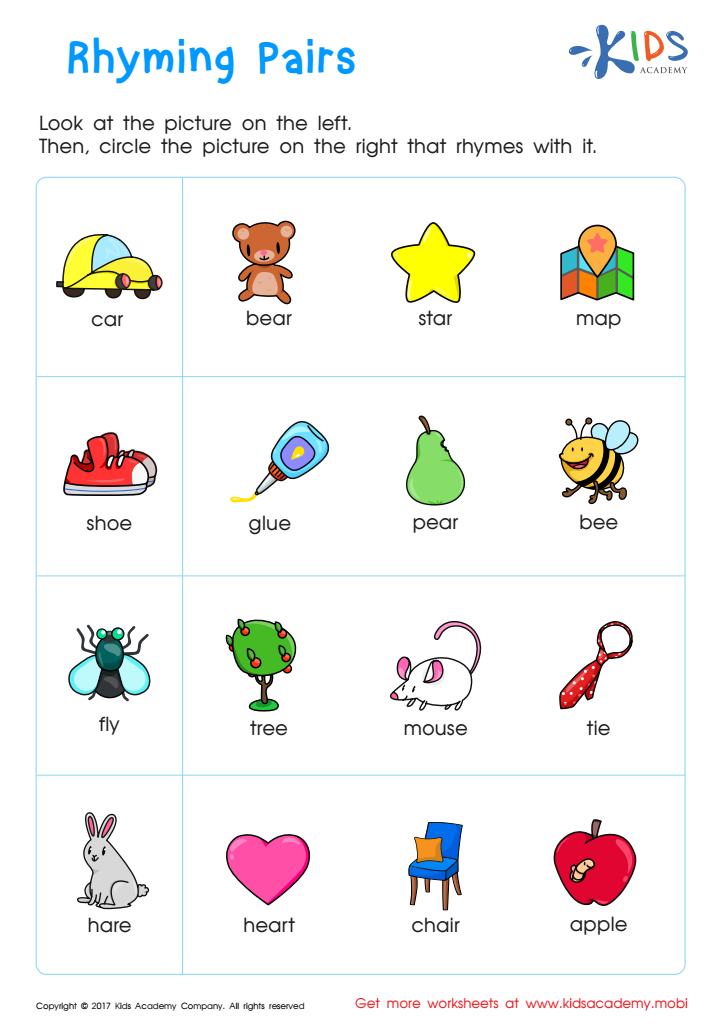
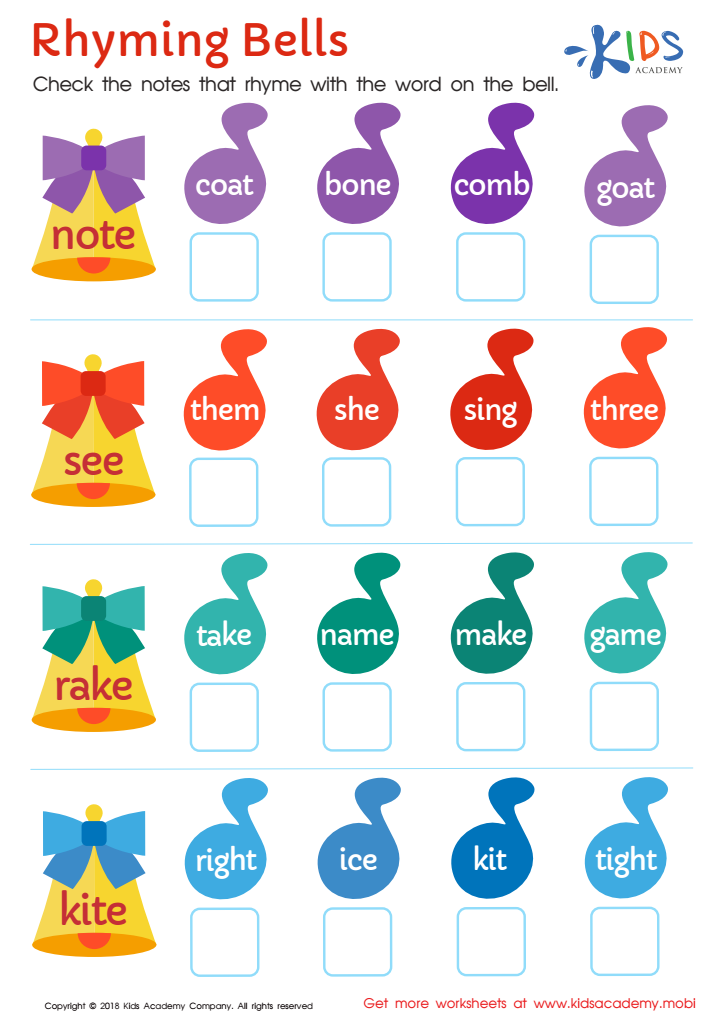
Rhyming Bells Worksheet
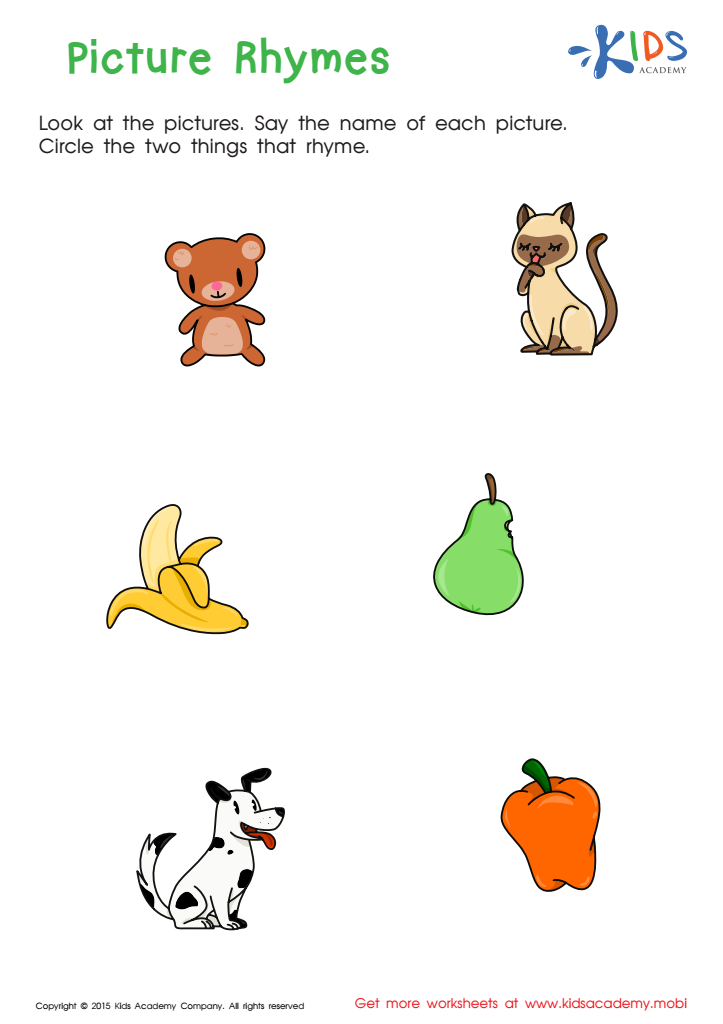
First Words: Picture Rhymes Worksheet








Rhyming skills play a crucial role in early literacy development, particularly for children aged 5-6. At this stage, the ability to recognize and produce rhymes aids in phonemic awareness, which is foundational for reading. When children engage in rhyming activities, they strengthen their understanding of sounds and syllables, making it easier to decode words later on.
Moreover, rhyming can enhance vocabulary and language skills. Through songs, nursery rhymes, and playful word games, children are exposed to new words and phrases, enriching their linguistic repertoire. These playful interactions also foster listening skills and memory retention, as children learn to anticipate sounds and match words, reinforcing their cognitive development.
Additionally, rhyming can boost confidence and motivation in literacy learning. Fun and engaging activities encompassing rhymes can inspire a love for reading and storytelling, encouraging children to experiment with language. As children learn to play with words, they develop creativity, enabling them to express themselves more freely.
In summary, prioritizing rhyming skill development for young children significantly contributes to their early literacy, vocabulary growth, cognitive skills, and overall love for reading, making it a vital focus for both parents and teachers.






