Letter formation Normal Tracing Letters Worksheets for Ages 5-6
3 filtered results
-
From - To
Discover our "Letter Formation Normal Tracing Letters Worksheets" designed specifically for children aged 5-6. These engaging worksheets provide young learners with the perfect tools to master letter formation through tracing exercises. Each worksheet focuses on both uppercase and lowercase letters, ensuring comprehensive practice for developing fine motor skills and handwriting. Our creative designs captivate children’s interest, making learning enjoyable and effective. As they trace each letter, kids build confidence in their writing abilities, providing a solid foundation for their educational journey. Ideal for both home and classroom use, these worksheets are a great resource for early literacy development. Start your tracing adventure today!
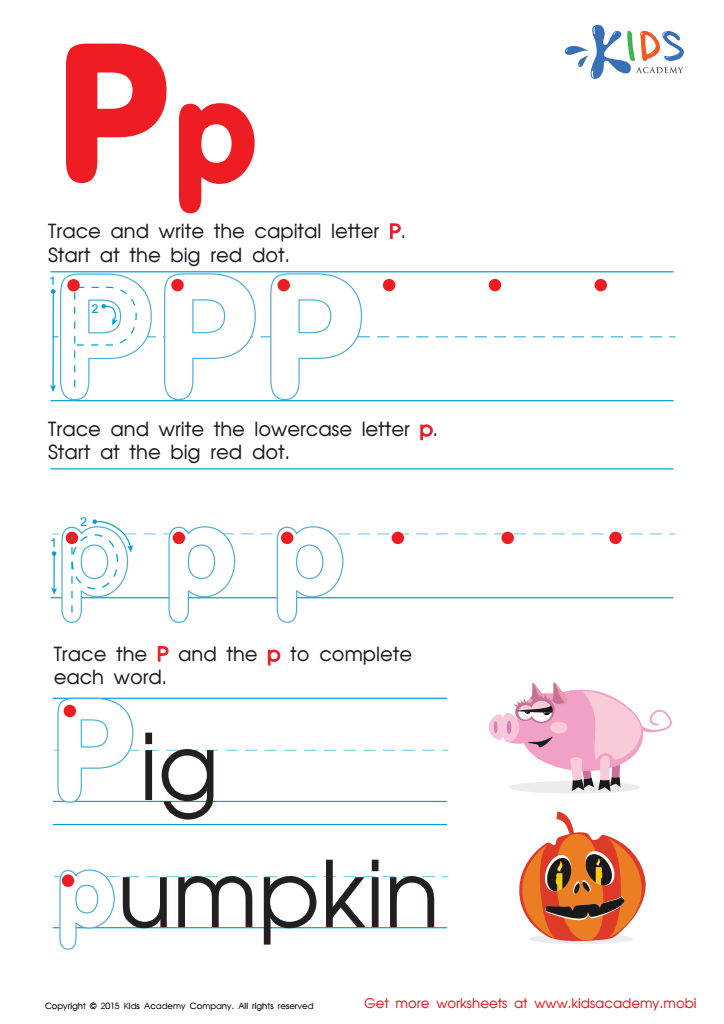
Letter P Tracing Page
 Assign to My Students
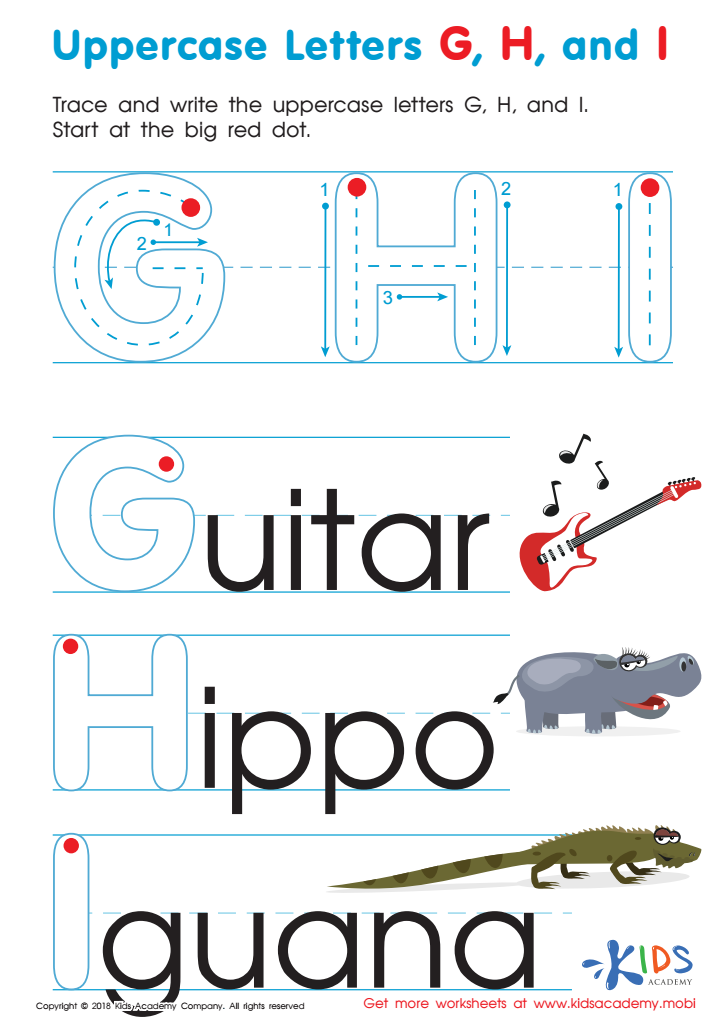
Uppercase Letters G, H, and I Worksheet
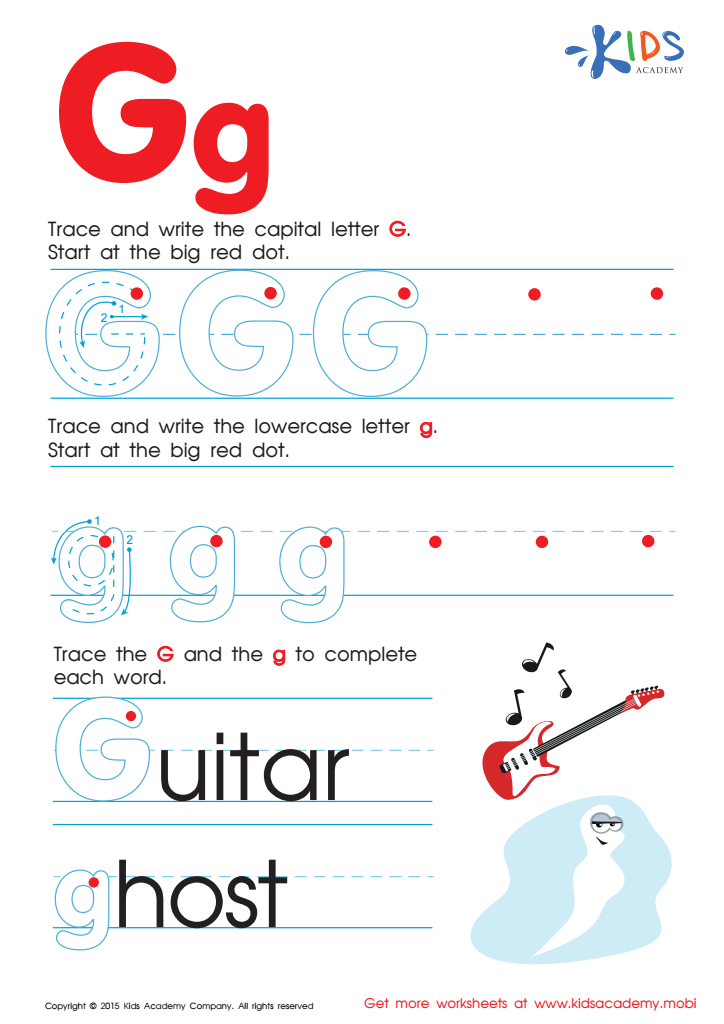
Letter G Tracing Page








Letter formation and tracing are foundational skills that play a crucial role in a child's early education. For parents and teachers of children aged 5-6, emphasizing proper letter formation is essential for several reasons.
Firstly, mastering letter formation enhances fine motor skills, which are vital for overall hand coordination and dexterity. As children learn to trace letters, they develop the muscle control needed for writing and other tasks.
Secondly, clear and consistent letter formation fosters confident reading and writing habits. Children who form letters correctly are less likely to develop bad habits that can hinder their progress later on. This helps ensure that their handwriting is legible, facilitating effective communication.
Additionally, engaging in tracing activities can be a fun and interactive way for children to familiarize themselves with letters and their shapes. It promotes phonemic awareness as they connect sounds to the written symbols, setting a strong foundation for literacy.
Finally, tracing letters often involves fine art techniques like coloring or using different materials, making learning delightful and visually stimulating. Encouraging letter formation through tracing not only aids academic growth but also builds a lifelong love for learning, making it a vital focus for both parents and educators.








