Letter Tracing Practice Normal Tracing Letters Worksheets for Ages 5-6
3 filtered results
-
From - To
Enhance your child's early literacy skills with our Letter Tracing Practice worksheets designed for ages 5-6! These engaging worksheets provide a fun and effective way for young learners to master the alphabet by tracing normal letters. Each sheet is customizable to support individual learning needs, encouraging confidence with letter formation and recognition. As children trace each letter, they'll develop fine motor skills and hand-eye coordination, essential for future writing tasks. Perfect for home or classroom use, these printable worksheets create an interactive and enjoyable learning experience while preparing children for academic success. Start your child on their literacy journey today!
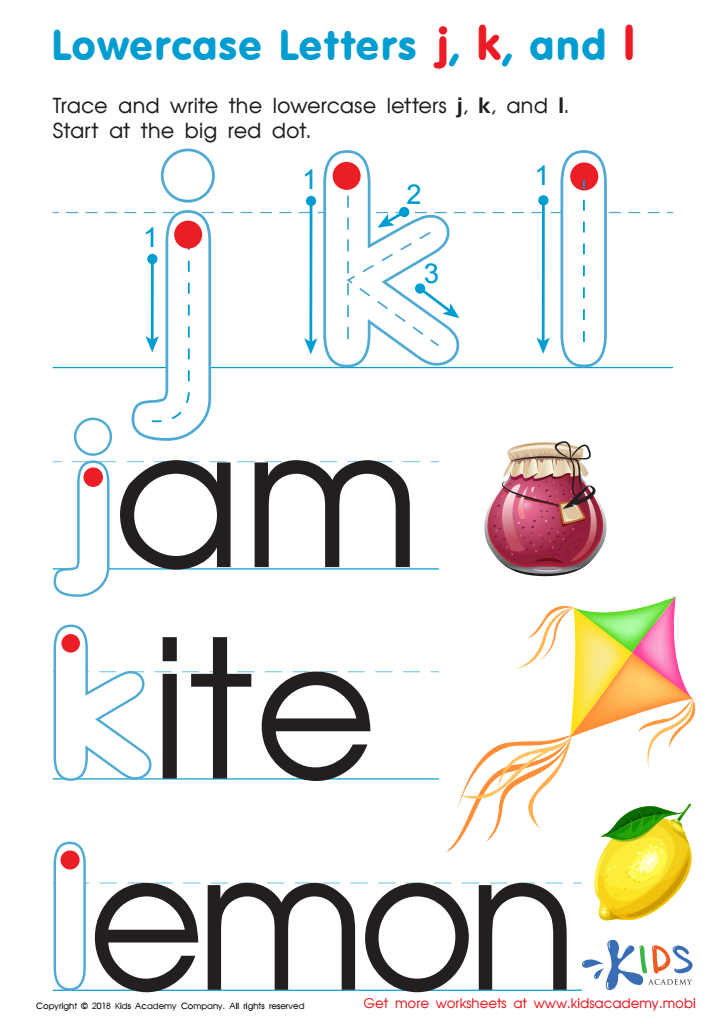
Lowercase Letters j k l Worksheet
 Assign to My Students
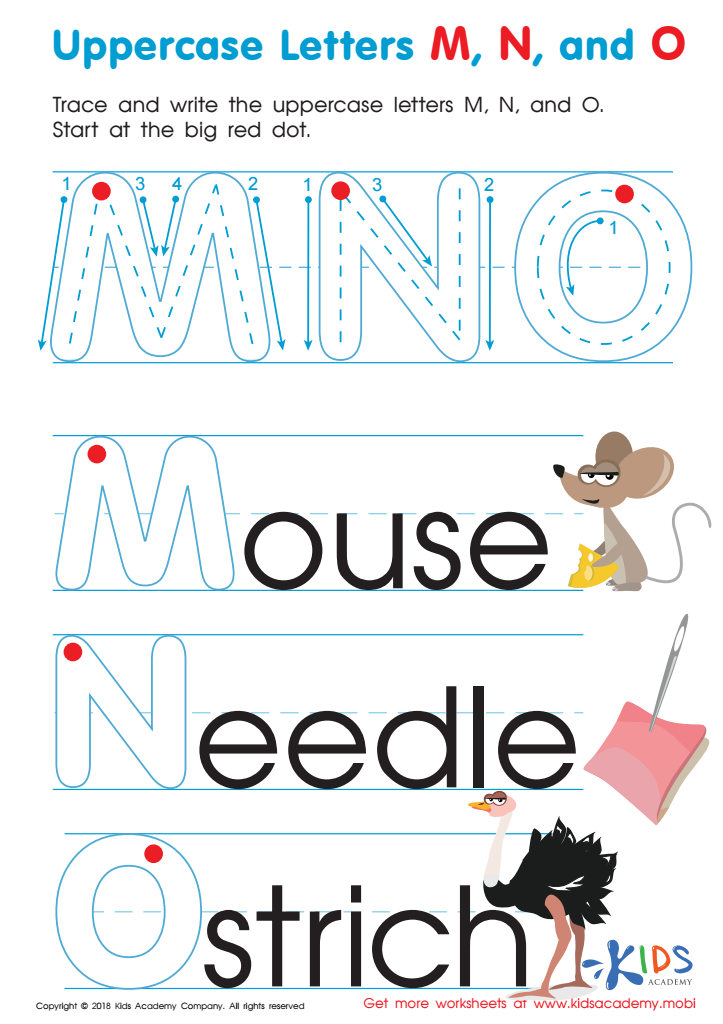
Uppercase Letters M, N, and O Worksheet
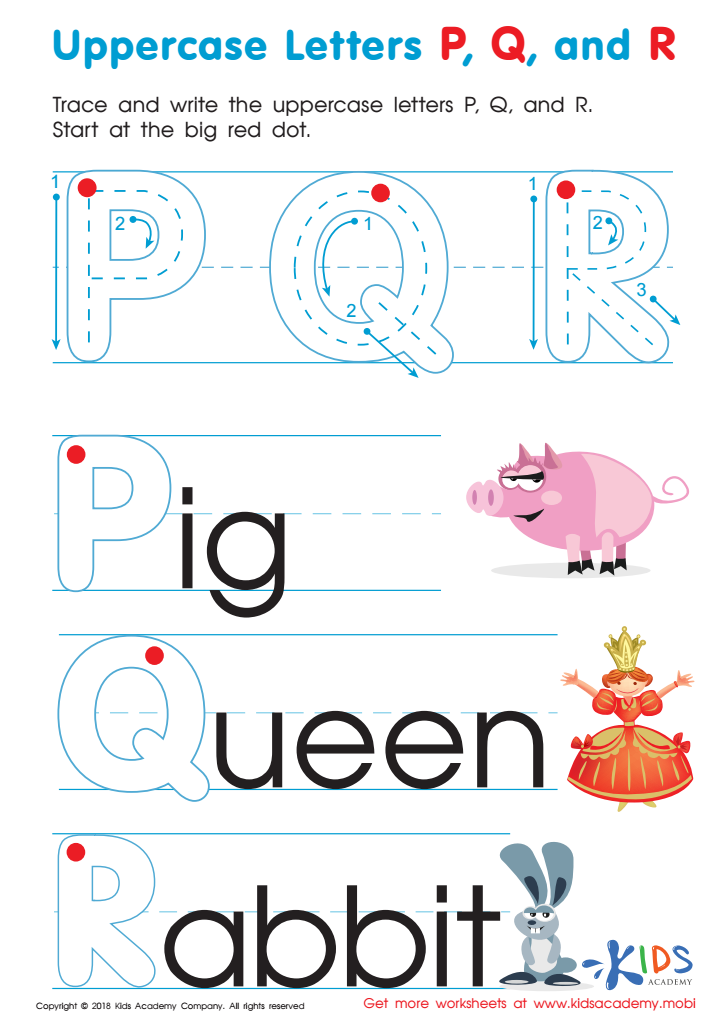
Uppercase Letters P, Q, and R Worksheet








Letter tracing practice is a crucial foundational skill for young learners aged 5-6, as it enhances their handwriting development and offers multiple cognitive benefits. First and foremost, tracing helps children understand letter formation and proper stroke order. This understanding is essential as they progress to writing independently, promoting legibility and confidence in their writing abilities.
Moreover, letter tracing engages fine motor skills, which are vital for everyday tasks beyond writing. By gripping pencils and tracing letters, children strengthen hand-eye coordination and dexterity. These improved motor skills enable them to perform other activities like cutting, drawing, and buttoning clothes more effectively.
Tracing also reinforces letter recognition and phonemic awareness, laying the groundwork for literacy development. As children trace letters, they concurrently familiarize themselves with the alphabet and its associated sounds, bridging the gap between written and spoken language.
Additionally, this practice offers a structured approach to learning while also making it enjoyable and creative. Whether through themed worksheets or interactive apps, tracing keeps children motivated and eager to learn. With parent and teacher support, letter tracing can serve as an invaluable tool in nurturing a child’s academic journey and fostering a lifelong love for writing and reading.








