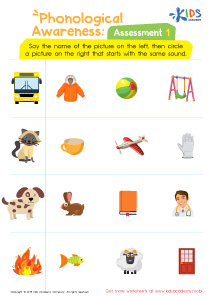
Phonics Skills Normal Two Letter Phonics Worksheets for Ages 5-6
4 filtered results
Difficulty Level
Grade
Age
-
From - To
Subject
Activity
Standards
Enhance your child's reading journey with our Phonics Skills Normal Two Letter Phonics Worksheets designed for ages 5-6. These engaging, printable worksheets focus on building essential phonics skills through two-letter combinations, laying a strong foundation for reading fluency. Each activity is crafted to develop recognition and pronunciation of letter pairs, helping young learners blend sounds effortlessly. Perfect for kindergarteners, these worksheets are a valuable resource for both classroom teaching and home practice. Foster literacy confidence and make learning enjoyable with our expertly designed phonics worksheets. Help your child master phonics through fun, interactive exercises today!
Favorites
With answer key
Interactive
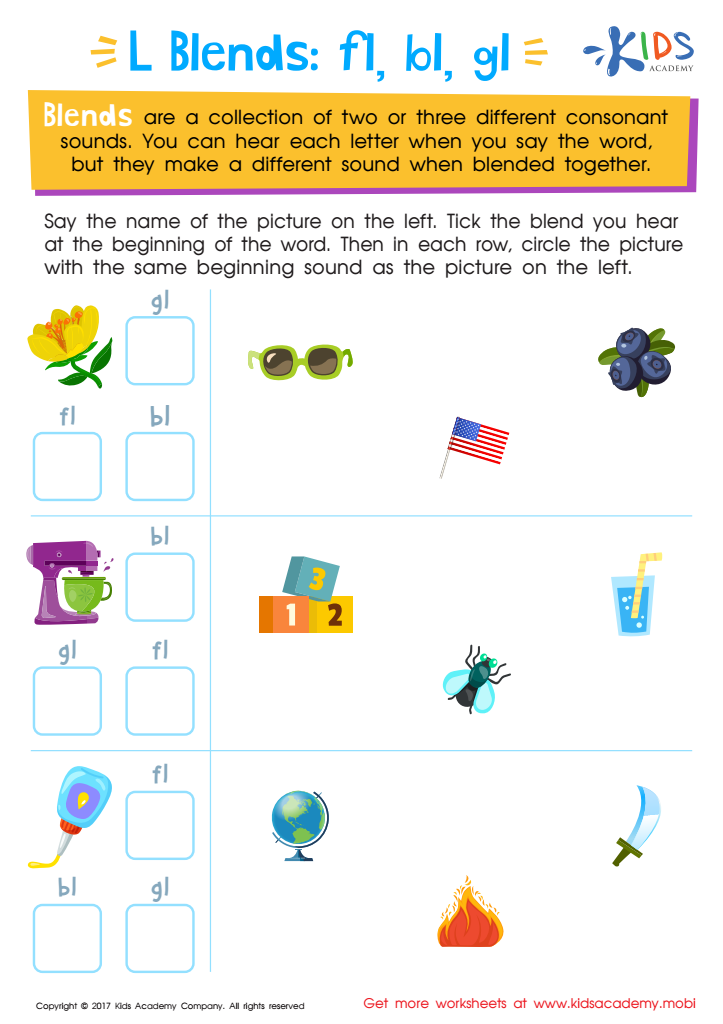
Blending Consonants: "Fl", "Bl" and "Gl" Printable
Help your child master consonant blends Fl, Bl, and Gl with this printable worksheet. Find words associated with the pictures and learn to better understand the difference between consonant blends. Vibrant images motivate and aid in learning. Download now for improved phonics success!
 Assign to My Students
Blending Consonants: "Fl", "Bl" and "Gl" Printable
Worksheet
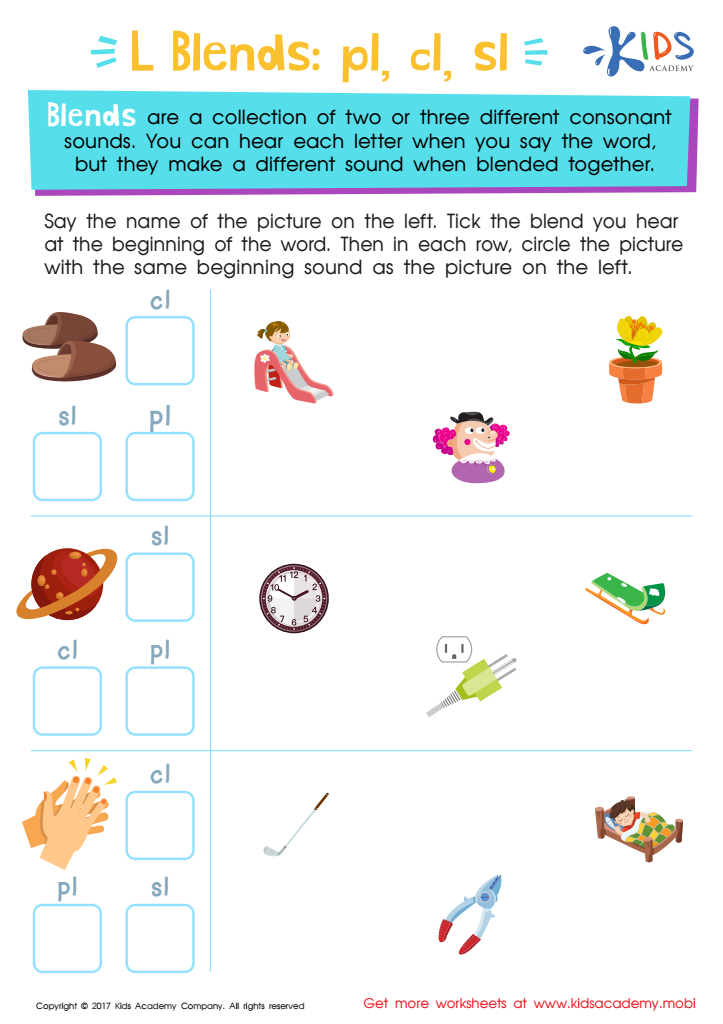
L Blends: "Pl", "Cl" and "Sl" Printable
This printable worksheet will help your child recognize and identify the Pl, Cl, and Sl consonant blends, sound them out, and identify them in print. Improve your child's reading and writing skills with fun and colorful phonics practice!
L Blends: "Pl", "Cl" and "Sl" Printable
Worksheet
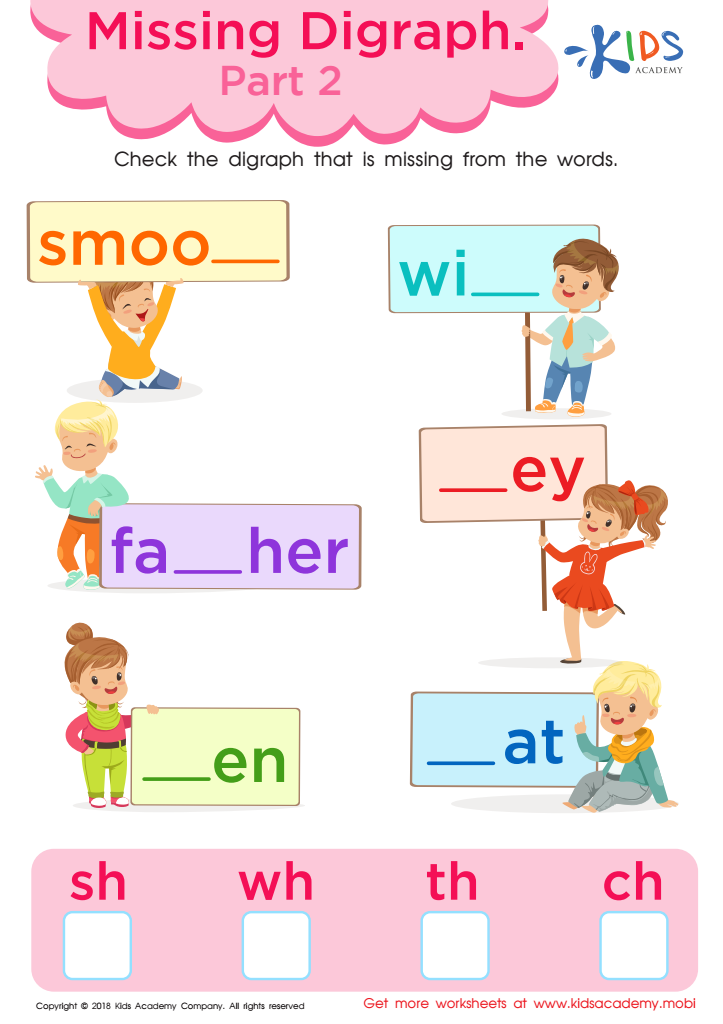
Missing Digraph: Part 2 Worksheet
Practice the "th" digraph with this fun worksheet from Kids Academy! See how it appears at the beginning, middle, or end of words and help learners fill in the blanks. Check if they got it right by finding the th digraph at the bottom!
Missing Digraph: Part 2 Worksheet
Worksheet
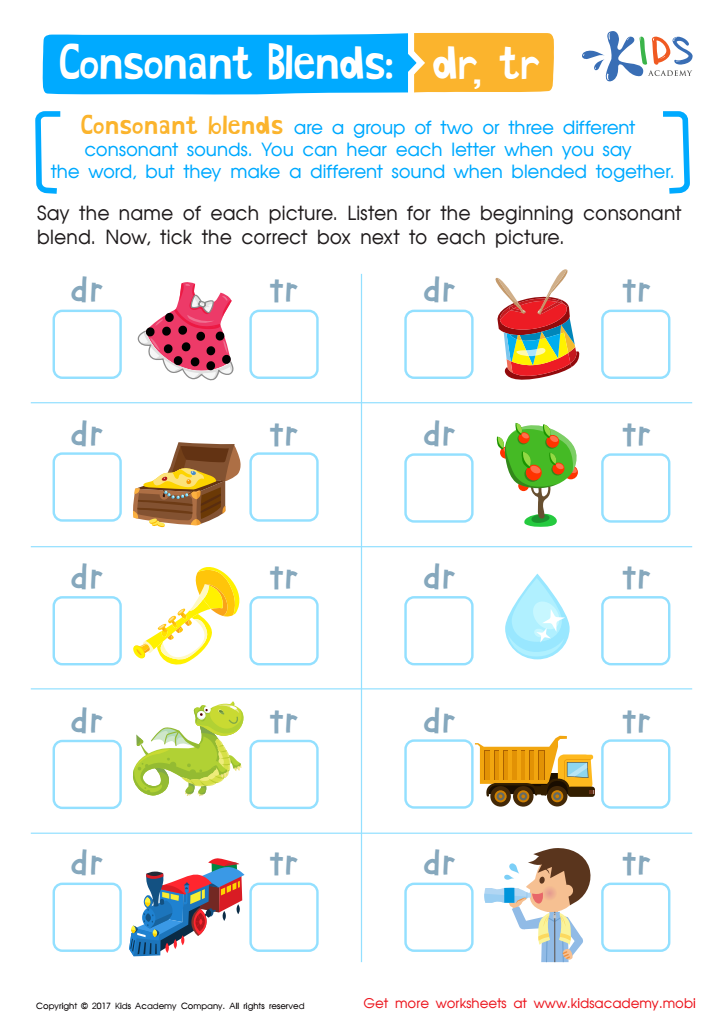
Consonant Blends: "Dr" and "Tr" Printable
Pictures of the words provide a visual cue, and sound-outs help with auditory cues.
Consonant Blends: "Dr" and "Tr" Printable
Worksheet
Join Kids Academy for Free
Who is primarily going to use this learning content?



Phonics skills, particularly normal two-letter phonics, are fundamental in laying a strong foundation for young learners, especially those aged 5-6. At this critical age, children are just beginning to understand the relationship between letters and sounds, a crucial component in learning to read. Two-letter phonics typically involve combinations of consonants and vowels that form the simplest of words, such as "at," "it," "in," and "on." Mastery of these basic unit pairs helps anchor the alphabetic principle in children's minds, making reading more intuitive and less intimidating.
For parents and teachers, emphasizing these skills ensures that children develop phonemic awareness—the ability to hear, identify, and play with individual sounds in spoken words. This early skill is predictive of later reading success and academic achievement. A strong grasp of two-letter phonics boosts children's confidence as they start recognizing these combinations in more complex words and sentences, thereby accelerating their reading fluency and comprehension.
Moreover, learning phonics at this age nurtures essential cognitive skills such as memory, pattern recognition, and attention to detail. By investing time in teaching normal two-letter phonics, both parents and teachers are equipping children with a lifelong tool for learning, thereby fostering a positive and proactive approach towards literacy.