Reading comprehension Normal Two Letter Phonics Worksheets for Ages 5-6
3 filtered results
Difficulty Level
Grade
Age
-
From - To
Subject
Activity
Standards
Enhance your young reader's skills with our Reading Comprehension Two-Letter Phonics Worksheets, designed specifically for ages 5-6. These engaging worksheets are perfect for helping children grasp the building blocks of phonics. Focused on two-letter combinations, each worksheet features activities that support letter recognition, sound association, and word formation. By incorporating fun and interactive exercises, kids are encouraged to practice and hone their reading comprehension in a structured yet enjoyable way. Ideal for both classroom and home use, these worksheets lay a solid foundation for literacy success. Foster a love for reading in your child with our expertly crafted phonics resources.
Favorites
With answer key
Interactive
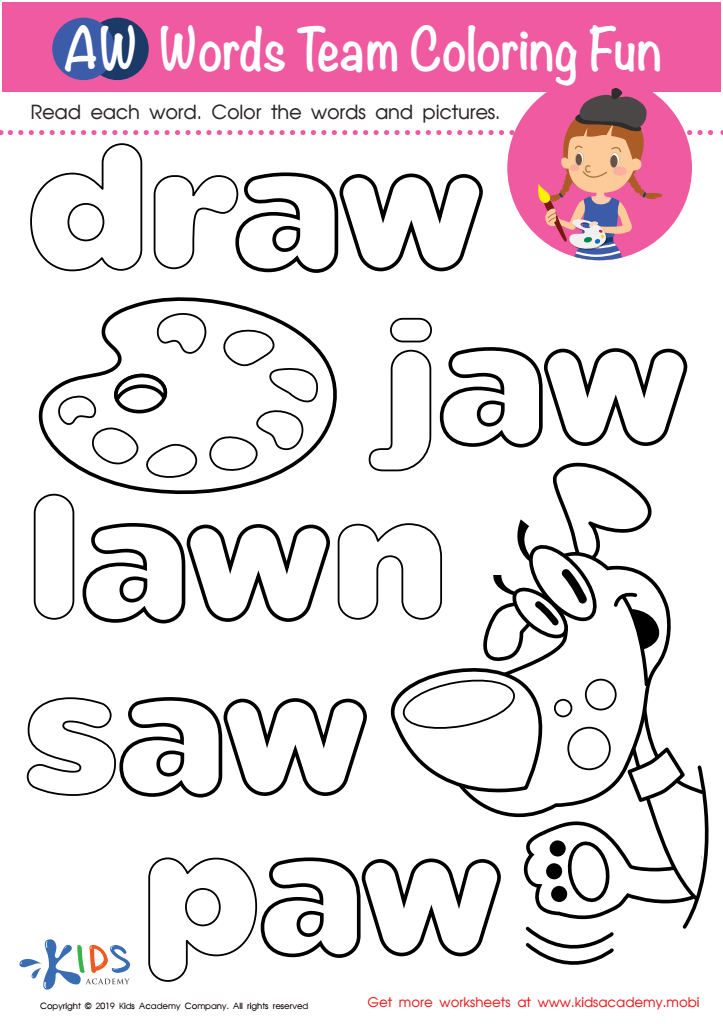
AW Words Team Coloring Fun Worksheet
Coloring words they can read is a blast for little learners! This worksheet offers emerging readers the chance to practice and gain confidence in reading words from the -aw family, while also improving fine-motor and creativity skills. Without knowing it, they'll learn about phonetic teams along the way!
Download (PDF)
 Assign to My Students
Assign to My Students
AW Words Team Coloring Fun Worksheet
Worksheet
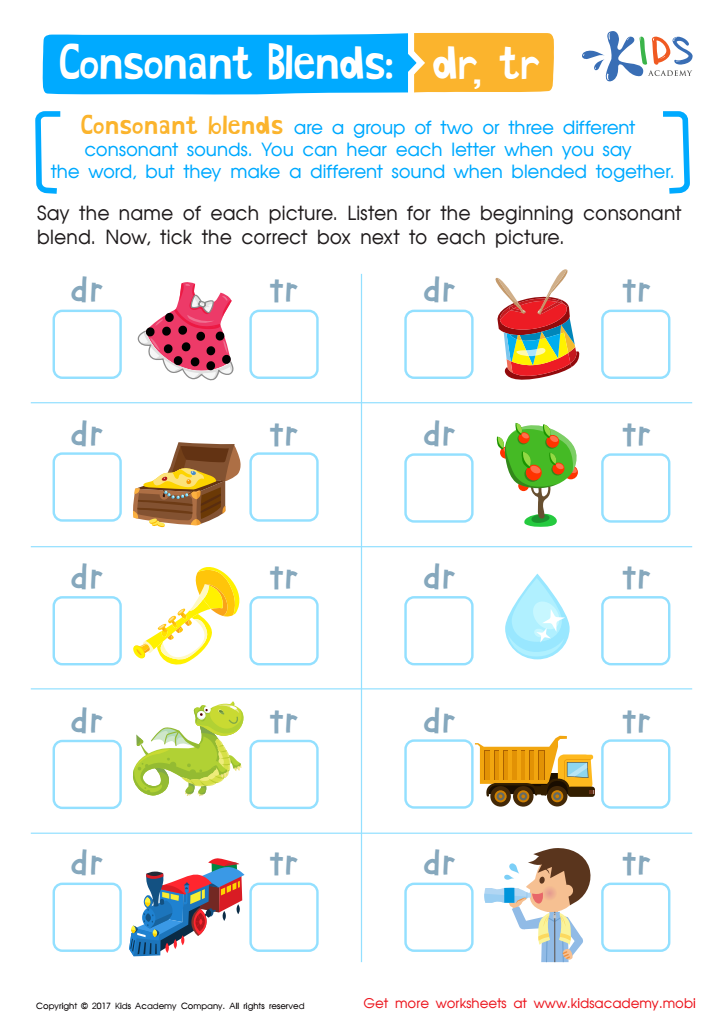
Consonant Blends: "Dr" and "Tr" Printable
Pictures of the words provide a visual cue, and sound-outs help with auditory cues.
Consonant Blends: "Dr" and "Tr" Printable
Worksheet
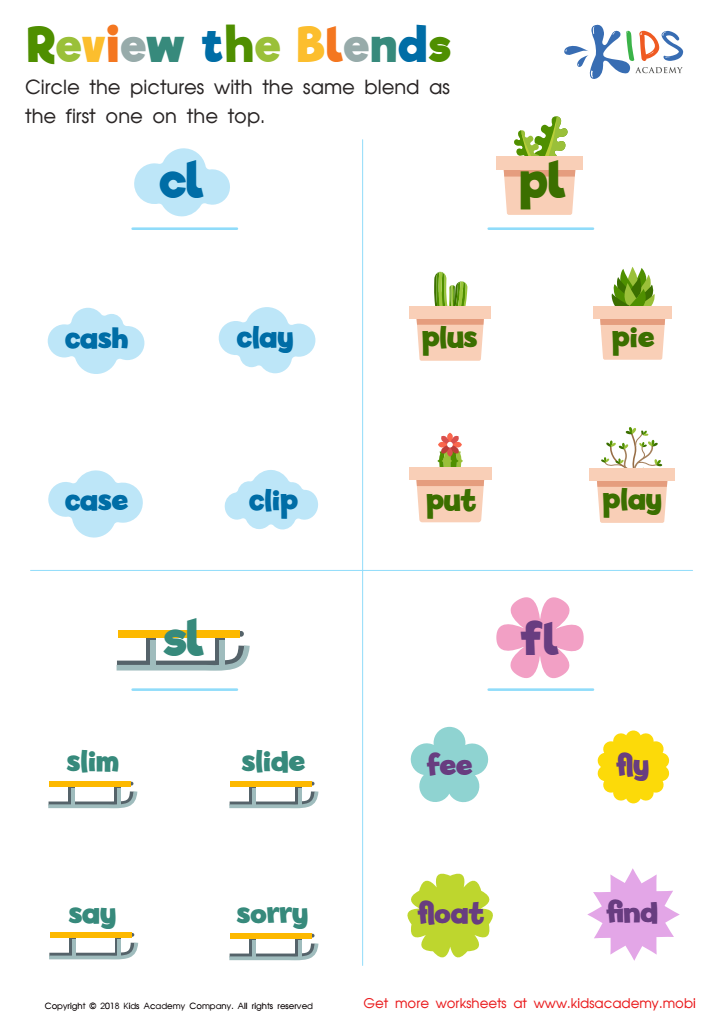
Review the Blends Worksheet
Consonant blends are two or three consonants that make a sound when pronounced together. L-blends like cl, bl, sl, fl and 3-letter blends like str, slp are common. This phonics worksheet helps early readers identify words containing two letter L-blends. Students must circle the words then read them aloud.
Review the Blends Worksheet
Worksheet
Join Kids Academy for Free
Who is primarily going to use this learning content?



Reading comprehension and phonics are foundational skills for young children, particularly ages 5-6, and hold immense significance in their early education. At this age, children are just beginning to grasp written language, and understanding how letters form sounds (phonics) is pivotal to this process. Two-letter phonics represent initial, manageable steps into this world of learning.
Phonics help children decode words, transforming written text into spoken language. When children grasp basic phonics, they can start to read short words, which drastically improves their reading confidence and fluency. This early grasp of phonics also lays the groundwork for more advanced literacy skills.
Reading comprehension, on the other hand, is about making sense of what is read. Without comprehension, reading is a hollow activity. It allows children to extract meaning, make predictions, and draw inferences from the text. Engaging with simple phonics and stories helps children practice these skills, aiding development in their vocabulary, critical thinking, and communication abilities.
By caring about and supporting reading comprehension and phonics, parents and teachers can ensure children build necessary skills to succeed academically. This enhances their ability to learn across subjects, fosters a love of reading, and contributes to overall cognitive development. Investing in these early skills sets a foundation for lifelong learning.