Uppercase identification Normal Uppercase Letters Worksheets for Ages 5-6
5 filtered results
-
From - To
Discover our engaging Uppercase Identification Worksheets designed specifically for children ages 5-6! These interactive worksheets enhance early literacy skills, making learning uppercase letters fun and effective. Each activity is crafted to help young learners confidently recognize and identify uppercase letters. Through colorful illustrations and playful exercises, kids will develop their letter recognition skills while enjoying the learning process. Ideal for both home and classroom settings, our worksheets support valuable skills such as visual discrimination and motor coordination. Foster your child's love for letters and set a strong foundation for reading with our curated collection of uppercase identification resources!
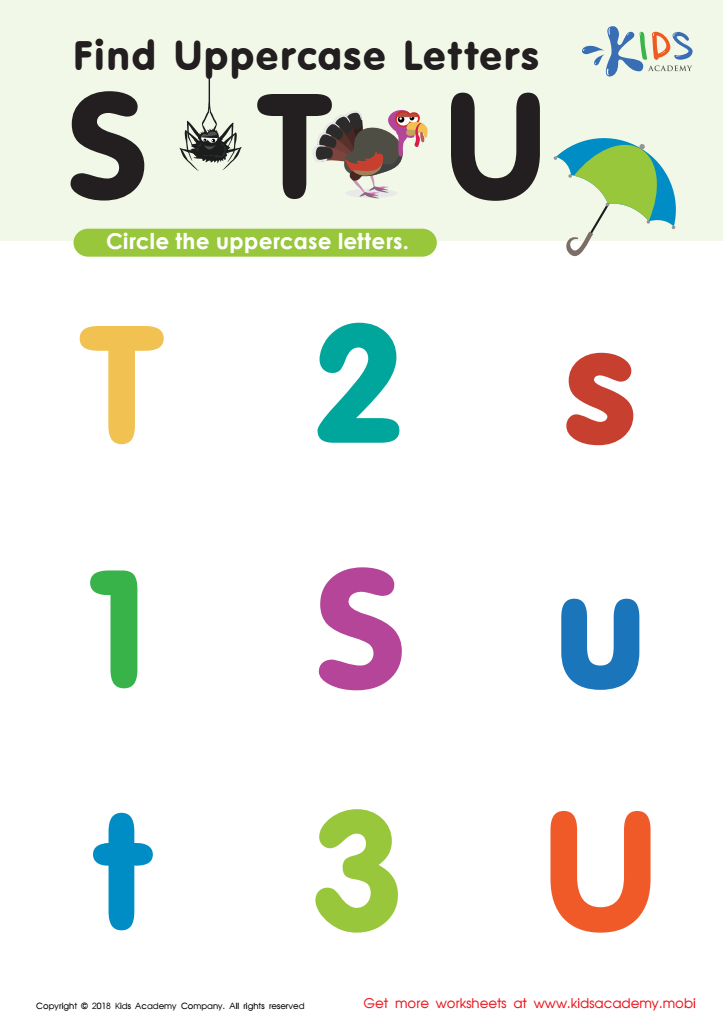
Find Uppercase Letters Worksheet
 Assign to My Students
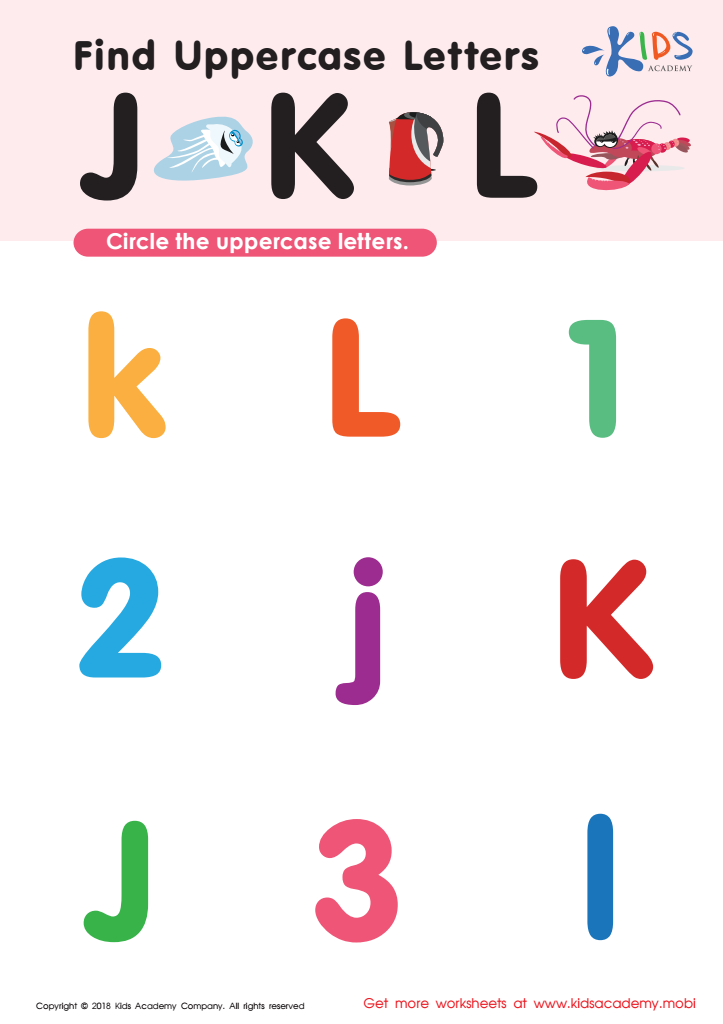
Find Uppercase Letters J, K, and L Worksheet

Find Uppercase Letters A, B, and C Worksheet
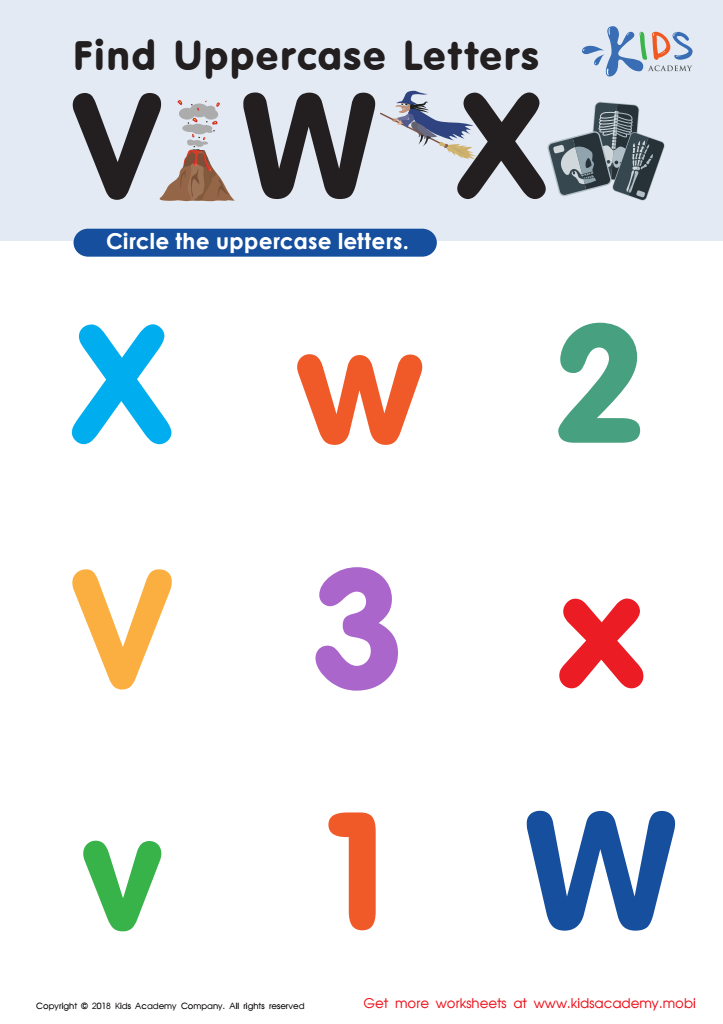
Find Uppercase Letters V, W, X Worksheet
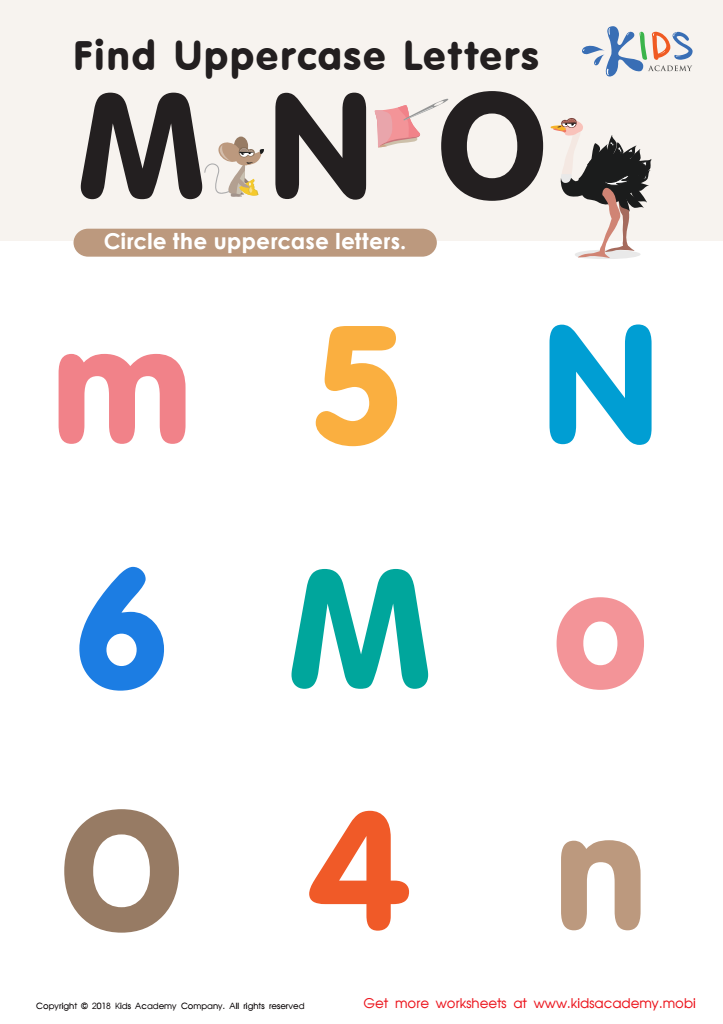
Find Uppercase Letters M, N, and O Worksheet








Uppercase letter identification is a fundamental skill in early literacy development for children ages 5-6. Understanding and recognizing uppercase letters lays the groundwork for various literacy skills, including reading, writing, and spelling. For both parents and teachers, fostering this skill is crucial because uppercase letters serve specific functions in language; they signal the beginning of sentences, proper nouns, and important titles, thus aiding comprehension.
When children can identify uppercase letters, they become more confident in their reading abilities. This self-assurance is vital as it encourages continuous engagement with text, fostering a love for reading. Parents and teachers can utilize games, songs, and interactive activities to make learning fun and impactful, turning uppercase letter recognition into an enjoyable experience.
Additionally, strong literacy skills are closely linked with overall academic success. By emphasizing uppercase letter identification in transitional programs, parents and educators can help children build a solid literacy foundation that supports their future learning endeavors. Ultimately, nurturing this skill promotes not only academic achievement but also enhances children's communication abilities and self-expression, essential components for their social and emotional development. Thus, recognizing and supporting uppercase identification is paramount in shaping competent, confident learners.