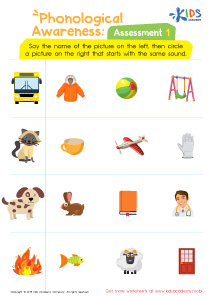
Phonics Skills Normal Vowels and Consonants Worksheets for Ages 5-6
4 filtered results
Difficulty Level
Grade
Age
-
From - To
Subject
Activity
Standards
Our "Phonics Skills Normal Vowels and Consonants Worksheets for Ages 5-6" are designed to help young learners master the basics of reading and spelling. Ideal for kindergarten students, these engaging and colorful worksheets focus on recognizing, writing, and sounding out both vowels and consonants. Each activity is carefully crafted to enhance early phonics skills, promote letter identification, and foster a love for reading. Through fun exercises and interactive tasks, children will build a strong foundation in phonics, setting them up for future academic success. Perfect for both classroom and at-home learning. Explore now and make learning phonics fun!
Favorites
With answer key
Interactive
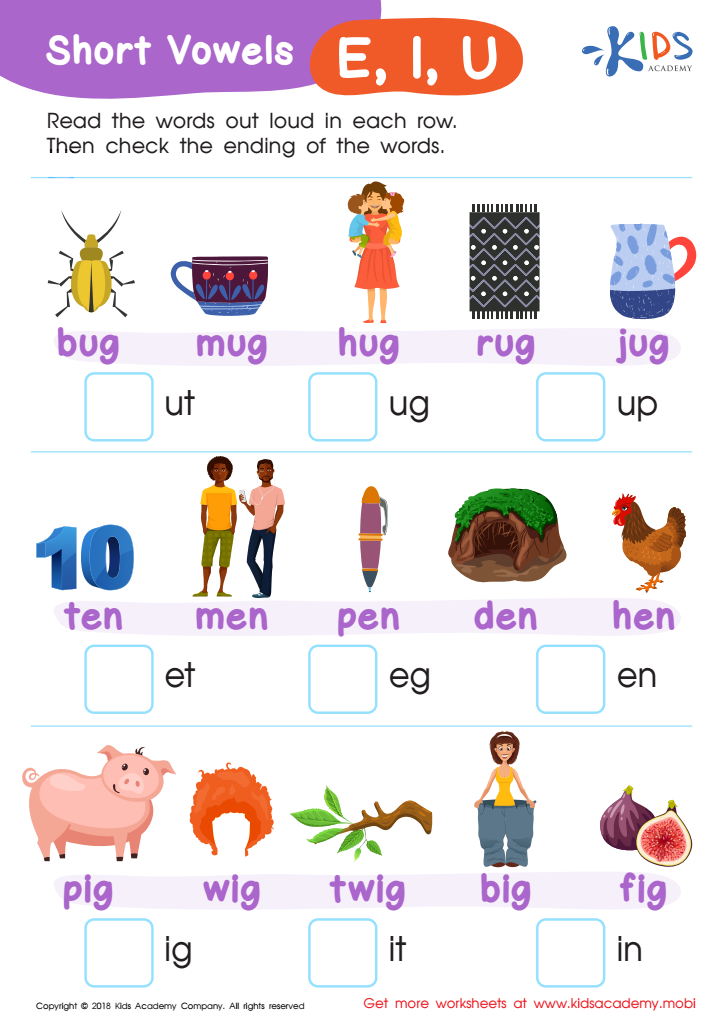
Short Vowels /e/, /i/, and /u/ Worksheet
Your emergent reader can have fun while practicing their short vowel sounds with this free, brightly colored worksheet. They'll identify one-syllable words by their pictures, then match the correct ending for each. They'll gain an understanding of how short vowel sounds vary in closed syllables with different endings, without even realizing it!
 Assign to My Students
Short Vowels /e/, /i/, and /u/ Worksheet
Worksheet
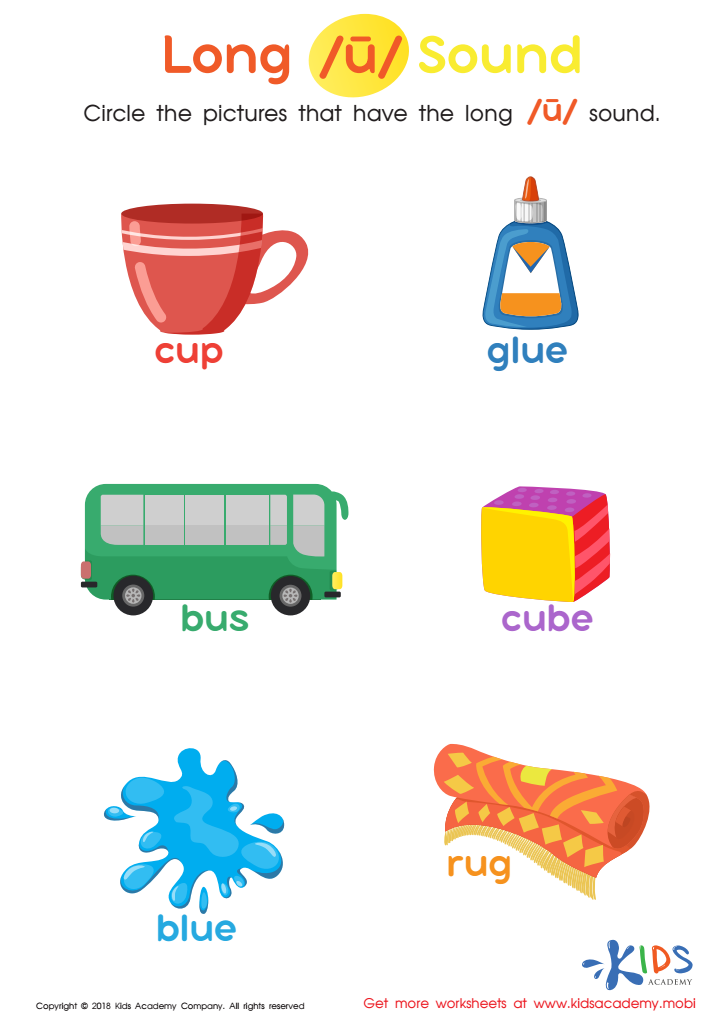
Long «u» Sound Worksheet
This fun and engaging free PDF worksheet teaches kids to differentiate between long and short «u» sounds. Through tracing circles around the correct words, they'll practice their fine motor skills while also recognizing patterns (silent-e for «ū» sound) in closed-syllable words. Bright and cheery pictures make it a great confidence booster for new readers!
Long «u» Sound Worksheet
Worksheet
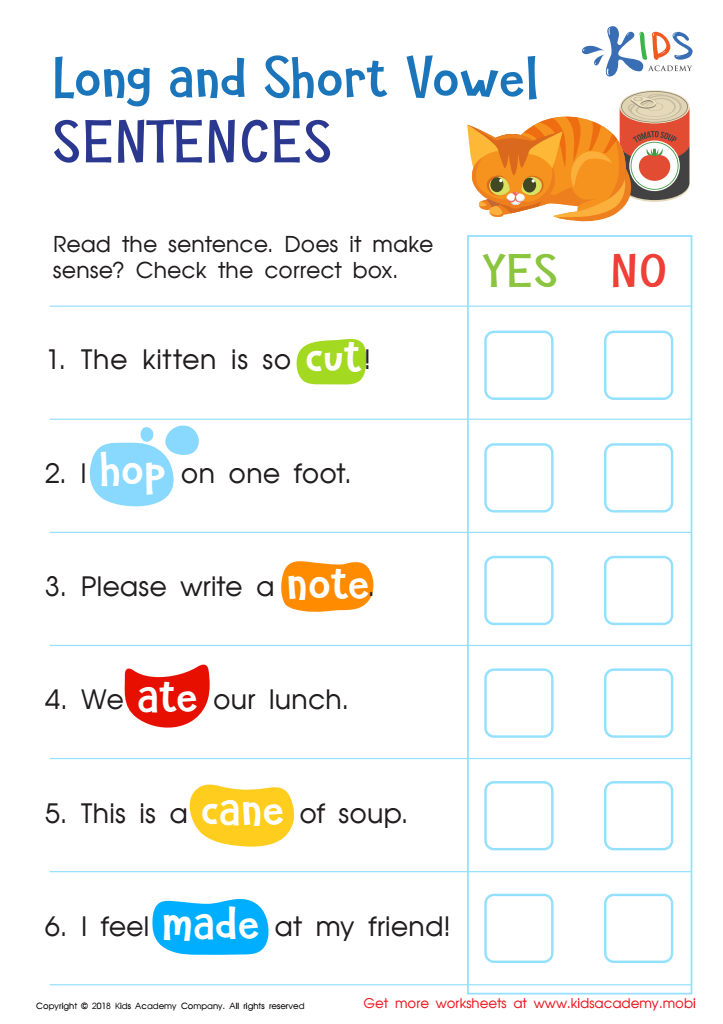
Long and Short Vowel Sentences: Assessment Worksheet
This printable worksheet helps kids practice differentiating between short and long vowel sounds. They'll use context clues to figure out which words make sense in simple sentences. A great way to build reading and writing skills!
Long and Short Vowel Sentences: Assessment Worksheet
Worksheet
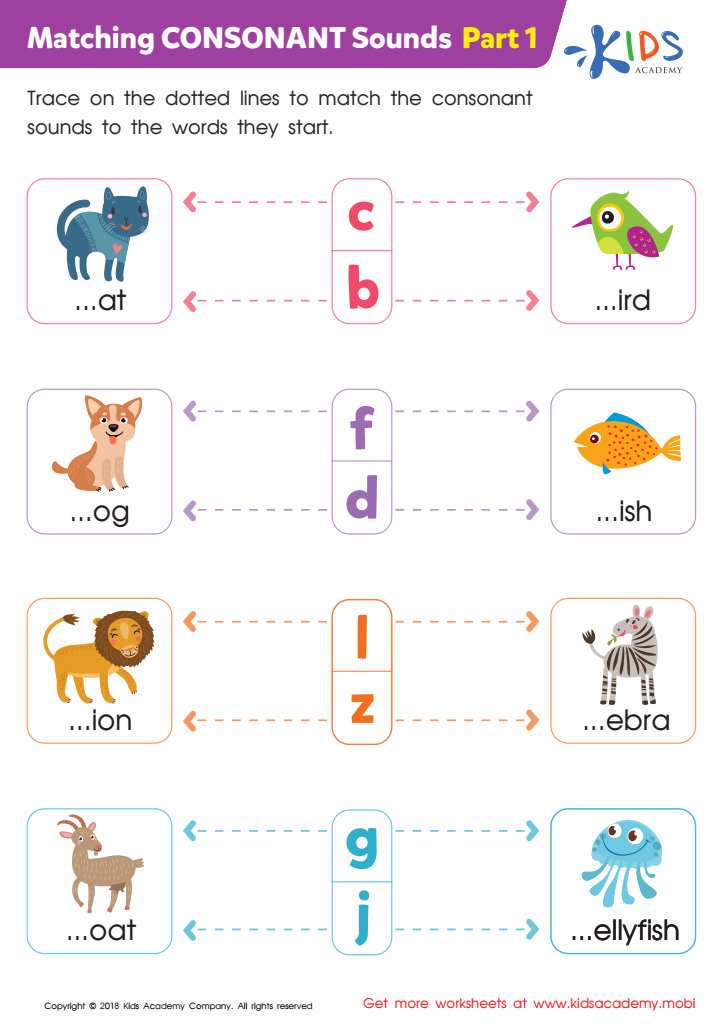
Matching Consonant Sounds: Part 1 Worksheet
Decide which letter matches each word and picture in this fun phonics worksheet. Slide your finger over each word, trying out each letter to check for matches. Once each pair is solved, trace the dotted lines with pencil to complete the printable. Who knew learning could be so enjoyable?
Matching Consonant Sounds: Part 1 Worksheet
Worksheet
Join Kids Academy for Free
Who is primarily going to use this learning content?



Phonics skills, which focus on understanding normal vowels and consonants, are critical for young learners aged 5-6 because they form the foundation of successful reading and writing. Phonemic awareness, the ability to identify and manipulate sounds in spoken words, is the precursor to these phonics skills. When children grasp how vowels and consonants work together to form sounds, they can begin decoding words, a crucial early step in reading.
Knowing normal vowels and consonants enables children to recognize patterns in word formation, which builds their vocabulary and comprehension skills. It fosters spelling abilities and helps them understand the systematic nature of the English language, enhancing their overall literacy. This foundational knowledge also boosts a child's confidence as they become more proficient readers, which in turn cultivates a love for learning and creates a positive feedback loop in their education.
Problems in early phonics skills can lead to difficulties in reading and writing in later grades, highlighting the importance of early intervention. Parents and teachers thus play a crucial role in ensuring that phonics skills are nurtured through engaging and developmentally appropriate activities. This investment in early education is critical for academic success and language development.