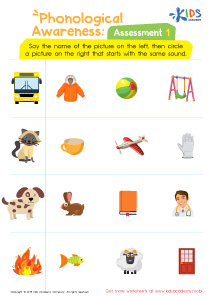
Reading Skills Normal Vowels Worksheets for Ages 5-6
3 filtered results
Difficulty Level
Grade
Age
-
From - To
Subject
Activity
Standards
Enhance your child's reading abilities with our engaging Normal Vowels Worksheets designed specifically for ages 5-6. These worksheets offer fun interactive activities that familiarize young learners with vowels, empowering them to become confident readers. Each worksheet features a variety of exercises, including matching, fill-in-the-blank, and cutting and pasting tasks, which foster essential reading skills through play. By exploring vowels in context, children will not only learn phonics but also improve their pronunciation and comprehension. Perfect for preschool or kindergarten classrooms, these printable worksheets ensure a solid foundation in reading while keeping your little ones entertained and inspired!
Favorites
With answer key
Interactive
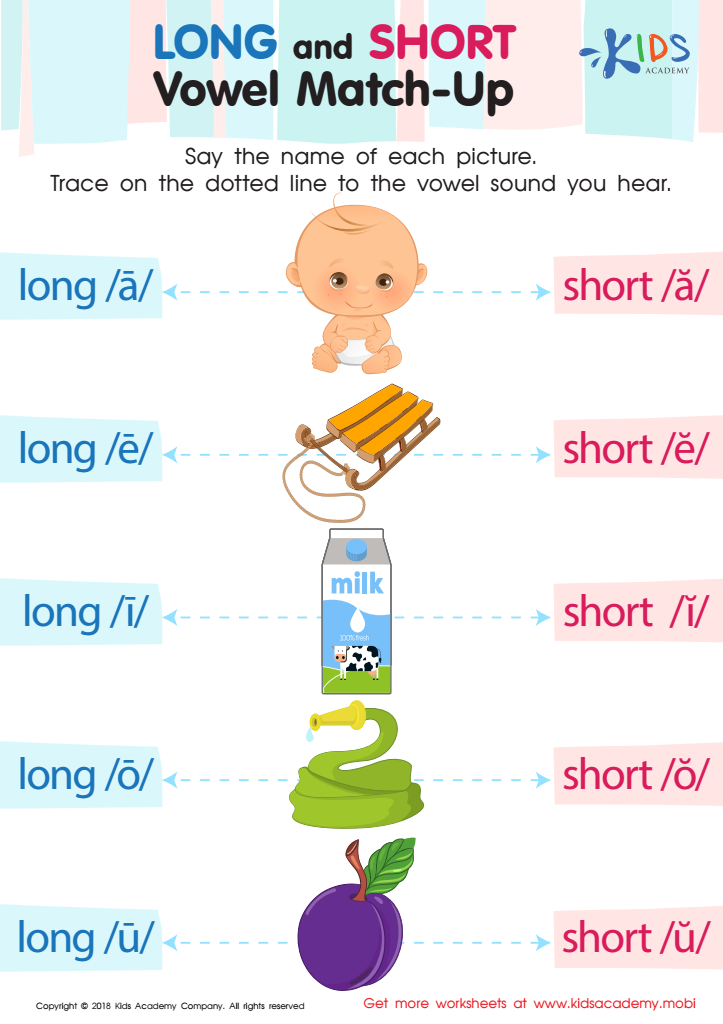
Long and Short Vowel Match up Reading Worksheet
Help your reader build confidence and refine their decoding skills! This worksheet combines long and short vowel recognition with a traceable component to improve fine motor skills. Your learner will name each picture and trace the dotted lines to get to the correct vowel sounds.
 Assign to My Students
Long and Short Vowel Match up Reading Worksheet
Worksheet
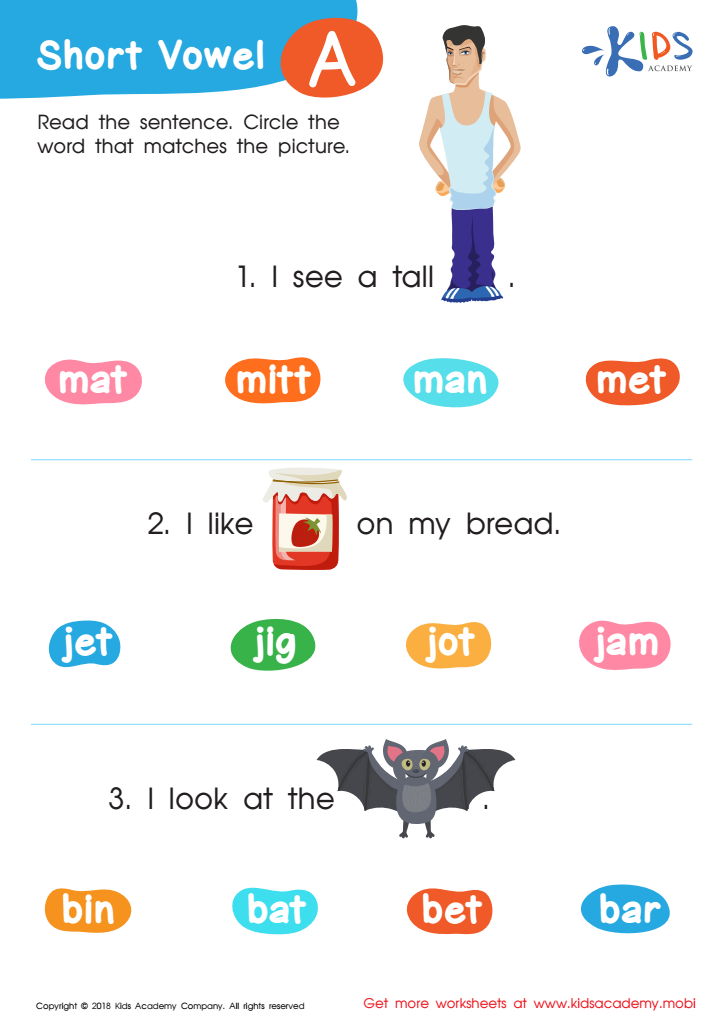
Short Vowel /a/ Worksheet
This free PDF helps new readers use sight words and pictures to read basic sentences. Then, they use accompanying word choices to find the correct word with the short a vowel sound. A key early reading skill, discriminating between short vowel sounds can be tricky in monosyllabic words, so use this PDF to help your reader reinforce it.
Short Vowel /a/ Worksheet
Worksheet
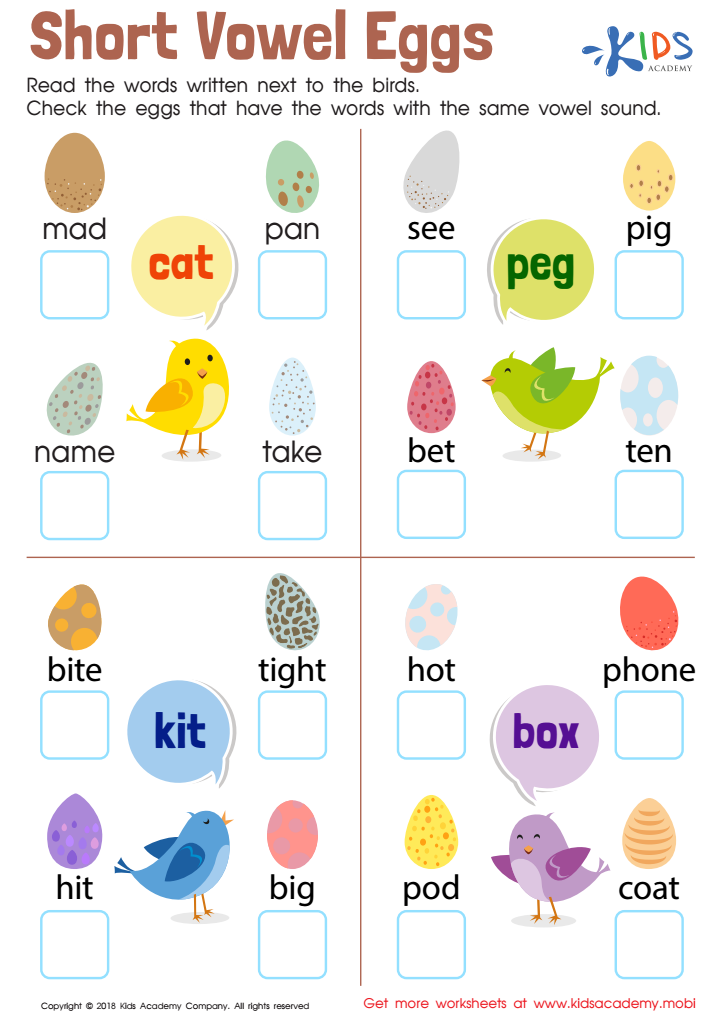
Short Vowel Eggs Worksheet
Your students will love helping these birdies pick the short vowel eggs! Have them read the words in the thought bubbles, then check off the boxes with the same short vowel sounds. The bright colors of this free Worksheet will draw them in and get them practicing their vowels!
Short Vowel Eggs Worksheet
Worksheet
Join Kids Academy for Free
Who is primarily going to use this learning content?





Reading skills involving normal vowels are foundational for children aged 5-6, as they form the backbone of language comprehension and communication. At this age, children are introduced to the basics of phonics, recognizing that vowels play a crucial role in word formation and pronunciation.
Understanding normal vowels empowers children to decode words independently, which fosters a sense of confidence and motivates them to engage with reading materials. When parents and teachers emphasize vowel recognition, children not only learn to read but also develop better listening and speaking skills, allowing them to express themselves more effectively.
Moreover, mastering normal vowels at an early age enhances literacy skills that pave the way for future academic success. It enables children to grasp more complex phonetic patterns as they progress through various grades. Early reading proficiency is linked to improved academic outcomes, so promoting a solid foundation in vowel sounds and their application can positively influence a child’s educational journey.
Investing time in this area is essential for laying the groundwork for lifelong reading habits and overall literacy development. Parents and teachers play a vital role in nurturing these skills, ensuring that children are prepared for the reading challenges that lie ahead.