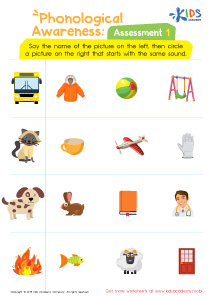
Vocabulary development Normal Vowels Worksheets for Ages 5-6
5 filtered results
-
From - To
Enhance your child's vocabulary with our engaging Normal Vowels Worksheets, specially designed for ages 5-6. These worksheets focus on building a robust vocabulary through fun and interactive activities that emphasize the importance of vowels in words. By engaging in colorful exercises, children will develop their reading and writing skills while learning to decode and identify vowel sounds. Our materials are perfect for parents and educators aiming to create a strong foundation in language arts. Explore our collection to inspire a love for learning and help your child thrive in their early educational journey! Download your worksheets today!
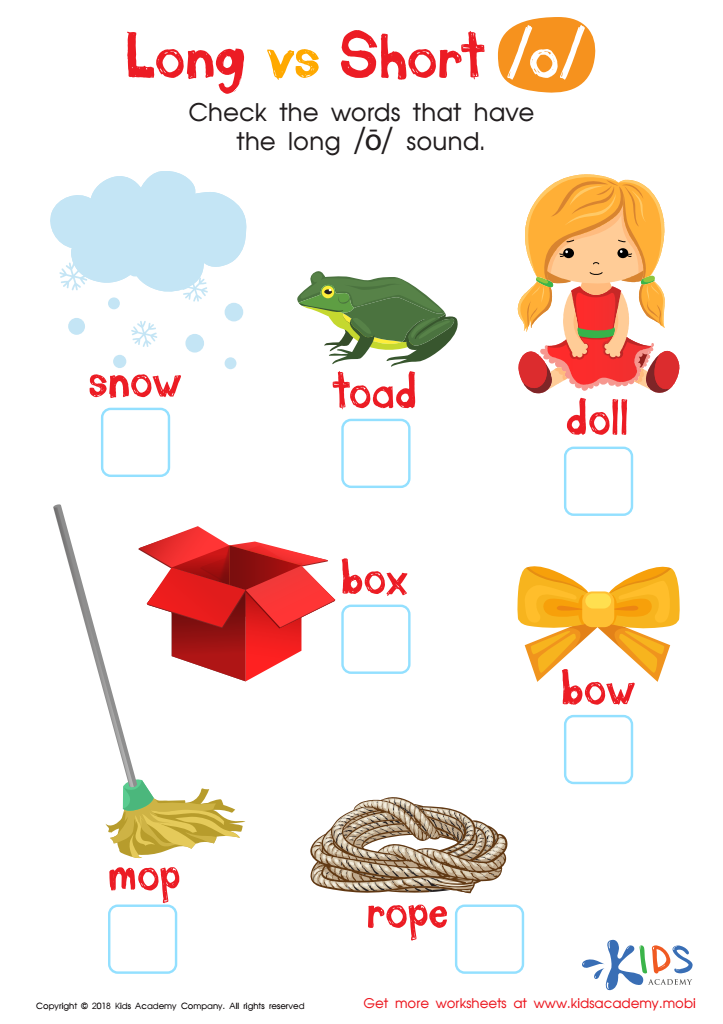
Long vs Short O Reading Worksheet
 Assign to My Students
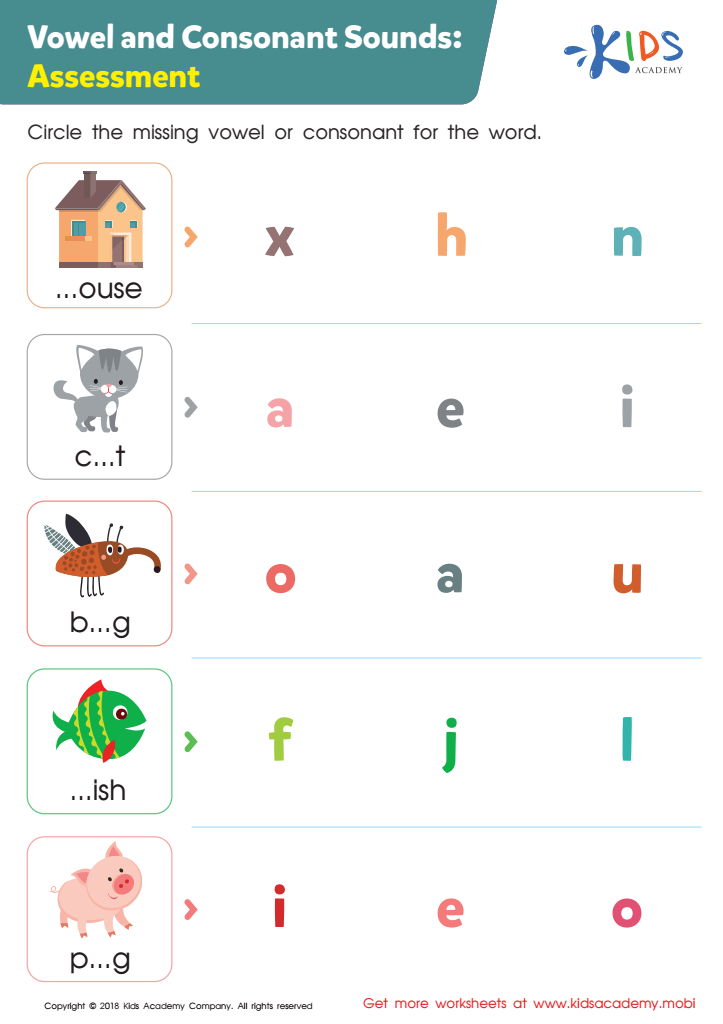
Vowel and Consonant Sounds: Assessment Worksheet
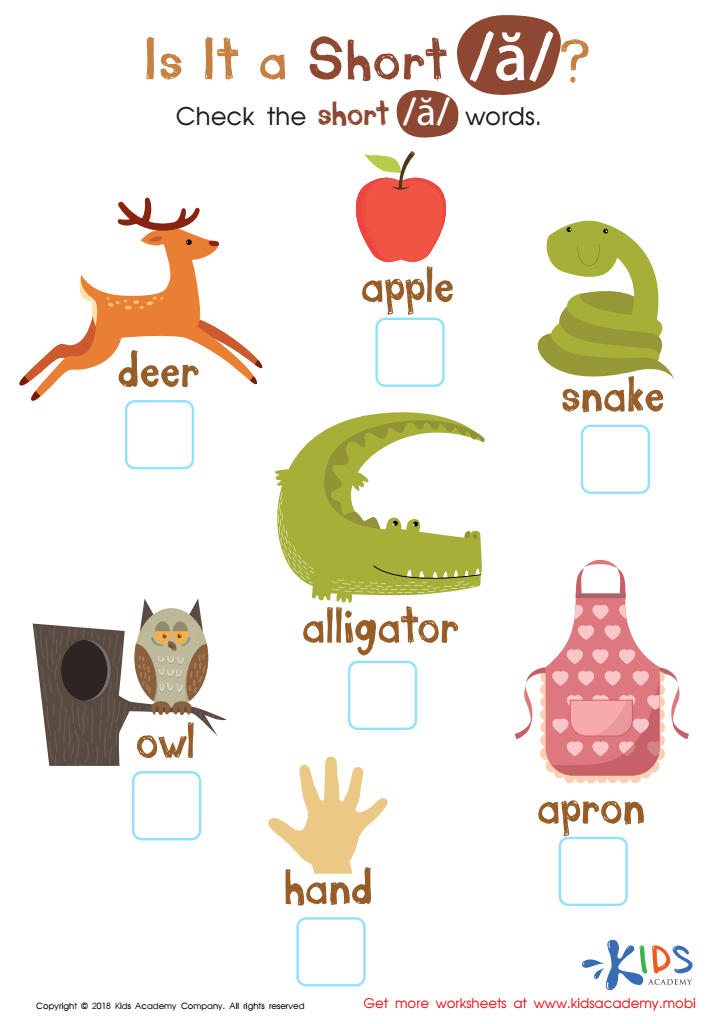
Is It Short A? Reading Worksheet
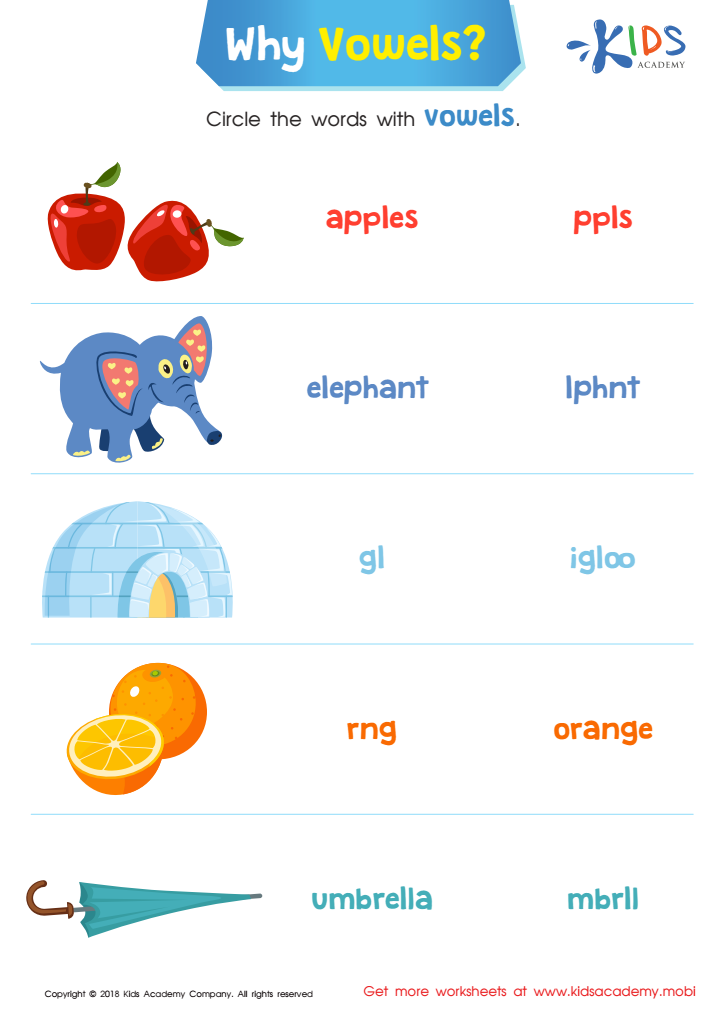
Why Vowels? Reading Worksheet
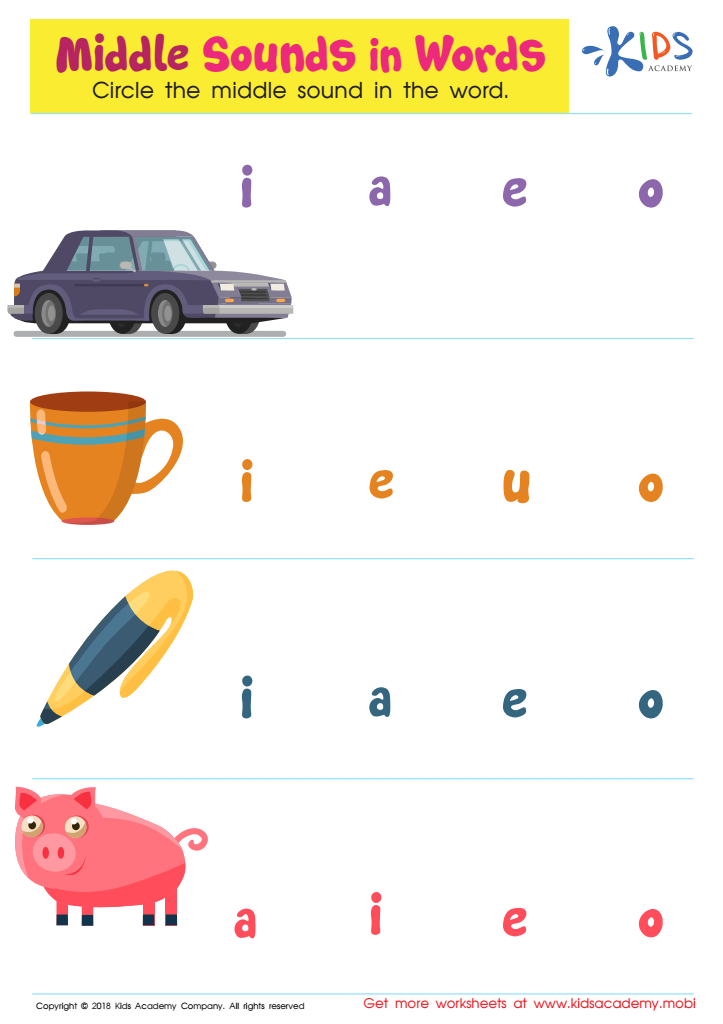
Middle Sounds in Words Worksheet





Vocabulary development is crucial for children aged 5-6 as it serves as the foundation for their overall language skills and literacy. At this stage, children are rapidly expanding their understanding of words and their meanings, which significantly influences their reading and writing abilities later on. Engaging in vocabulary development helps children not only recognize words but also understand how to use them in context, enhancing their communication skills.
Normal vowels play a vital role in this development, as they are essential sounds used in constructing words. Understanding normal vowels aids in phonemic awareness, enabling children to decode new words while reading. With a strong vocabulary, children can express their thoughts more clearly and effectively, fostering confidence in their communication.
Moreover, a rich vocabulary supports cognitive development and comprehension skills. Children with a broader vocabulary can engage more deeply with stories, connecting with characters and ideas. For parents and teachers, providing a conducive environment filled with diverse vocabulary—from reading books to participating in discussions—encourages curiosity and a love for learning. Ultimately, prioritizing vocabulary development during these formative years sets the stage for future academic success and effective communication.