Contextual understanding Normal Worksheets for Ages 5-6
3 filtered results
-
From - To
Introduce your child to learning with our Contextual Understanding Normal Worksheets for Ages 5-6. These resources are designed to boost comprehension skills by placing new information into context. Perfect for early learners, our worksheets encourage children to decode and interpret stories, follow instructions, and understand various scenarios through vivid illustrations and engaging activities. Enhance vocabulary, critical thinking, and problem-solving skills in a fun, interactive way. Ideal for both classroom and home use, our specially crafted worksheets provide a foundation for academic success while keeping learning enjoyable and meaningful for young minds.
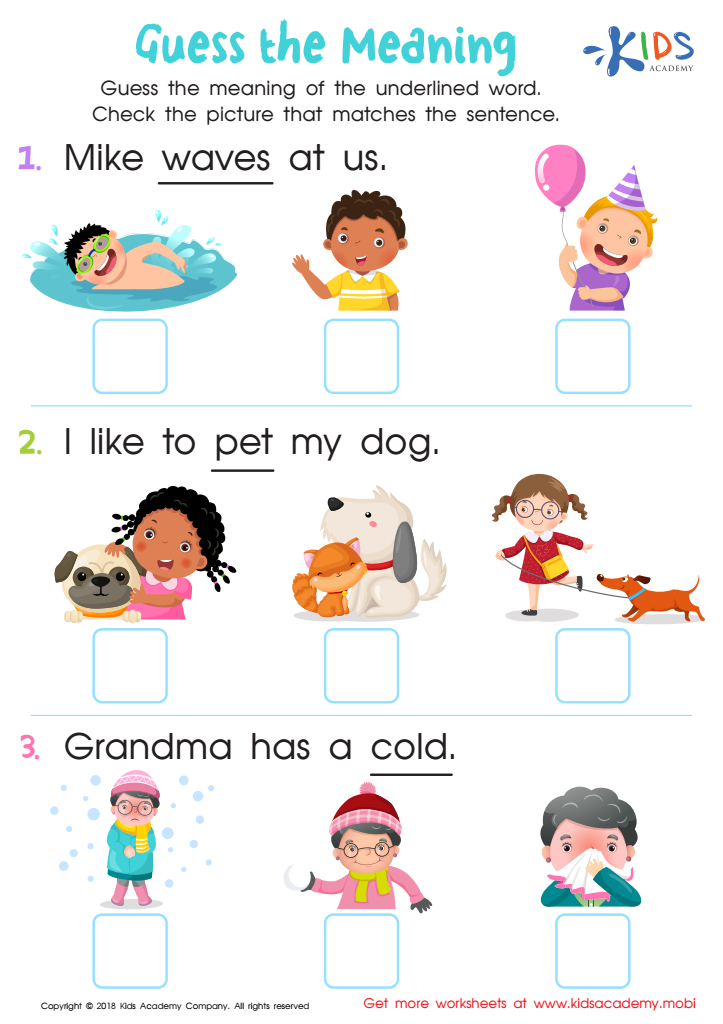
Guess the Meaning Worksheet
 Assign to My Students
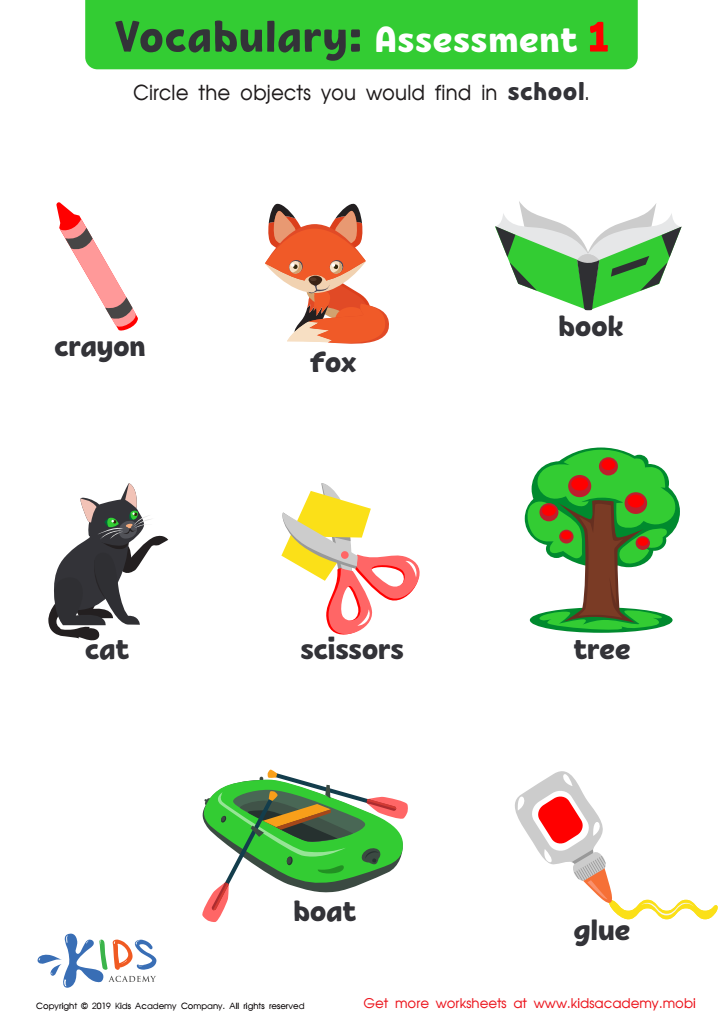
Vocabulary: Assessment 1 Worksheet
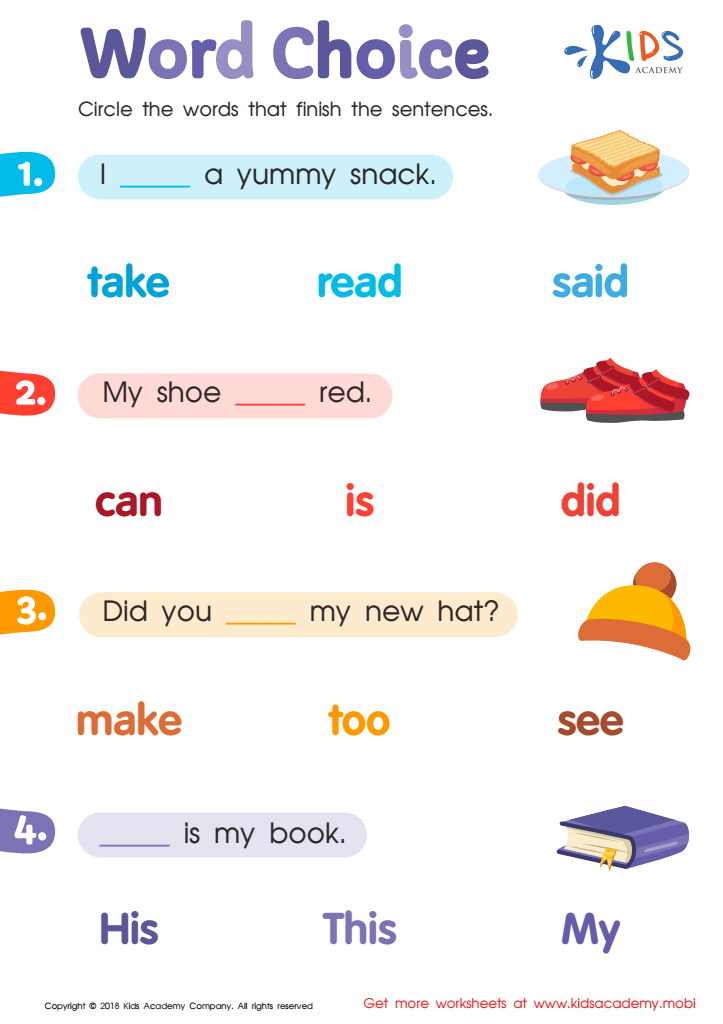
Word Choice Worksheet








At ages 5-6, children are in a critical phase of cognitive and emotional development where they begin to understand and process the world around them. Contextual understanding, or the ability to comprehend and utilize information based on the context in which it occurs, plays a pivotal role in this developmental stage. Parents and teachers should prioritize fostering this skill because it underpins numerous aspects of early learning.
Firstly, contextual understanding aids in the development of language and communication skills. When children grasp the context of conversations, stories, and instructions, they can respond more accurately and learn more effectively. For instance, knowing that a "bank" in one scenario means a financial institution and a river's edge in another helps build nuanced vocabulary.
Secondly, contextual comprehension enhances social interactions and emotional intelligence. By recognizing social cues and contextual signals, children can navigate interpersonal relationships more adeptly, exhibit empathy, and make better decisions in social settings.
Lastly, contextual understanding supports academic skills. In subjects like math and reading, understanding the context ensures that children can solve problems correctly and comprehend reading materials beyond mere word recognition.
By focusing on contextual understanding, parents and teachers can provide children with a solid foundation for lifelong learning, critical thinking, and social success.








