Understanding light sources Normal Worksheets for Ages 5-6
3 filtered results
-
From - To
Explore the world of light with our "Understanding Light Sources" worksheets, designed specifically for kids aged 5-6. These engaging and educational worksheets help young learners differentiate between natural and artificial light sources through fun activities and colorful illustrations. Each worksheet is crafted to enhance your child's cognitive and observational skills while sparking curiosity about their surroundings. Perfect for preschool and kindergarten students, these printables make learning interactive and enjoyable. Equip your young scientist with the knowledge to understand the importance of light in our daily lives. Download today and illuminate their path to discovery!
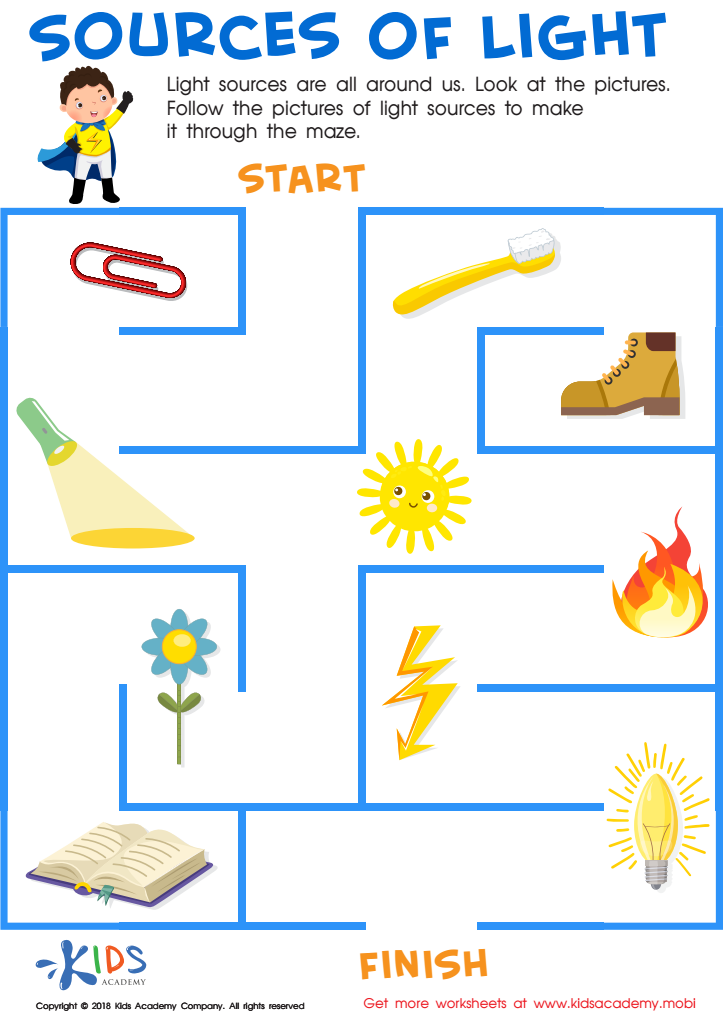
Sources of Light Worksheet
 Assign to My Students
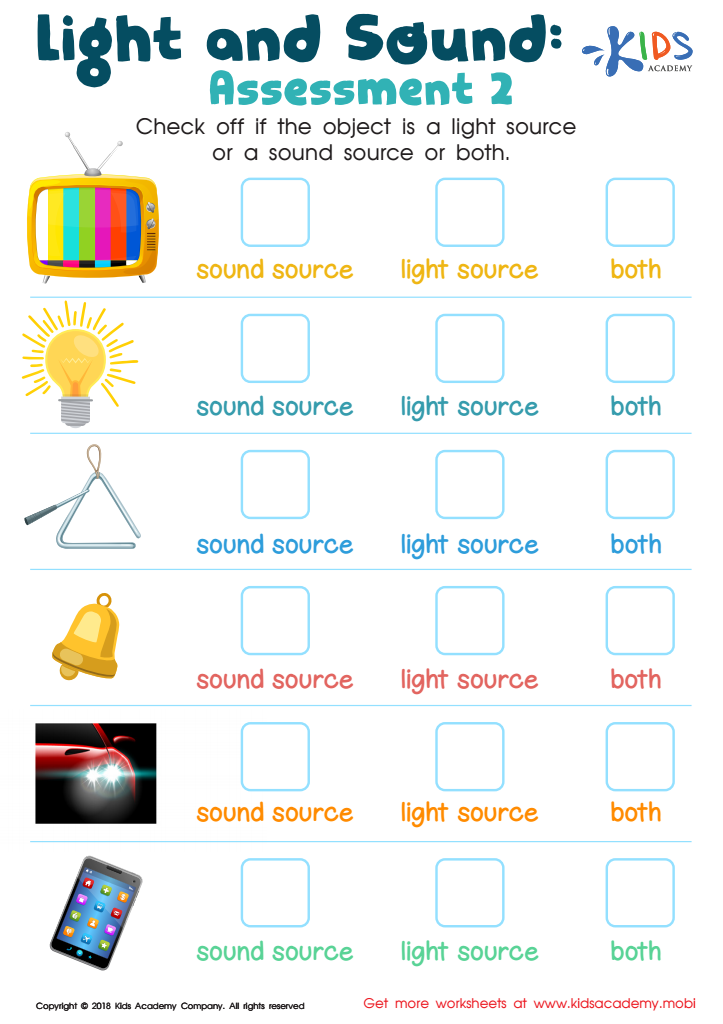
Light and Sound: Assessment 2 Worksheet
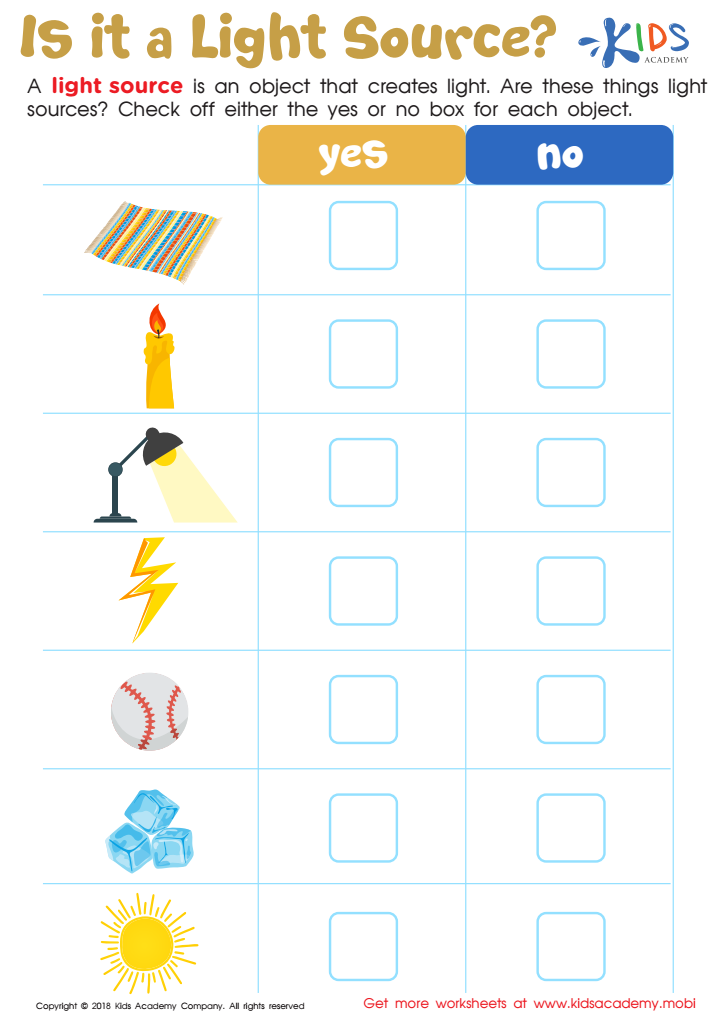
Is It a Light Source? Worksheet



.jpg)

Understanding light sources is fundamental for young children's cognitive and emotional development. For kids aged 5-6, light is more than just physical brightness; it is a gateway to exploration and learning. Parents and teachers should prioritize this understanding because it lays the groundwork for scientific inquiry and critical thinking.
Firstly, recognizing various light sources—such as the sun, lamps, or candles—helps children distinguish between natural and artificial light, fostering early scientific curiosity. It also introduces them to basic safety concepts, such as the need to be cautious around fire and the understanding of how too much sunlight can be harmful.
Moreover, light is integral to understanding the world around them. It influences concepts like time (day and night), seasons, and weather, which are essential elements of a young child's education. Through experiments involving shadows or simple observations of how plants grow towards light, children develop problem-solving skills and learn to make predictions based on observations.
Emotionally, awareness of light sources can alleviate fears of the dark, making children feel safer and more secure.
Incorporating light exploration in classroom activities can spark joy and wonder, engage students' natural curiosity, and establish a strong foundation for more advanced scientific learning in later years. Thus, helping children understand light sources is critical for their overall development and learning experience.








