Basic Math Skills Normal Math Worksheets for Ages 5-6 - Page 2
25 filtered results
-
From - To
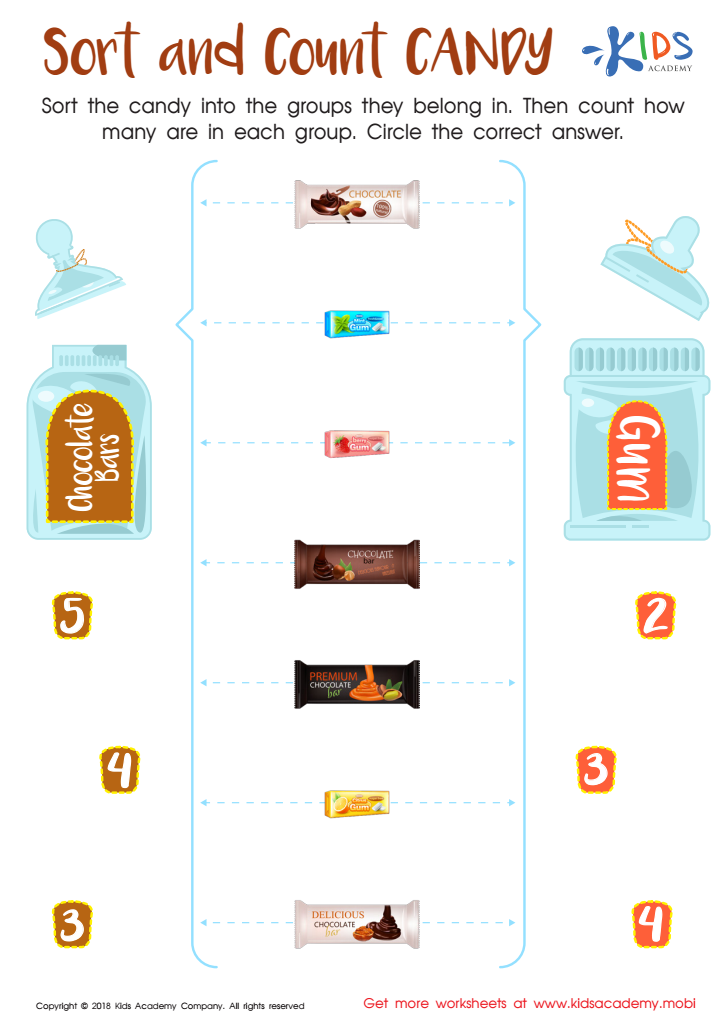
Sort and Count Candy Worksheet
 Assign to My Students







Basic math skills are crucial for children ages 5-6 as they form the foundation for all future learning. At this age, children begin to grasp number recognition, counting, addition, and subtraction, which are essential components of normal math. Parents and teachers should care about these basic skills because they not only encourage cognitive development but also foster problem-solving abilities.
Mastering math concepts at an early age enhances children's confidence and promotes a positive attitude towards learning. These foundational skills are linked to academic success in later years; children who achieve basic math proficiency early are more likely to excel in more complex mathematical concepts as they grow.
Moreover, proficient basic math skills serve practical purposes in daily life. They empower children to make sense of the world around them, enabling them to measure, calculate, and comprehend patterns and relationships. This learning also develops critical thinking skills necessary for effective decision-making.
Finally, collaboration between parents and teachers in supporting these skills creates a consistent learning environment, which can lead to better outcomes. By investing time in nurturing basic math skills, we set children on a path toward lifelong learning and success in various domains.








