
Basic measurement concepts Normal Math Worksheets for Ages 5-6
3 filtered results
Difficulty Level
Grade
Age
-
From - To
Subject
Activity
Standards
Discover our engaging Basic Measurement Concepts Math Worksheets designed specifically for children ages 5-6! These worksheets introduce young learners to foundational measurement skills, including length, weight, and volume, in a fun and accessible way. Each worksheet is crafted to stimulate curiosity and build confidence in early mathematical understanding, featuring vibrant illustrations and interactive activities. Ideal for classrooms or home learning, these resources support cognitive development while ensuring essential skills are taught effectively. Help your child grasp these vital concepts through enjoyable practice, paving the way for future academic success. Start measuring up their math skills today!
Favorites
With answer key
Interactive
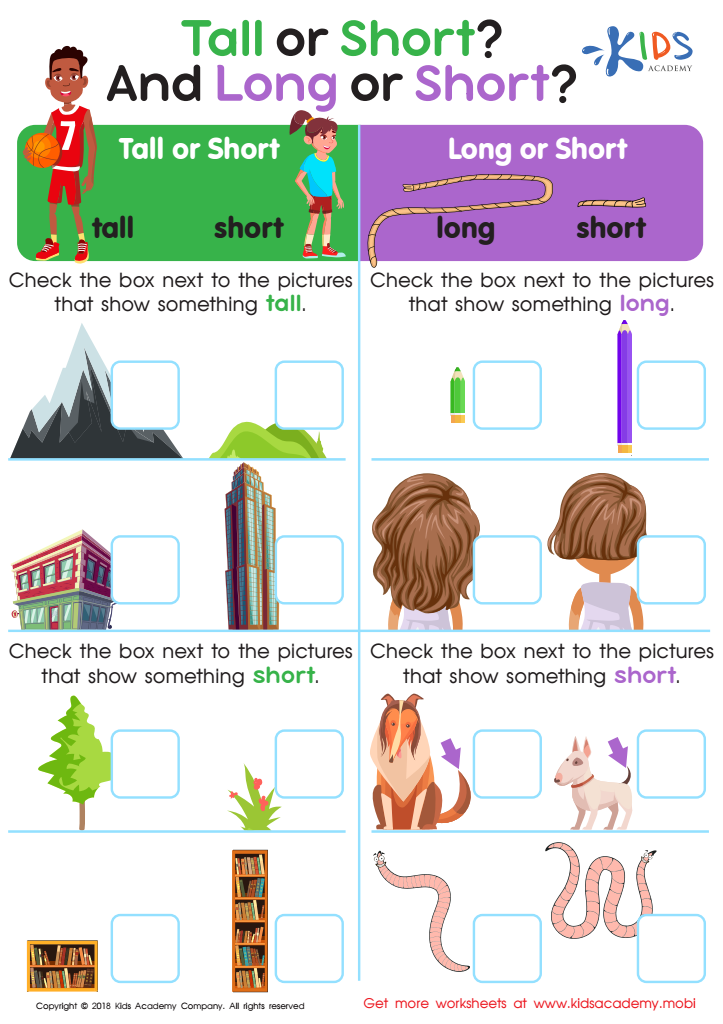
Tall or Short and Long or Short? Worksheet
This worksheet is fun and helpful for kids to understand the difference between height and length. With pictures of familiar objects, they can compare and choose the box with the right answer. This helps them gain skills and a better foundation for future measuring.
 Assign to My Students
Tall or Short and Long or Short? Worksheet
Worksheet
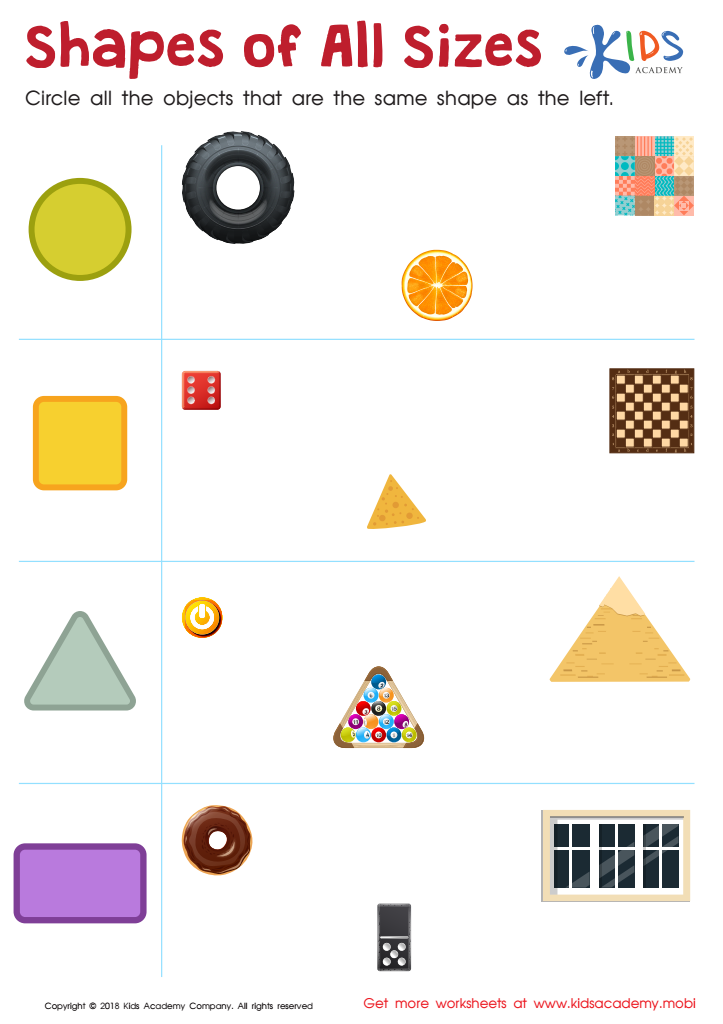
Shapes of All Sizes Worksheet
Students will have fun comparing basic shapes to familiar objects with this worksheet. It's an excellent way to help them recognize similarities in geometric shapes, building strong foundations for understanding congruence and similarity.
Shapes of All Sizes Worksheet
Worksheet
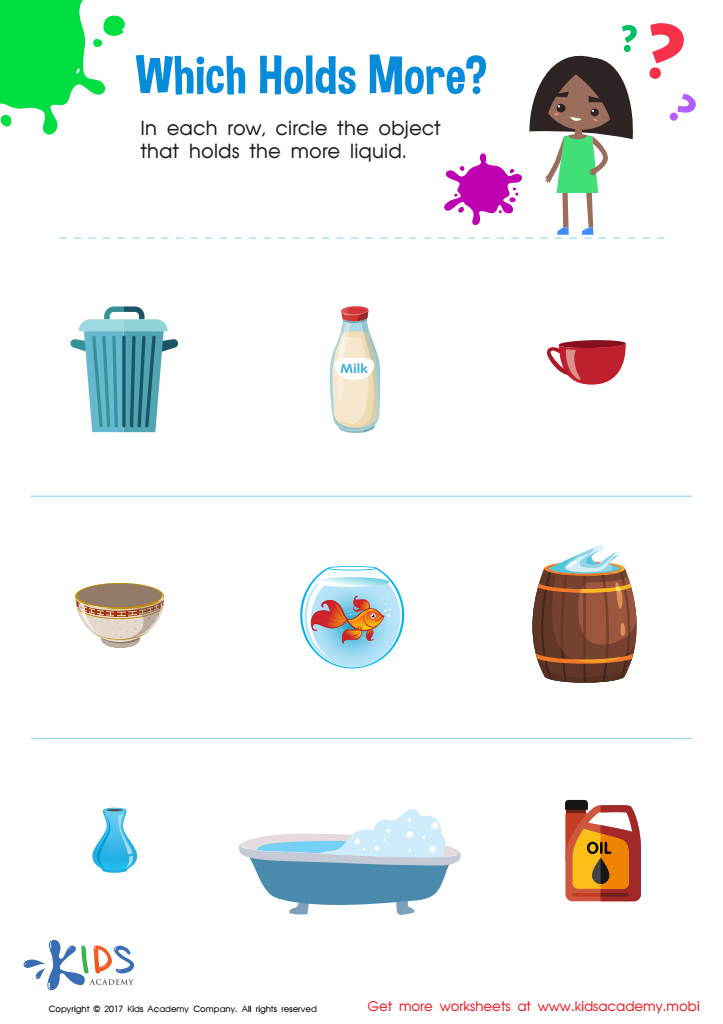
Which Holds More: Capacity Worksheet
Kids learn volume with containers of different capacities, such as mugs and barrels, and understand which can hold more liquid. A fun and interactive way to teach essential math concepts.
Which Holds More: Capacity Worksheet
Worksheet
Join Kids Academy for Free
Who is primarily going to use this learning content?






.jpg)

Parents and teachers should prioritize basic measurement concepts in mathematics for children ages 5-6 due to the foundational role these skills play in a child's cognitive development. At this age, children are naturally curious, using measurement concepts in their everyday lives, such as comparing sizes, weighing objects, or understanding lengths. Engaging with these concepts not only enhances their math literacy but also hones critical thinking and problem-solving skills.
Early exposure to measurement lays the groundwork for more advanced math topics. It helps young learners develop an understanding of units, quantities, and the relationships between different measurements. Additionally, activities involving measurement can foster a love for math by making it tangible and relatable.
Furthermore, incorporating these concepts in learning allows children to develop language skills—using terms like "longer," "shorter," "heavier," and "lighter." These discussions build vocabulary and comprehension while encouraging collaborative learning experiences with peers or family members.
Ultimately, focusing on measurement concepts in early education nurtures confident learners and prepares them for future academic success. By emphasizing the importance of basic measurements, parents and educators become vital partners in fostering a child’s interest in math and science and their analytical skills for life.








