
Developing math skills Normal Math Worksheets for Ages 5-6
3 filtered results
Difficulty Level
Grade
Age
-
From - To
Subject
Activity
Standards
Developing math skills for children aged 5-6 is crucial as it lays the groundwork for future academic success. Kids Academy offers a comprehensive selection of Normal Math Worksheets designed specifically for this age group. These printable resources cover essential topics like counting, addition, subtraction, and more. Engaging activities and colorful designs motivate young learners to grasp basic math concepts effortlessly. Each worksheet is crafted to develop critical thinking, problem-solving, and fine motor skills while making learning fun and enjoyable. Equip your child with the fundamental math skills they need to excel in school and build a lifelong love of learning.
Favorites
With answer key
Interactive
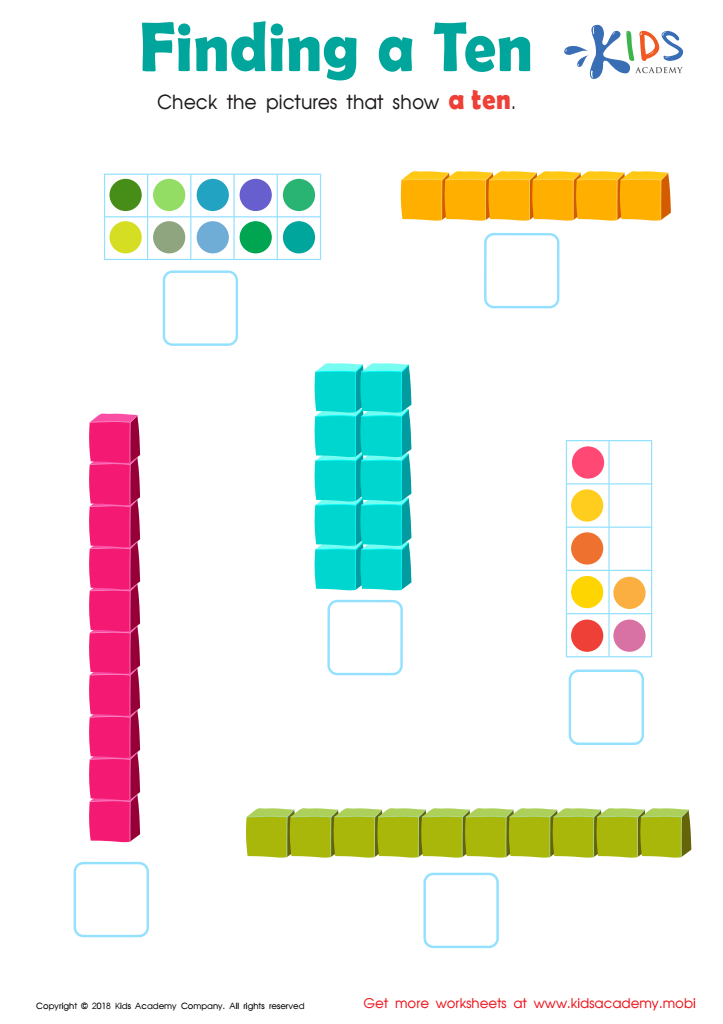
Finding a Ten Worksheet
Can your child count to ten? Distinguish groups of ten? This free printable worksheet uses shapes and colors to help first graders learn to count and understand what groups of numbers look like. It's fun and easy to comprehend, helping kids master the fundamentals of math.
 Assign to My Students
Finding a Ten Worksheet
Worksheet
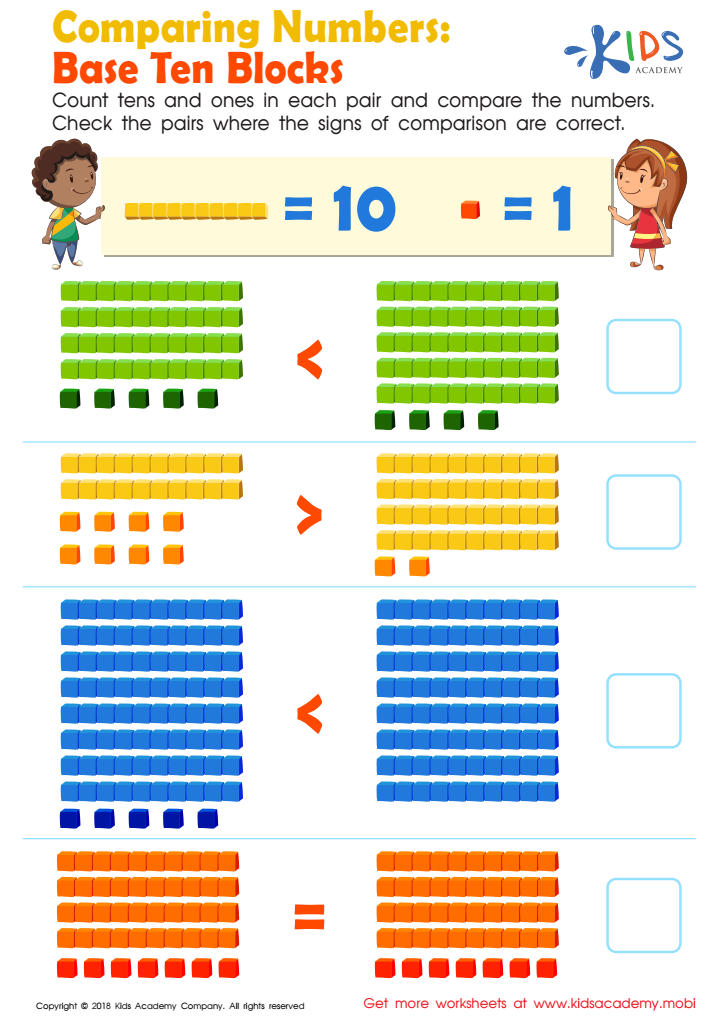
Comparing Numbers: Base Ten Blocks Worksheet
Make math fun for your child with a colorful worksheet. They'll need to compare signs by counting blocks on each side and signifying whether it's correct or not. This is one way to help your child beat the unhappiness that comes with math.
Comparing Numbers: Base Ten Blocks Worksheet
Worksheet
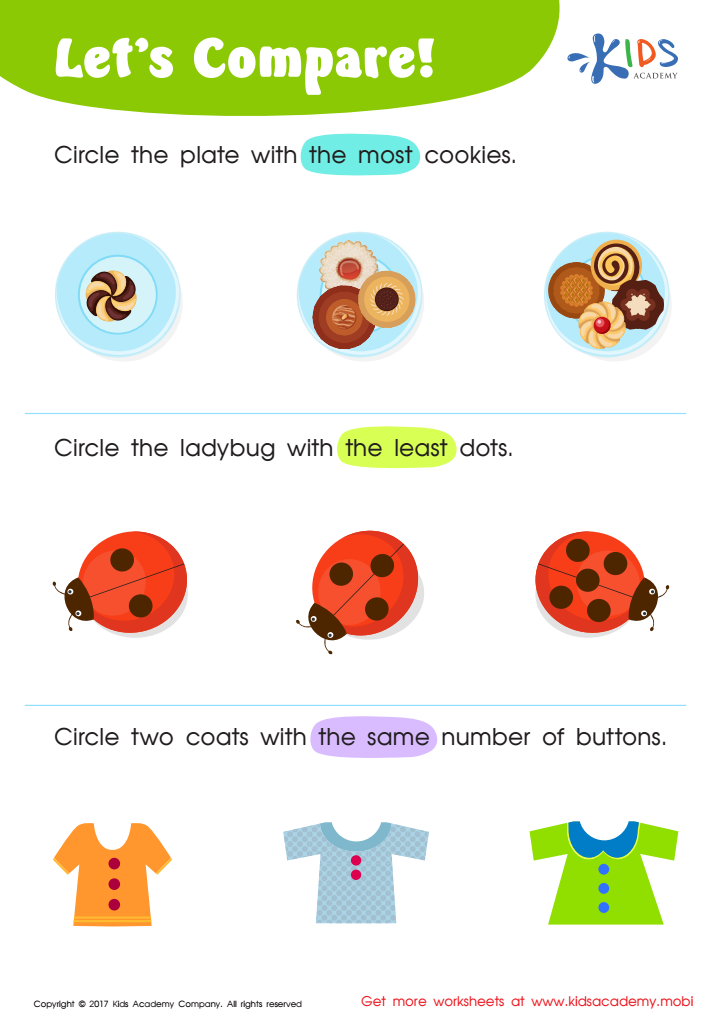
Matching: Classifying Toys by Size Worksheet
.
Have your young one's observation and counting skills ready for this worksheet; carefully look through the images and count the objects, then circle the plates with the least, most or equal number of patterns. Pay attention and have good counting abilities to make this task easy.
Matching: Classifying Toys by Size Worksheet
Worksheet
Join Kids Academy for Free
Who is primarily going to use this learning content?








Developing math skills in children aged 5-6 is crucial as it lays a strong foundation for their future academic success and everyday life problem-solving abilities. At this formative stage, young minds are extraordinarily receptive and can grasp fundamental concepts of numbers, patterns, and shapes, which are building blocks for more complex mathematical thinking.
First and foremost, early math skills are predictive of later academic achievement not only in mathematics but also in reading and general learning. Understanding basic math concepts boosts children's reasoning abilities and promotes logical thinking. These skills are essential as children progress through higher educational levels where math becomes progressively abstract and complex.
Moreover, developing math skills enhances cognitive development by encouraging children to think critically and make connections. This early brain development plays a key role in creating efficient learning pathways that benefit overall intellectual growth.
For practical everyday life, early math proficiency helps children understand time, money, quantity, and measurements. These are essential skills for navigating daily tasks and encounters, from using a clock to managing allowances or even baking a simple recipe.
Lastly, fostering a positive attitude toward math during these early years can help prevent anxiety related to the subject. Confidence in their abilities to solve problems makes children more open to tackling challenges, leading to better resilience and adaptability throughout life.
Parents and teachers have a pivotal role in nurturing these foundational skills through engaging activities and positive reinforcement, setting children on a path of lifelong learning and curiosity.








