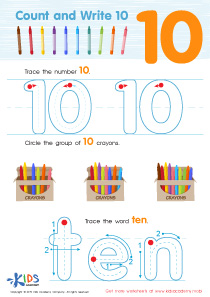
Animal recognition Normal Numbers 0–10 Worksheets for Ages 5-6
3 filtered results
-
From - To
Enhance your child's learning experience with our engaging Animal Recognition Normal Numbers 0–10 Worksheets, designed for ages 5-6. These captivating worksheets combine early math skills with animal recognition, making learning both fun and effective. Children will practice counting while identifying various animals, fostering their cognitive development and enhancing their understanding of numbers. Each worksheet is visually appealing and age-appropriate, encouraging young learners to explore and discover through colorful illustrations and interactive activities. Perfect for home or classroom use, these worksheets help build foundational math skills while keeping kids excited about learning! Download your set today and watch your child's confidence grow!
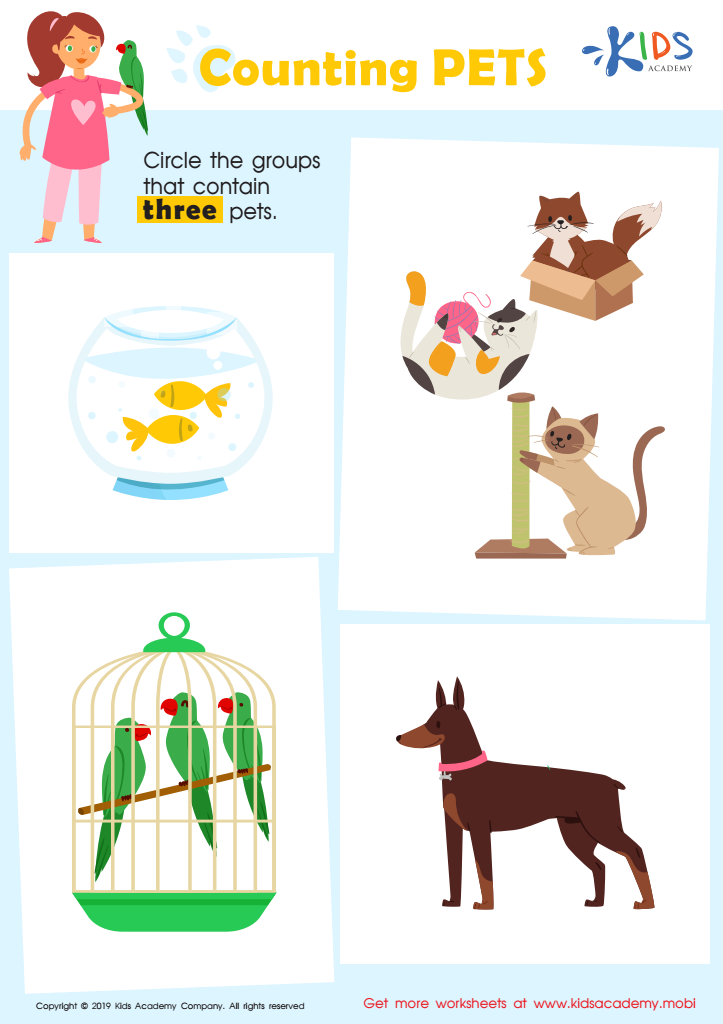
Counting Pets Worksheet
 Assign to My Students
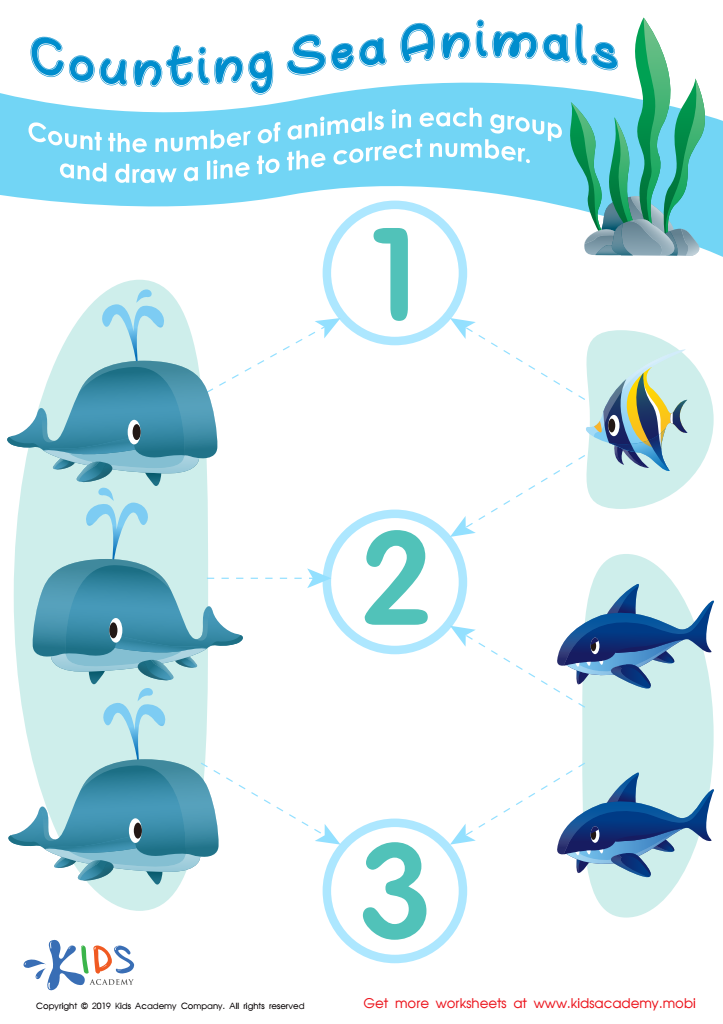
Counting Sea Animals Worksheet
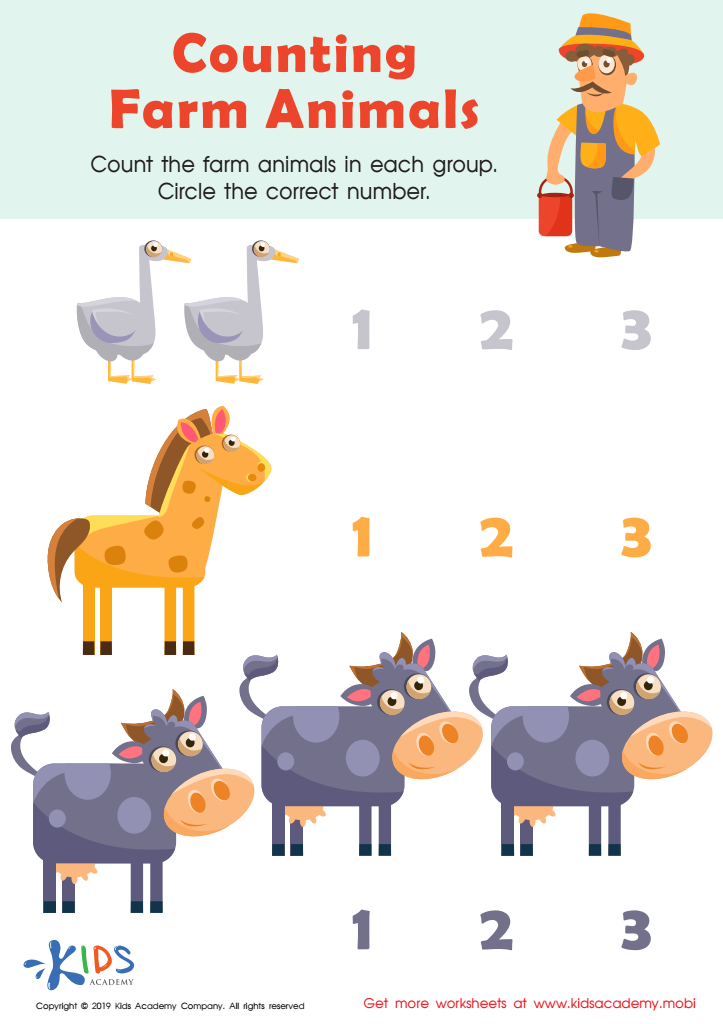
Counting Farm Animals Worksheet








Animal recognition and normal number skills from 0 to 10 are crucial for children ages 5-6 as they provide a strong foundation for both social and cognitive development. Firstly, animal recognition helps children build ecological awareness and empathy towards living beings. Identifying various animals can ignite curiosity about nature and encourage responsible behavior towards wildlife.
Meanwhile, learning to recognize and understand numbers is essential in developing early mathematical skills. Children in this age group are at a prime developmental stage for grasping basic math concepts, and recognizing numbers lays the groundwork for operations such as addition and subtraction later on. It also enhances critical thinking skills, as comparing quantities, counting animals, and sorting them can foster problem-solving abilities.
Furthermore, integrating these two subjects can make learning more engaging. Activities that involve counting animals—such as playing games or reading related stories—can foster a love for both mathematics and nature.
Ultimately, when parents and teachers emphasize animal recognition alongside normal number concepts, they promote holistic development, improve cognitive abilities, and inspire an understanding of the interconnectedness of life and mathematics. Investing time in these areas yields engaged learners ready for future academic challenges.