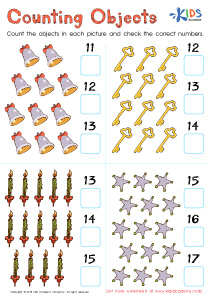
Addition Practice Normal Place Value Worksheets for Ages 5-6
4 filtered results
-
From - To
Enhance your child's math skills with our "Addition Practice Normal Place Value Worksheets for Ages 5-6". These expertly designed worksheets make learning fun and engaging, helping young learners grasp essential addition concepts within normal place values. Perfect for kindergarten and early grade students, each worksheet provides activities that strengthen addition skills and promote mathematical confidence. Ideal for at-home practice or classroom use, our worksheets support fundamental math development through colorful and interactive exercises. Encourage smooth numerical progression and a strong foundation in math with these practical and educational resources. Start their journey to math mastery today!
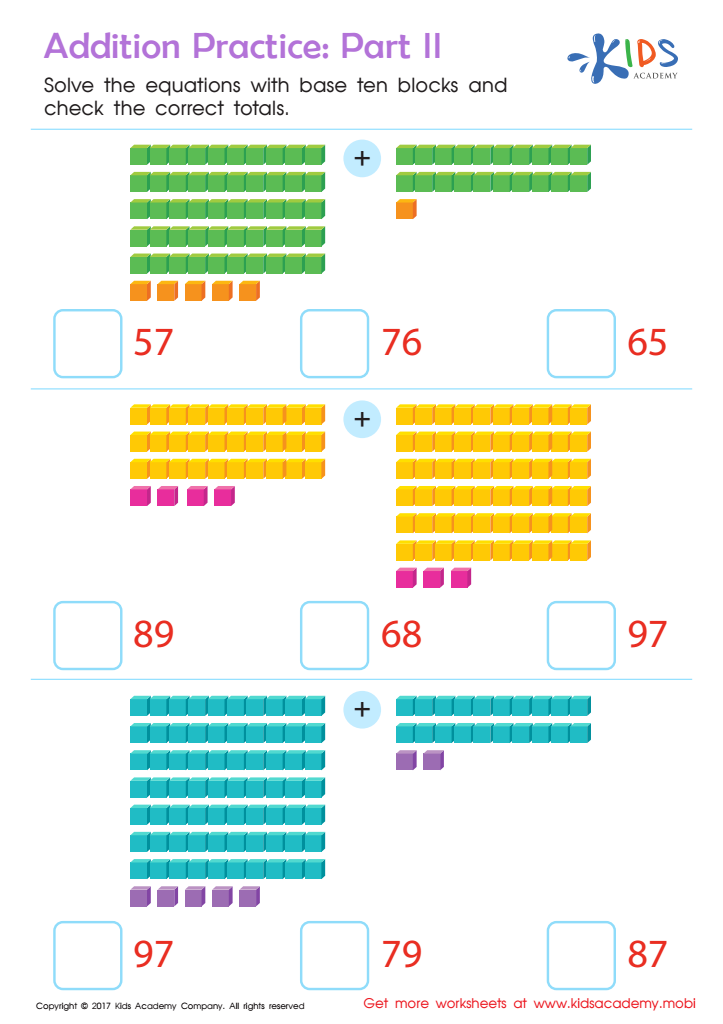
Addition Practice Sheet: Part 2
 Assign to My Students
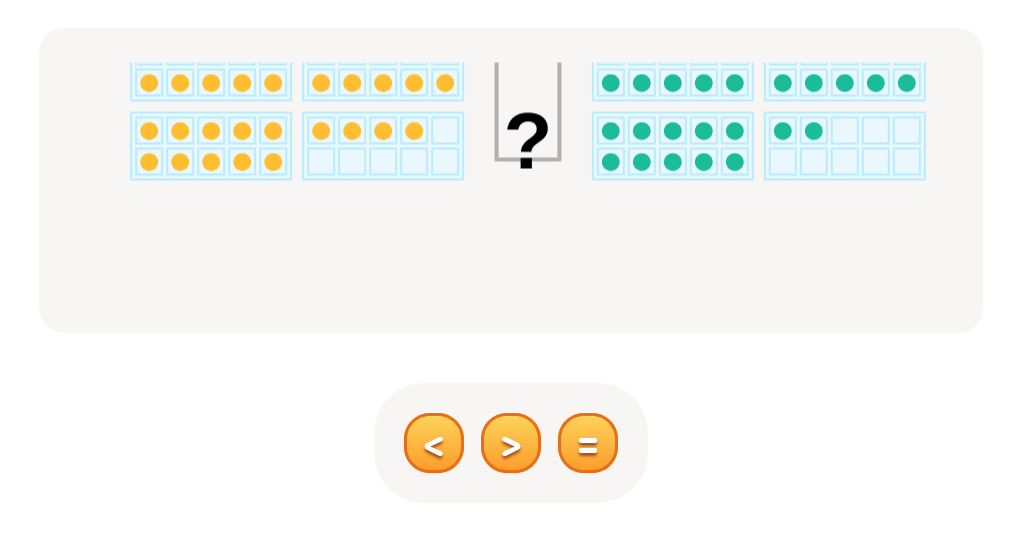

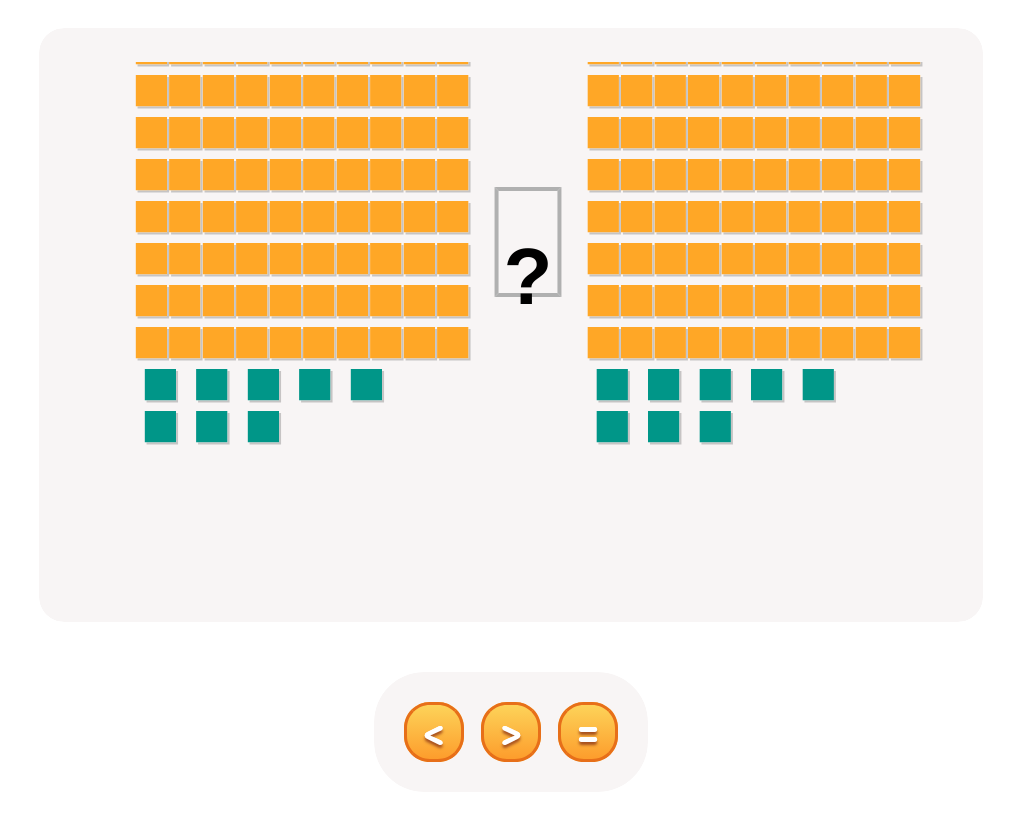
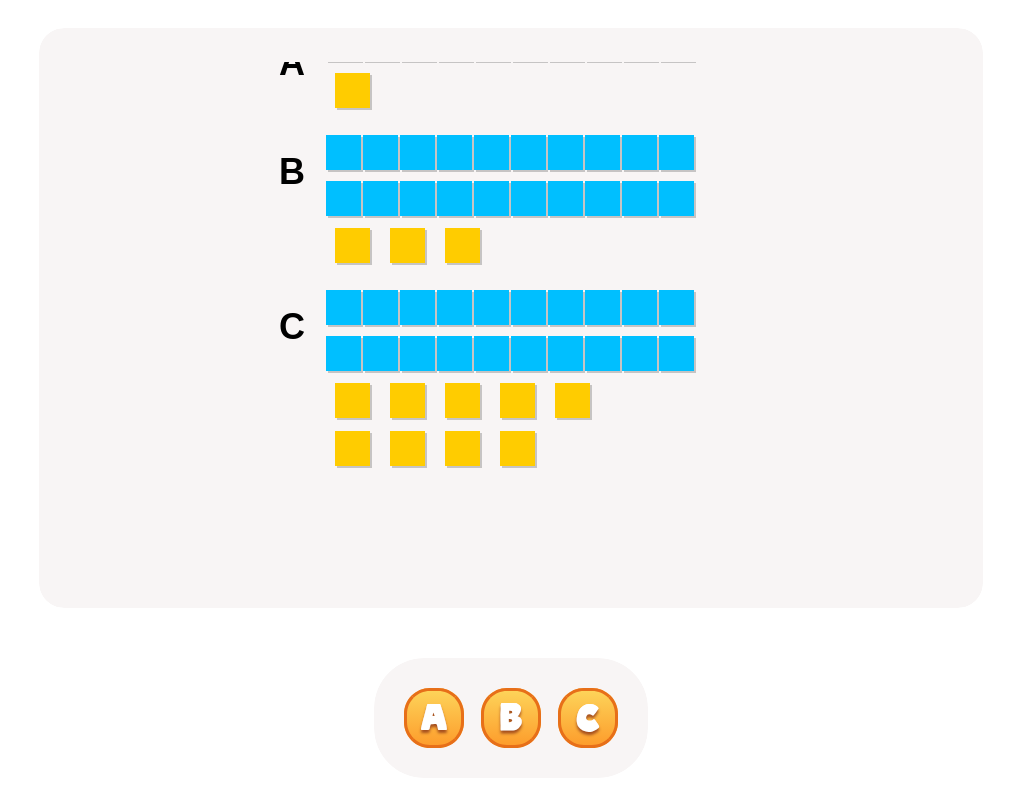
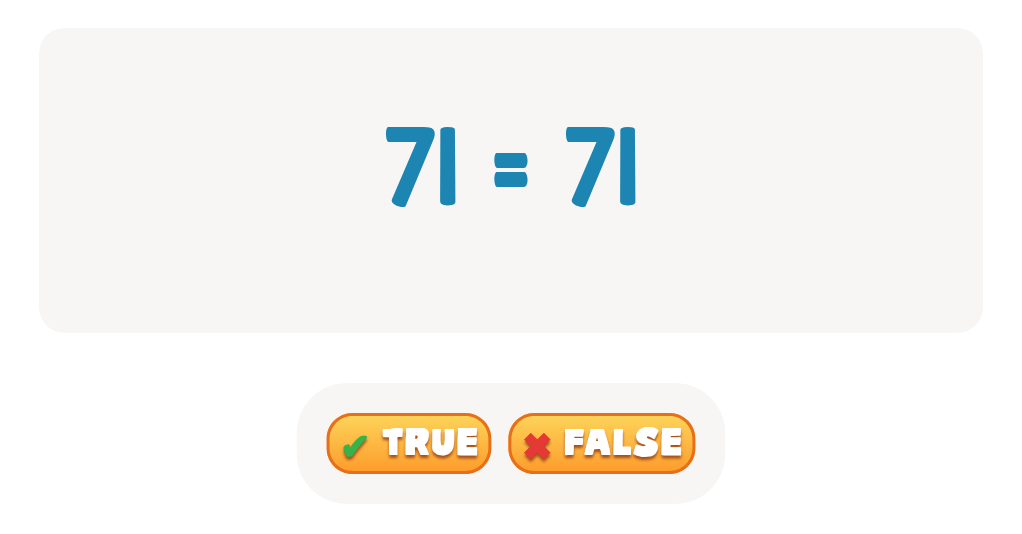
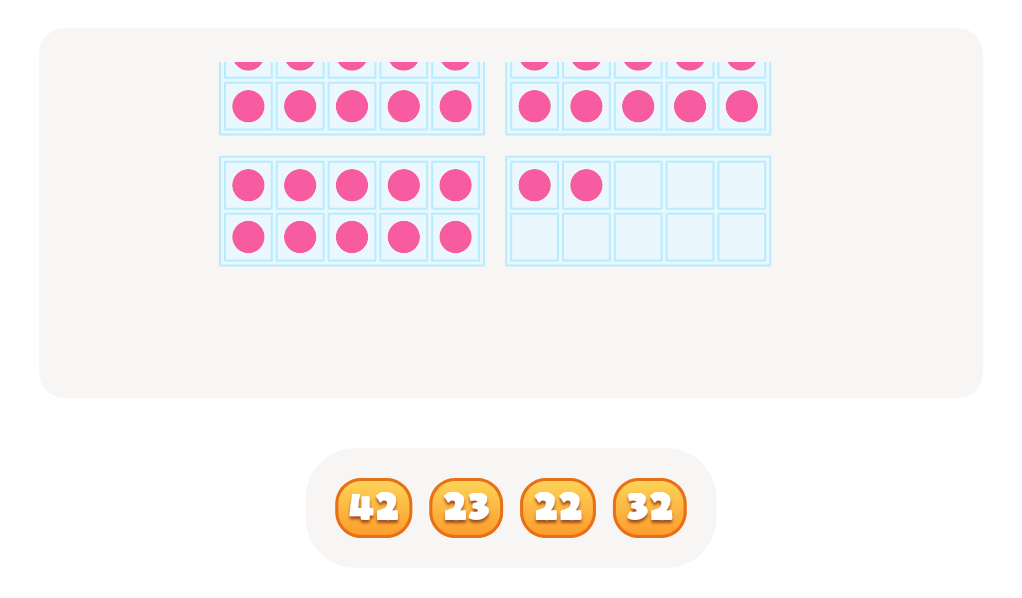
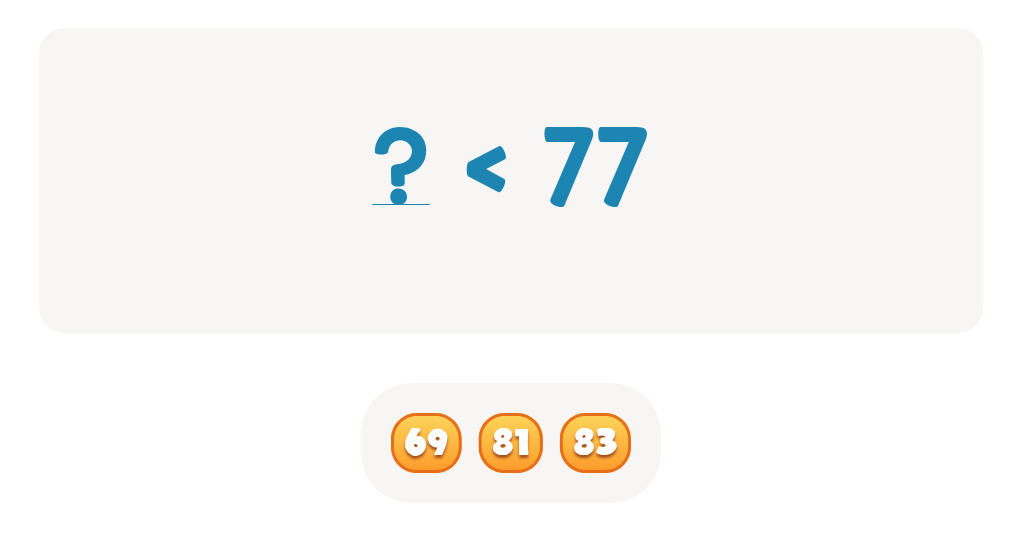
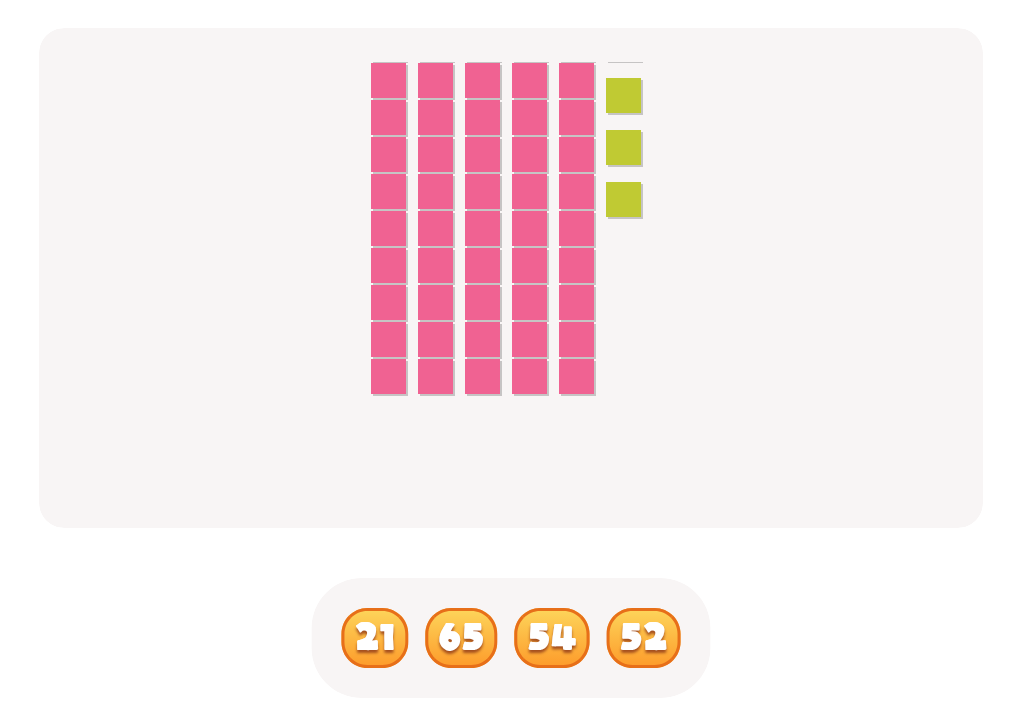
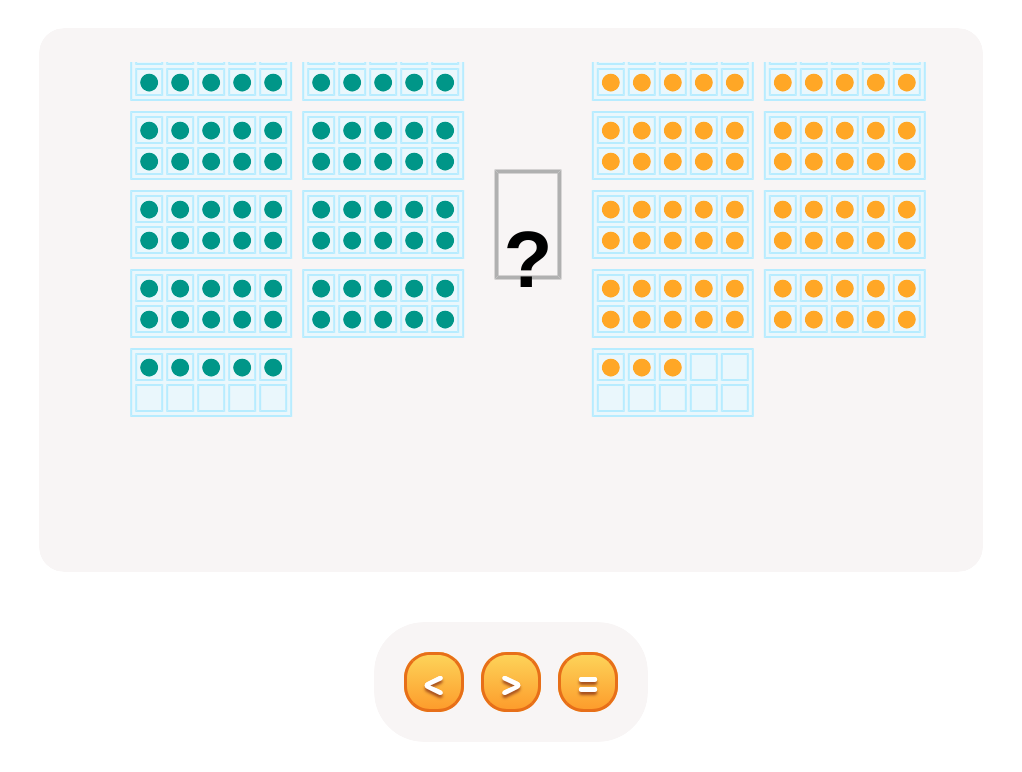
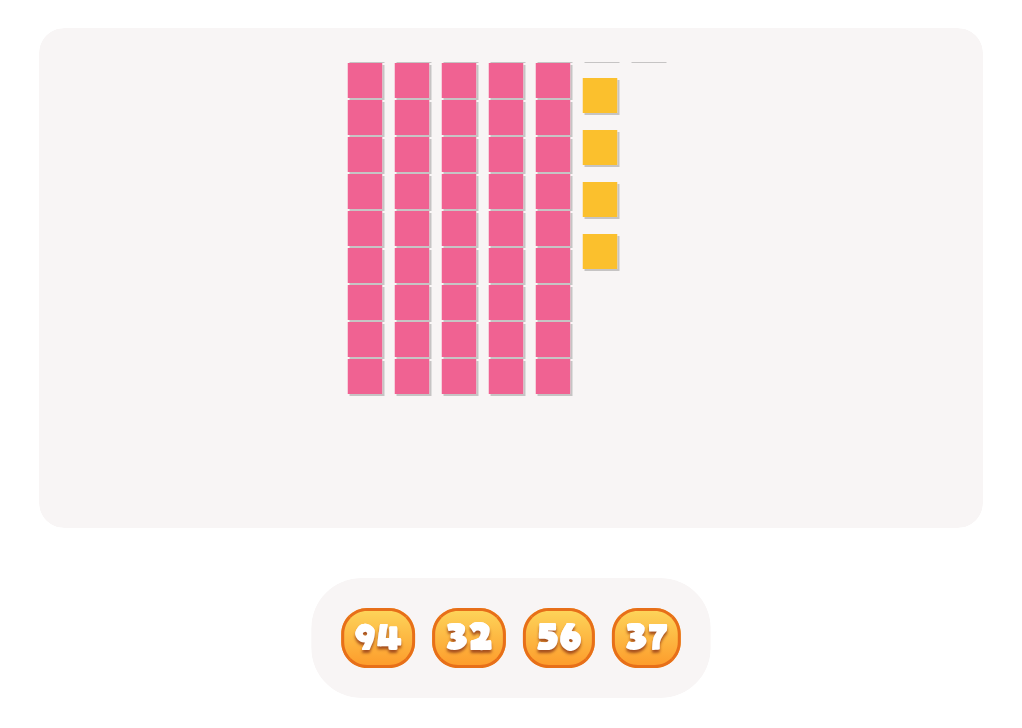
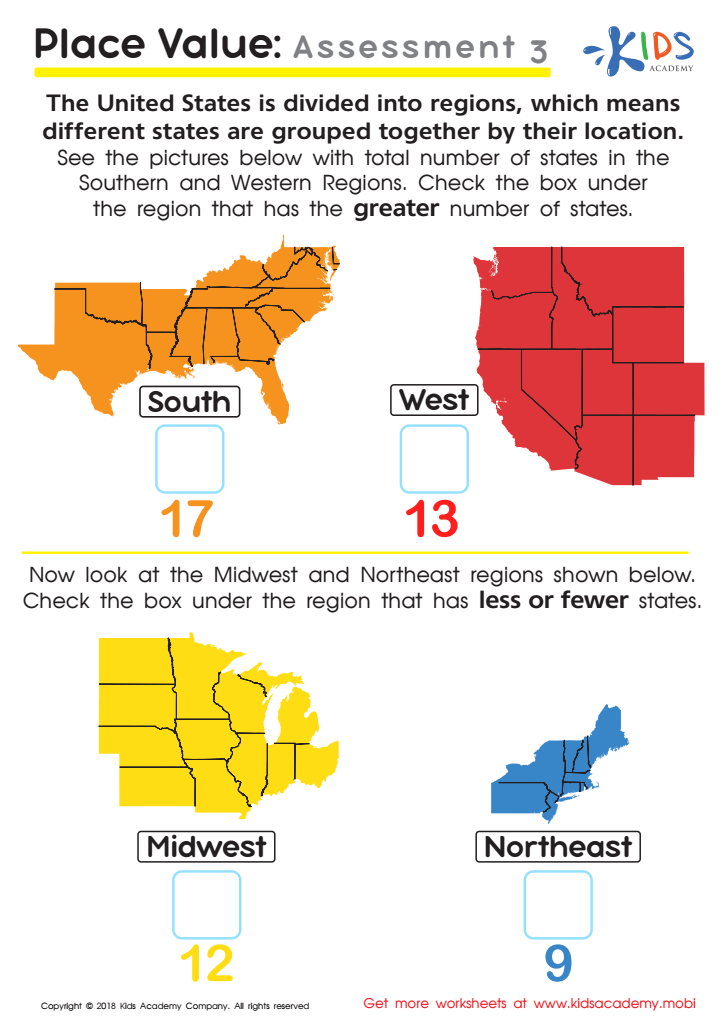
Place Value: Assessment 3 Worksheet
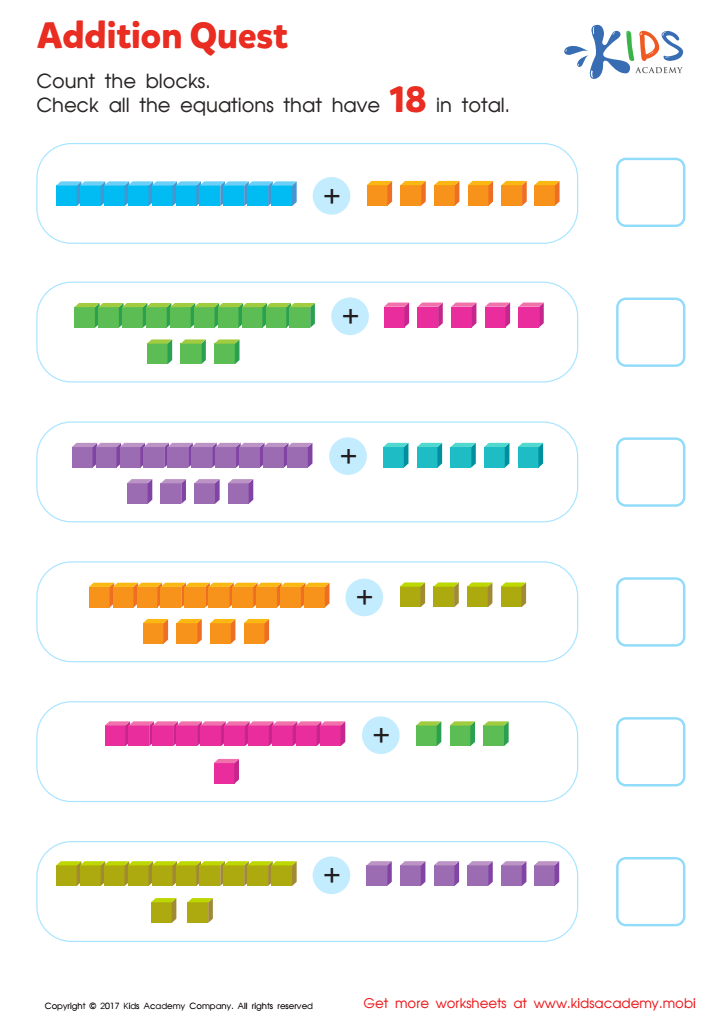
Addition Quest Worksheet: Part 2
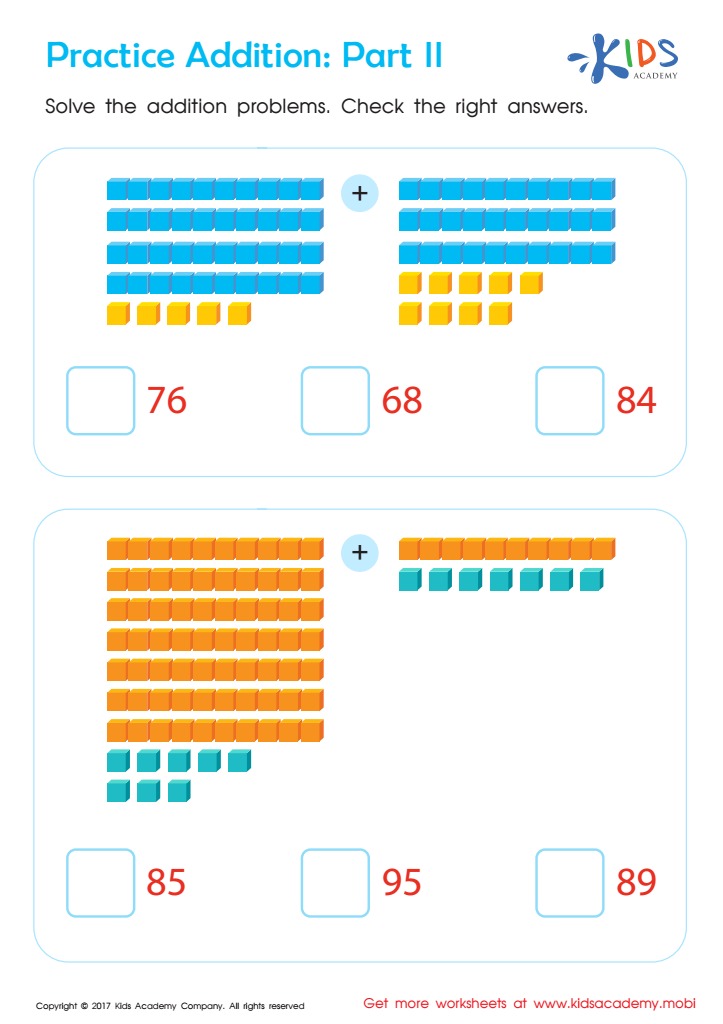
Practice Addition: Part 2 Worksheet








Parents and teachers should prioritize addition practice with normal place value for children aged 5-6 as it builds a crucial mathematical foundation. At this developmental stage, understanding basic addition paves the way for more complex arithmetic skills necessary in later grades. Mastering place value helps children grasp the concept of "tens" and "ones," enabling them to organize numbers systematically rather than see them as individual and unrelated figures. This understanding is critical not just for addition, but for subtraction, multiplication, and division as well.
Engaging in consistent addition practice improves mental math capabilities, promoting problem-solving and logical reasoning skills. It also boosts confidence when children can accurately solve problems, encouraging a positive attitude towards mathematics. When young learners successfully understand and apply place value concepts, they exhibit a stronger grasp of rounding, estimation, and other vital mathematical operations as they progress.
Furthermore, developing these skills early on helps identify and address any learning issues sooner, allowing for timely intervention and minimizing future academic challenges. Therefore, integrating addition practice with place value is essential in nurturing numerate, confident, and competent future mathematicians. Regular practice also fosters a supportive learning environment where critical thinking and mathematical curiosity thrive.