
Story analysis Normal Reading Fiction Worksheets for Ages 5-6
3 filtered results
Difficulty Level
Grade
Age
-
From - To
Subject
Activity
Standards
Explore our engaging Story Analysis Normal Reading Fiction Worksheets designed specifically for ages 5-6! These worksheets encourage young learners to delve into the wonderful world of storytelling, enhancing their reading comprehension and critical thinking skills. Each activity focuses on key elements of fiction, such as characters, settings, and plot, allowing children to express their understanding creatively. With visually appealing layouts and age-appropriate content, kids will develop a love for reading while building essential analytical skills. Perfect for classroom use or homeschooling, these worksheets make learning fun and interactive, fostering a strong foundation for future literacy success. Get started on your child's reading journey today!
Favorites
With answer key
Interactive
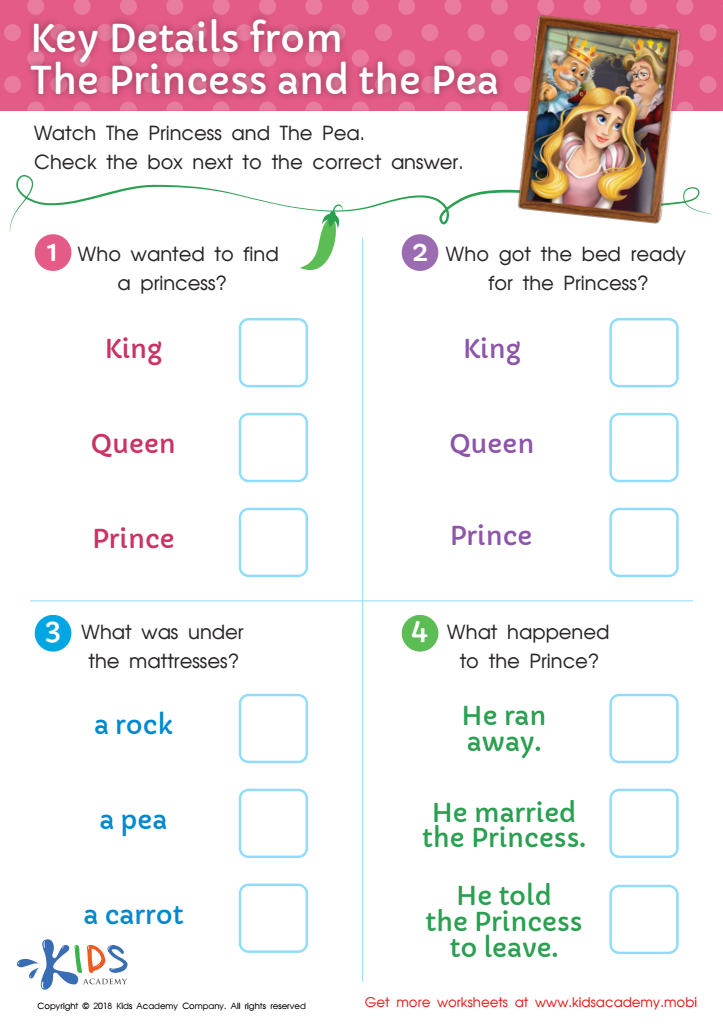
Key Details from the Princess and the Pea Worksheet
After reading The Princess and the Pea, ask your students questions to assess their comprehension of the story. Check their knowledge of key details. This printable can be used to help evaluate their understanding. Encouraging the recall of story events helps build important reading skills.
 Assign to My Students
Key Details from the Princess and the Pea Worksheet
Worksheet
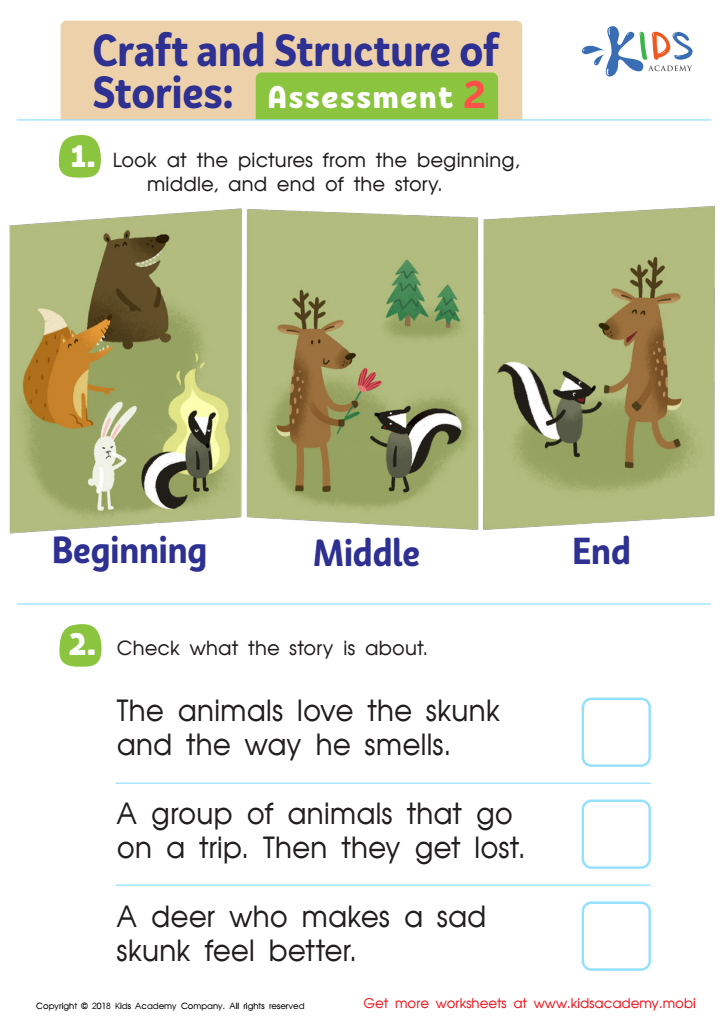
Craft and Structure of Stories: Assessment 2 Worksheet
Help your child assess their story sequencing and reading comprehension skills using this cute worksheet! It encourages them to look at the three pictures on the page, each representing a scene from the beginning, middle and end. Ask them what the story is about, then let them check the box next to the correct answer. This is a great way to ensure they understand the main events of a story.
Craft and Structure of Stories: Assessment 2 Worksheet
Worksheet
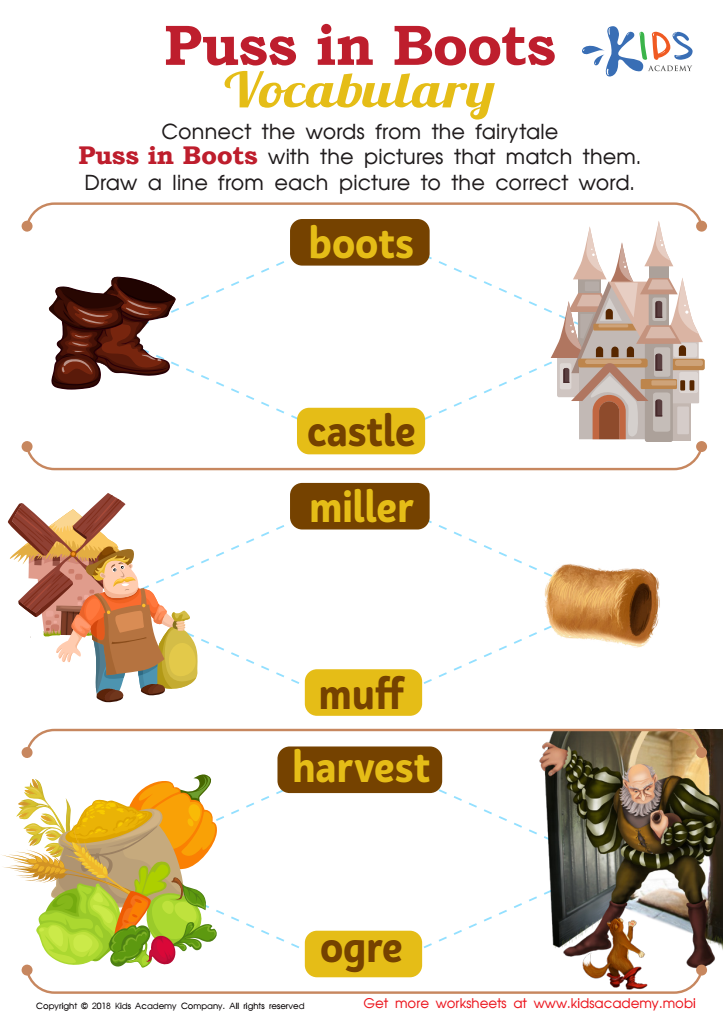
Puss in Boots Vocabulary Worksheet
Let your kids enjoy story-telling while learning at the same time. Help them learn from the fairytale, Puss in Boots, by connecting words from the worksheet with the matching pictures. Ask them to draw a line between each picture and corresponding word to build their vocabulary.
Puss in Boots Vocabulary Worksheet
Worksheet
Join Kids Academy for Free
Who is primarily going to use this learning content?


.jpg)





Story analysis in normal reading fiction for children ages 5-6 is vital for several reasons. First, it fosters critical thinking skills. When young readers engage with stories, they learn to comprehend and interpret narrative elements such as characters, settings, and plot, encouraging them to think analytically about the material.
Second, story analysis enhances vocabulary development. By discussing the language and terms used in stories, parents and teachers can introduce new words in context, improving children's understanding and use of language.
Moreover, this process nurtures empathy and emotional intelligence, as children explore different perspectives, feelings, and experiences depicted in stories. This insight helps them relate to their peers and develop better social skills.
Additionally, story analysis promotes creativity. When children reflect on story endings or alternate scenarios, they exercise their imaginative abilities, which is crucial for their overall cognitive and emotional growth.
Lastly, incorporating story analysis into reading practices helps create a love for reading. Engaging discussions about stories can inspire a lifelong passion for literature, making children more enthusiastic and motivated readers. Therefore, it's essential for parents and teachers to prioritize story analysis in developing young children's literacy skills and emotional understanding.







