Animal knowledge Normal Reading Non-Fiction Worksheets for Ages 5-6
3 filtered results
Difficulty Level
Grade
Age
-
From - To
Subject
Activity
Standards
Introduce your little learners to the amazing world of animals with our "Animal Knowledge Normal Reading Non-Fiction Worksheets for Ages 5-6." Designed to captivate young minds, these worksheets offer intriguing facts and colorful illustrations about various animals. Perfect for early readers, each worksheet enhances reading skills while nurturing curiosity and knowledge about wildlife. Whether it’s learning about habitats, diets, or unique traits, these resources will provide a fun and educational experience. Ideal for classroom or at-home learning, our worksheets ensure a foundation in both reading proficiency and animal awareness. Turn reading time into an adventure today!
Favorites
With answer key
Interactive
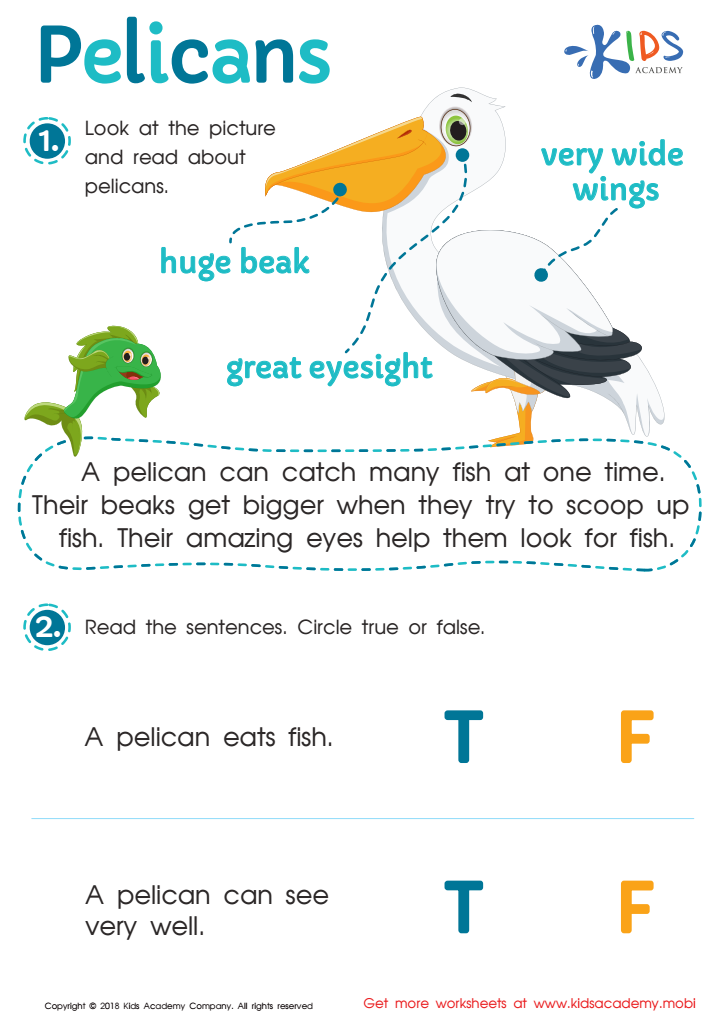
Pelicans Worksheet
This printable worksheet will help your child learn to read and analyze informational passages. It's fun and educational, featuring an animal science topic about pelicans. Read the passage and view the graph, then answer the questions by indicating if the statements are true or false.
 Assign to My Students
Pelicans Worksheet
Worksheet
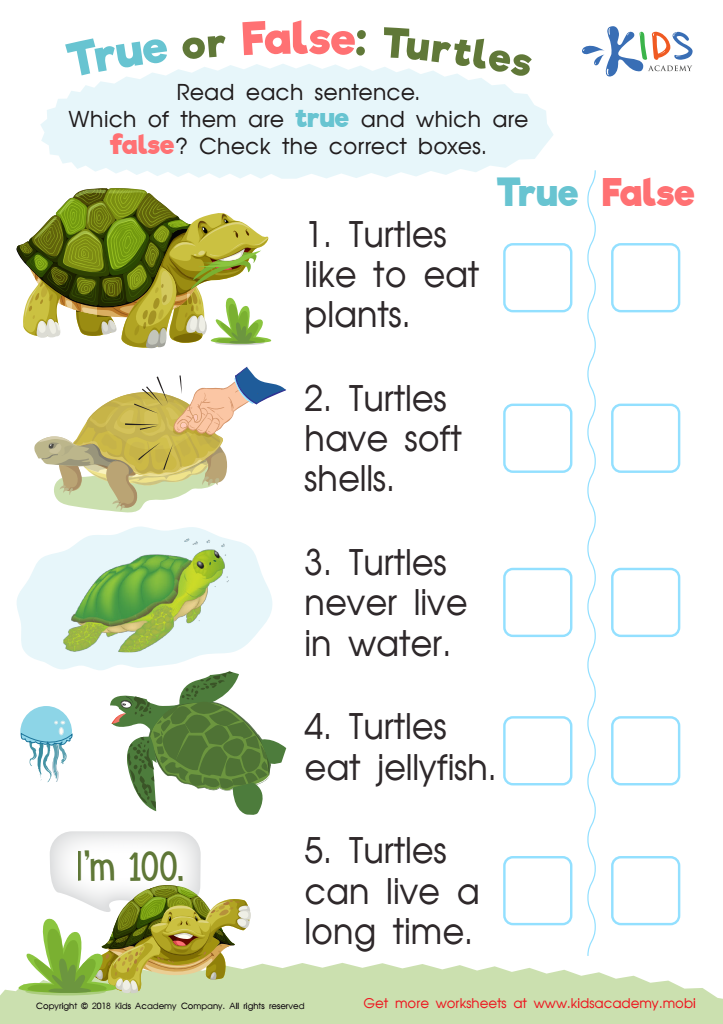
True or False: Turtles Worksheet
Print this free downloadable worksheet to strengthen your child's reading comprehension. Assist them to read each sentence and recall facts about turtles. Check true or false for each statement to verify their knowledge. Perfect for early learners!
True or False: Turtles Worksheet
Worksheet
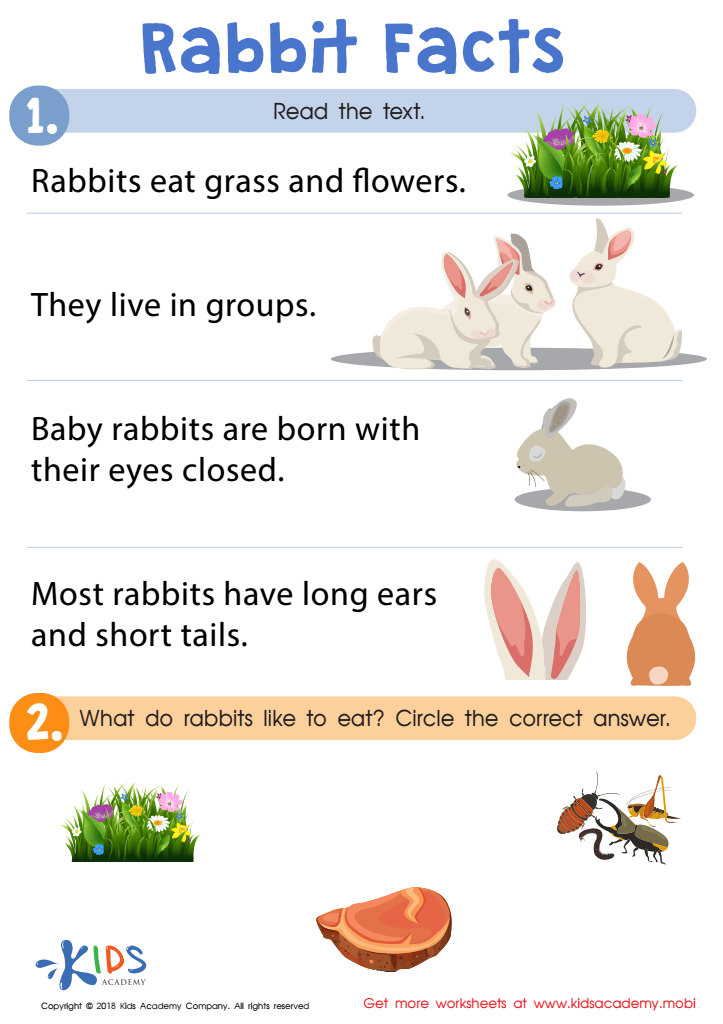
Rabbit Facts Worksheet
Informational texts offer great learning opportunities. Kids Academy's reading worksheet helps children read and recall important details from a text about bunnies. Kids will love it! Simply read the rabbit facts and circle the correct pictures to answer the questions.
Rabbit Facts Worksheet
Worksheet
Join Kids Academy for Free
Who is primarily going to use this learning content?








Parents and teachers should prioritize animal knowledge in non-fiction reading for children aged 5-6 because it forms an essential part of their formative education. Firstly, reading about animals captivates young minds and fuels their curiosity and imagination, making learning a delightful experience. This fascination with animals can enhance their concentration and foster a love for reading early on.
Understanding different animals and their habitats introduces critical concepts of science and nature, instilling a foundation for environmental awareness and respect for wildlife. At this age, children’s cognitive abilities are rapidly developing, and learning factual information about animals can support critical thinking skills, vocabulary building, and comprehension.
Additionally, animal stories often come with illustrations and interesting facts that can assist in visual learning and retention. Discussing animals also provides opportunities for parent-child or teacher-student engagement, encouraging interactive and communicative learning environments. This engagement nurtures bonds and aids social development.
Furthermore, animal knowledge can inculcate empathy and ethical understanding as children learn about the care, protection, and needs of different creatures. In essence, integrating animal non-fiction into early education helps produce well-rounded, informed, and compassionate individuals, laying the groundwork for lifelong learning and environmental stewardship.