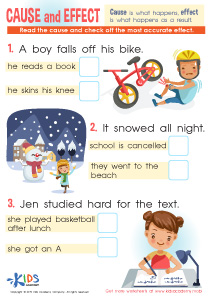
Vocabulary development Normal Reading Non-Fiction Worksheets for Ages 5-6
3 filtered results
Difficulty Level
Grade
Age
-
From - To
Subject
Activity
Standards
Enhance your child's vocabulary with our expertly designed Normal Reading Non-Fiction Worksheets, tailored for ages 5-6. These worksheets are crafted to foster vocabulary development while engaging young readers with fascinating non-fiction topics. Each worksheet introduces new words, encouraging both understanding and usage in context. Our interactive and visually appealing exercises help children build a strong foundation in reading and comprehending non-fiction texts. Ideal for early readers, these worksheets support literacy skills, critical thinking, and a lifelong love for learning. Dive into a world of knowledge and language with our educational resources today!
Favorites
With answer key
Interactive
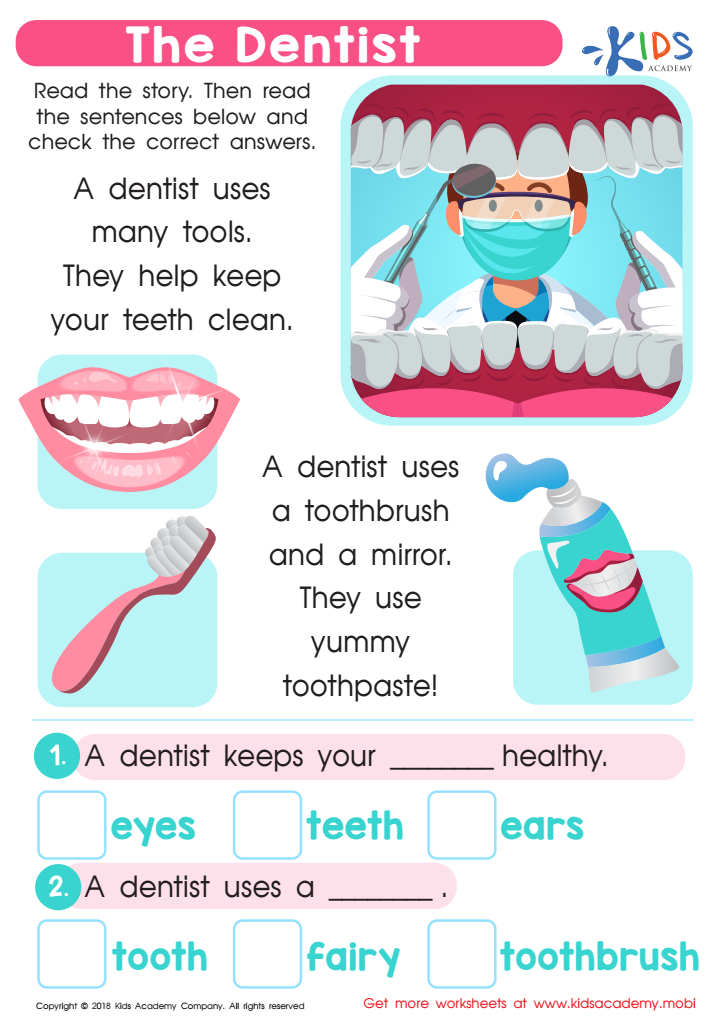
The Dentist Worksheet
Community helpers are essential for our wellbeing. This vibrant worksheet is a great way to introduce children to the dentist and their tools. They'll read the text, use the pictures and answer questions about what the dentist does and what they use. It's a great way to make the dentist more approachable, as well as help with comprehension.
 Assign to My Students
The Dentist Worksheet
Worksheet
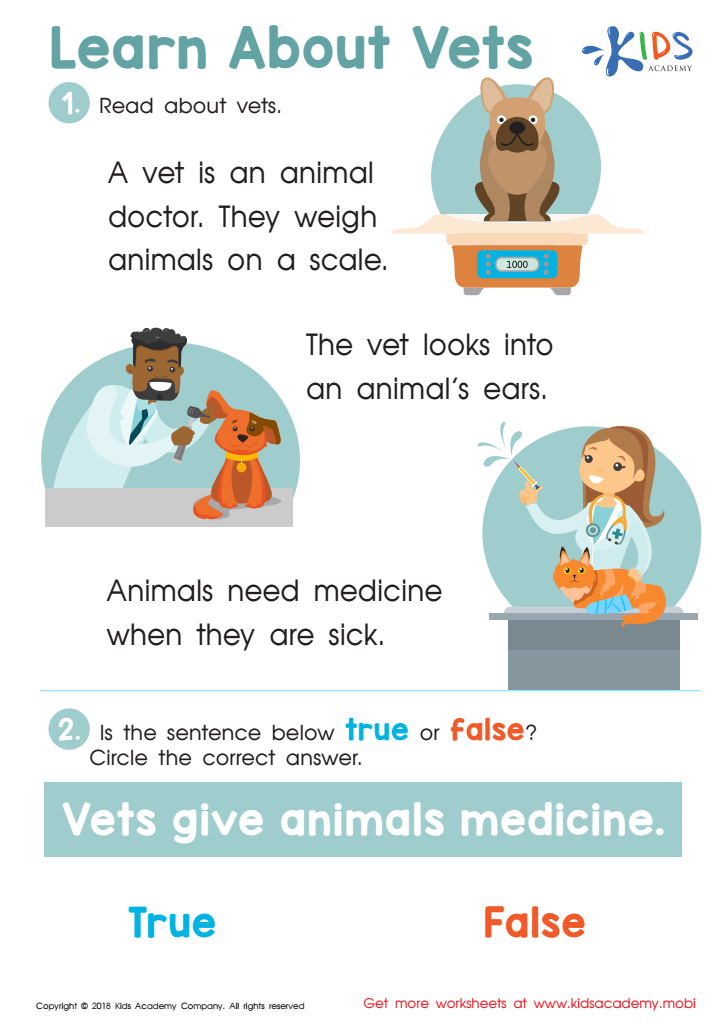
Learn About Vets Worksheet
Assess your child's reading comprehension and recall with this ELA worksheet! It reviews interesting facts about vets with brief passages and pictures to help your reader. Ask the question at the bottom to see what they learned. It's a great way to check understanding!
Learn About Vets Worksheet
Worksheet
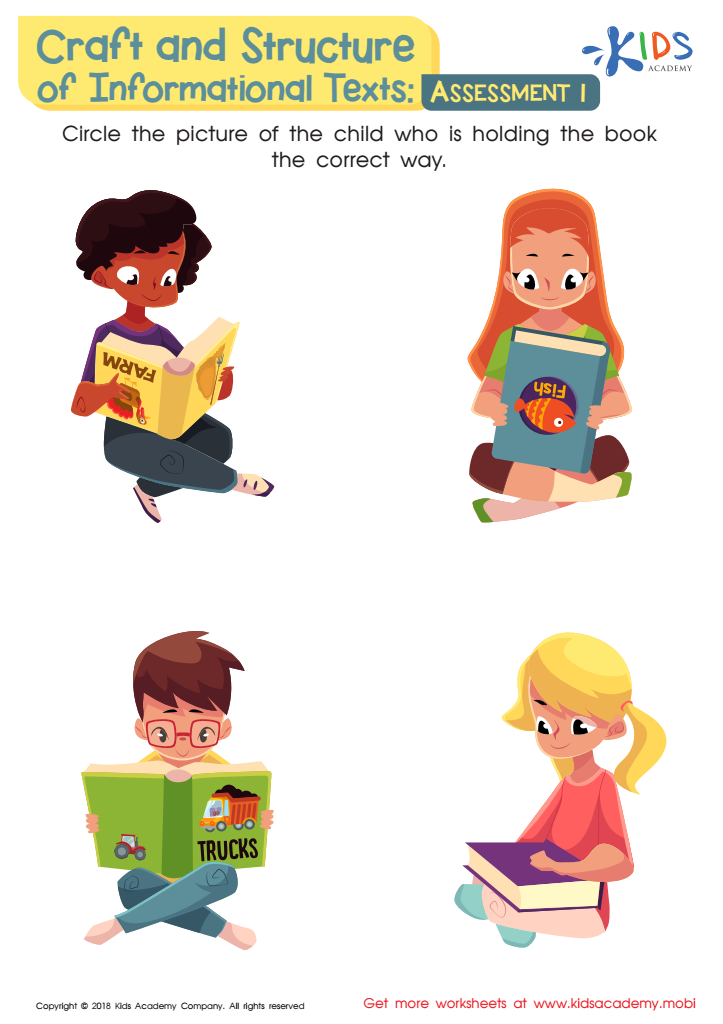
Craft and Structure of Informational Texts: Assessment 1 Worksheet
Young children need to know how to hold books correctly when they start reading. This assessment worksheet helps them show they know what to do. They'll look at the pictures and circle the child who is holding the book correctly. It's a great way to tell they are well on their way to becoming lifetime readers!
Craft and Structure of Informational Texts: Assessment 1 Worksheet
Worksheet
Join Kids Academy for Free
Who is primarily going to use this learning content?








Vocabulary development and reading non-fiction are crucial for children aged 5-6 as they significantly impact early literacy and cognitive growth. At this stage, children are rapidly expanding their language skills. A robust vocabulary allows them to understand and express complex ideas, leading to better communication both in and out of the classroom.
Exposure to non-fiction texts introduces children to factual information and diverse topics like animals, space, and history. This not only piques their curiosity but also helps build general knowledge, which is foundational for future learning. Non-fiction requires different comprehension strategies than fiction, encouraging analytical thinking and understanding of real-world concepts.
Boosting vocabulary through reading enriches a child's language processing abilities and enhances cognitive development critical for problem-solving and reasoning. It also supports their ability to follow instructions and perform well academically in various subjects, including science and social studies.
By prioritizing vocabulary development and engaging with non-fiction material, parents and teachers are setting the stage for lifelong learning. This helps children build the confidence and skills they need for advanced reading tasks, fostering a positive attitude towards learning and exploration. Overall, these skills are crucial for academic success and effective communication.