Knowledge application Normal Science Worksheets for Ages 5-6
3 filtered results
-
From - To
Explore our "Knowledge Application Normal Science Worksheets for Ages 5-6," designed to engage young learners in hands-on scientific exploration. These worksheets promote creativity and critical thinking while reinforcing foundational science concepts. Children will enjoy fun activities that encourage observation, classification, and reasoning. Ideal for early learners, our worksheets foster curiosity about the natural world and nurture essential skills through interactive exercises. From identifying plants to understanding simple experiments, these resources make learning science exciting and accessible. Download now to support your child's educational journey and spark a lifelong love for discovery! Perfect for both home and classroom use.
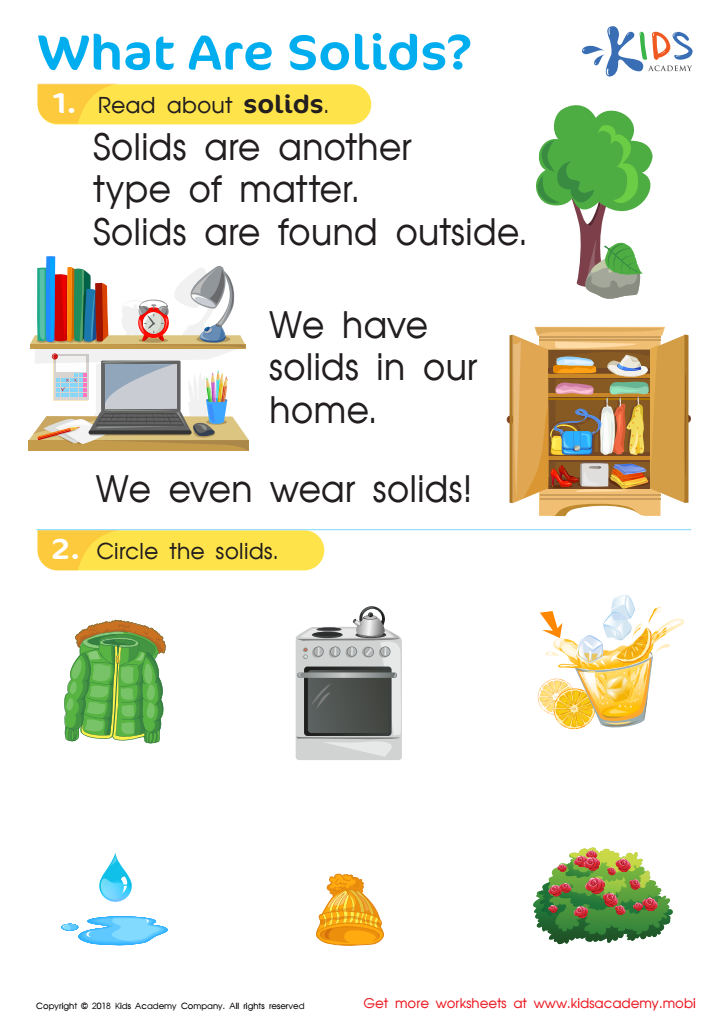
What Are Solids? Worksheet
 Assign to My Students
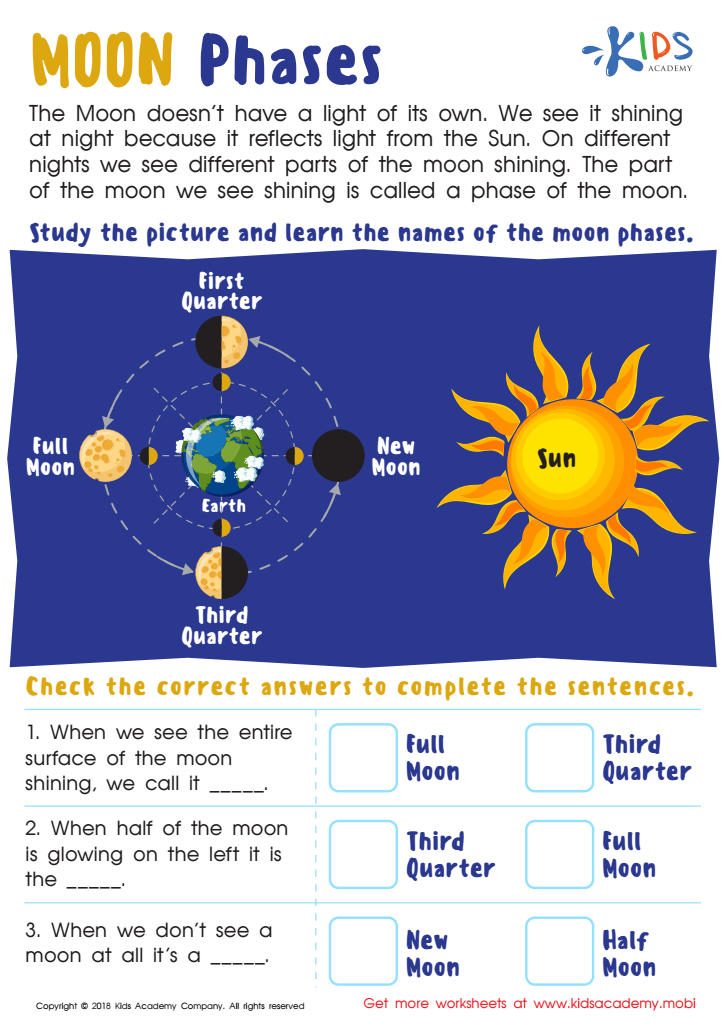
Moon Phases Worksheet
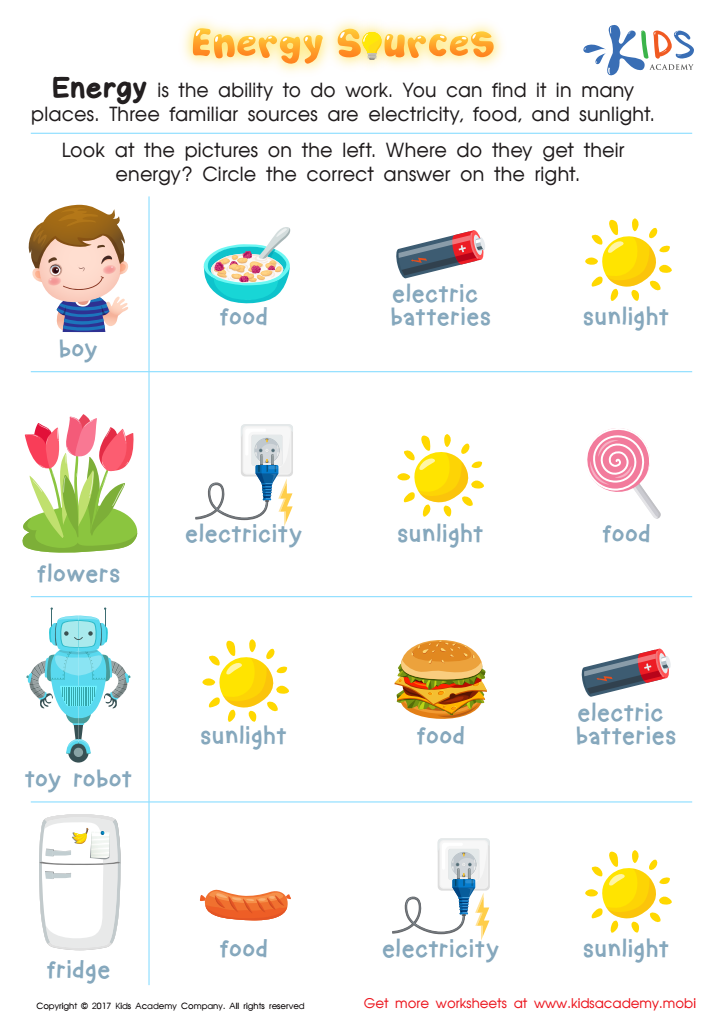
Energy Sources Printable








Knowledge application in Normal Science is critical for children aged 5-6 as it lays the foundation for scientific literacy and a growth mindset. At this developmental stage, children are naturally curious and eager to explore the world around them. Parents and teachers play a pivotal role in nurturing this curiosity by encouraging hands-on experiences that connect scientific concepts to real-life situations. Engaging children in simple experiments or observational activities fosters an understanding of the scientific method, encourages questioning, and promotes critical thinking skills.
Moreover, knowledge application in science aids in cognitive development, enhancing problem-solving abilities and creativity. When children apply what they've learned, they develop a sense of ownership over their knowledge, reinforcing their self-confidence and motivation to learn. Understanding concepts such as balance, force, and habitats through play and exploration also helps in the acquisition of language and communication skills, as children learn to articulate their observations and thought processes.
Investing in early science education helps children develop a lifelong interest in learning and inquiry, preparing them for future academic success. Overall, integrating Normal Science into early education fosters an environment where curiosity thrives, nurturing not only budding scientists but well-rounded, thoughtful individuals.







