Understanding directions Normal Science Worksheets for Ages 5-6
4 filtered results
-
From - To
Explore our "Understanding Directions Normal Science Worksheets" specifically designed for ages 5-6! These engaging worksheets help young learners develop essential directional skills through fun and interactive activities. Each sheet combines science concepts with easy-to-follow instructions, encouraging students to practice interpreting directions while exploring the natural world. From identifying different parts of the environment to understanding movement, our worksheets promote critical thinking and enhance cognitive abilities. Perfect for classroom settings or at-home learning, these resources make mastering directions enjoyable and rewarding. Empower your child with foundational skills that will support their future learning journey. Download and start exploring today!
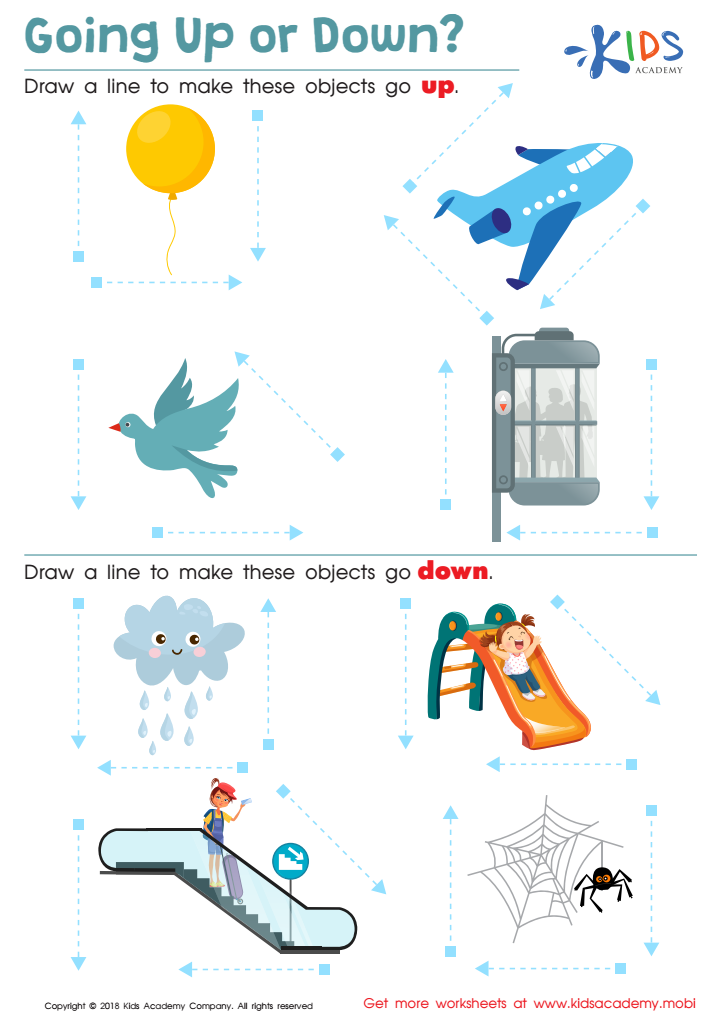
Going up or Down? Worksheet
 Assign to My Students
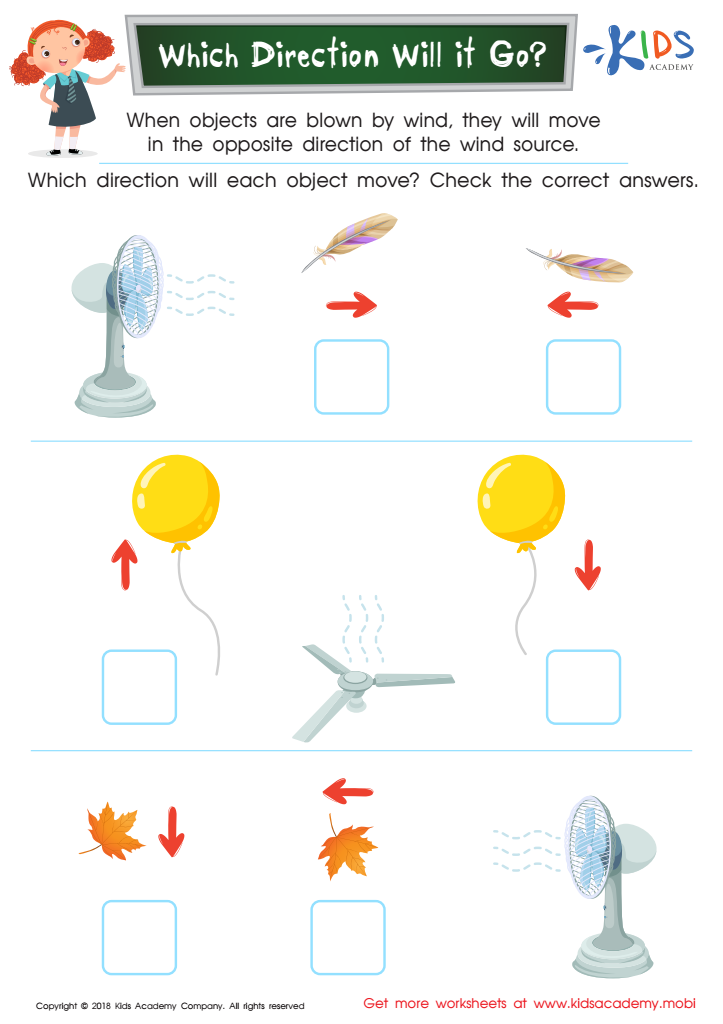
Which Direction Will it Go? Worksheet
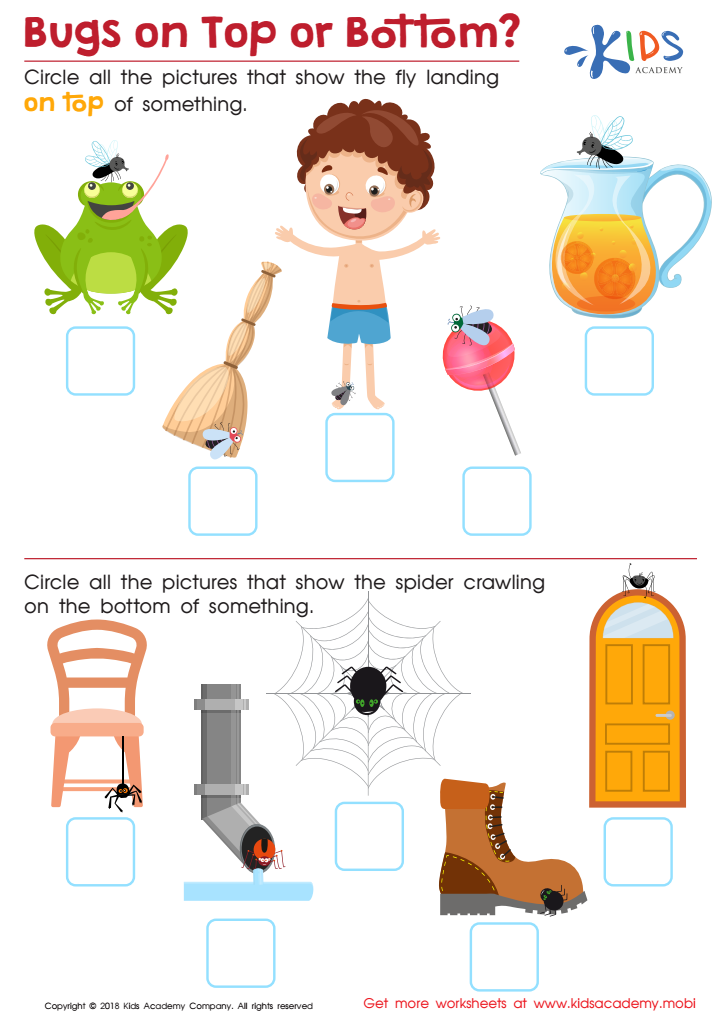
Bugs on Top or Bottom? Worksheet
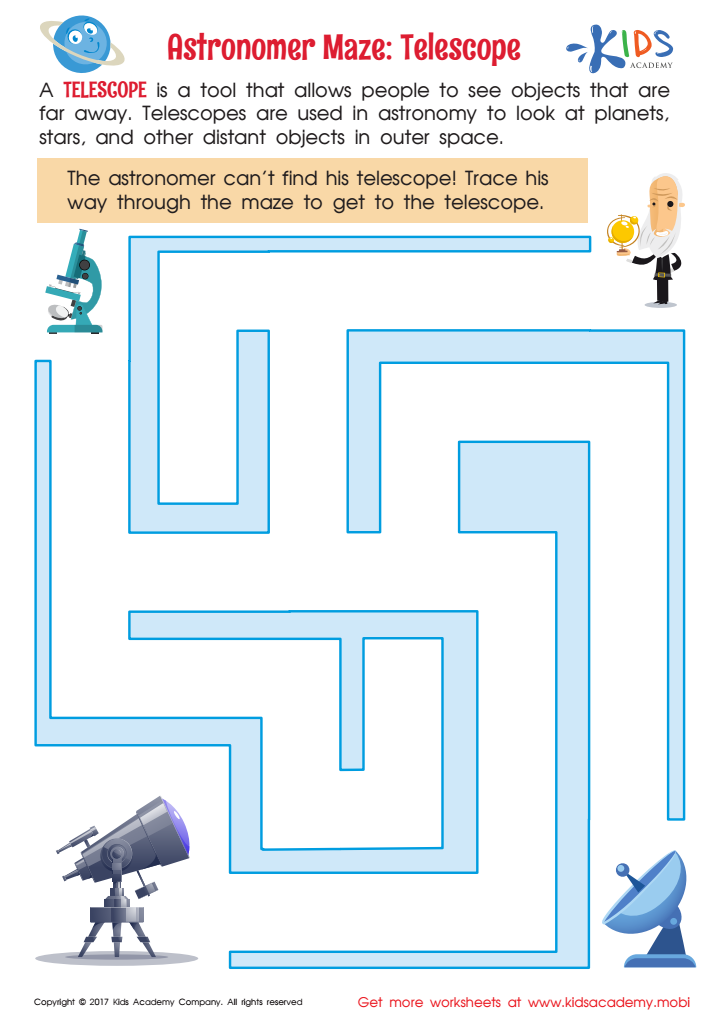
Astronomer Maze: Telescope Worksheet








Understanding directions is a fundamental skill for children aged 5-6, and both parents and teachers play a pivotal role in fostering this ability. At this age, children are developing essential cognitive skills and learning to navigate their environment, both physically and socially. Grasping the concept of directions—left, right, up, down, forward, backward—enhances their spatial awareness, which is crucial for tasks such as reading maps, playing sports, and even engaging in everyday activities like crossing the street or following instructions.
Moreover, effective communication is vital when guiding young learners. By understanding directional language, children are better equipped to comprehend and engage with their surroundings. This ability promotes independence and boosts self-confidence. In a classroom setting, children who can follow directions effectively tend to perform better, participate more readily in group activities, and minimize instances of confusion or frustration.
Additionally, early exposure to directional concepts lays the groundwork for future learning in more complex subjects such as math, science, and geography. Parents and teachers who prioritize understanding directions help nurture well-rounded, confident learners who are prepared to tackle both academic challenges and everyday life with greater assurance and skill.







