
Weather Vocabulary Normal Science Worksheets for Ages 5-6
3 filtered results
Difficulty Level
Grade
Age
-
From - To
Subject
Activity
Standards
Discover an engaging collection of Weather Vocabulary Normal Science Worksheets designed for young learners aged 5-6! These worksheets provide playful and interactive activities that help children explore essential weather concepts. From identifying weather types to matching terms with images, kids will enhance their vocabulary and comprehension skills through fun, hands-on experience. Perfect for both classroom and home use, these resources support early science education while sparking curiosity about the world around them. Encourage your child's love for learning and make weather science exciting with our thoughtfully crafted worksheets that foster creativity and critical thinking. Explore the wonders of weather today!
Favorites
With answer key
Interactive
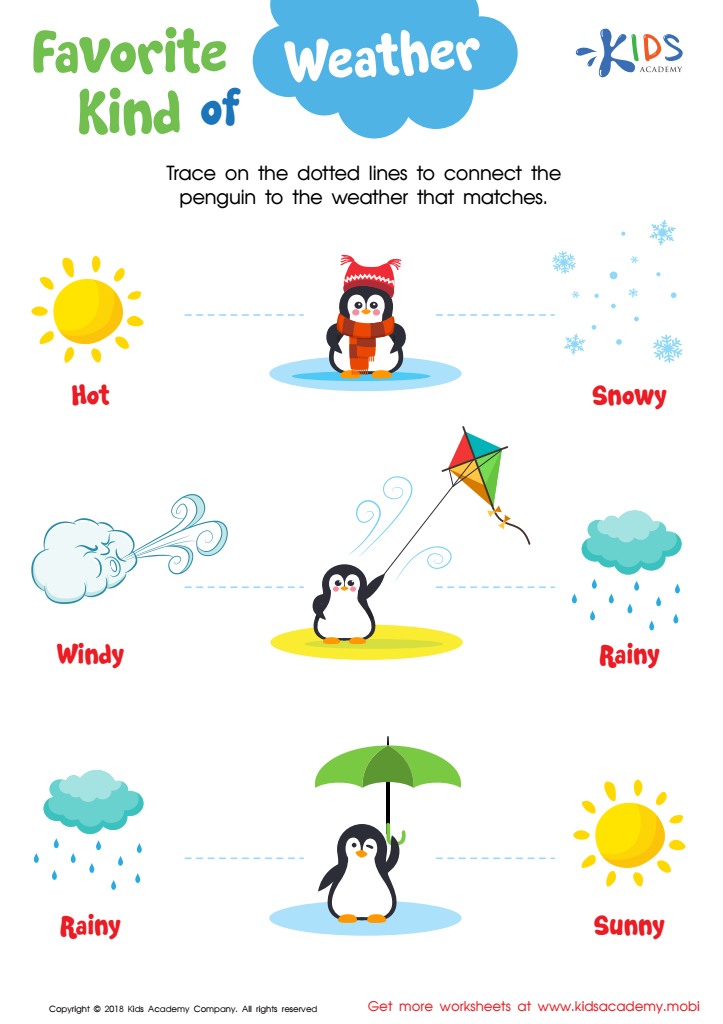
Favorite Kind of Weather Worksheet
!
Help your child understand weather and seasons with this fun worksheet featuring a cute penguin. They'll learn to recognize types of weather and associate them with seasons. To practice their fine motor skills, they'll trace lines to select the right seasons and weather. Kids will make a new friend while broadening their knowledge of nature.
Favorite Kind of Weather Worksheet
Worksheet
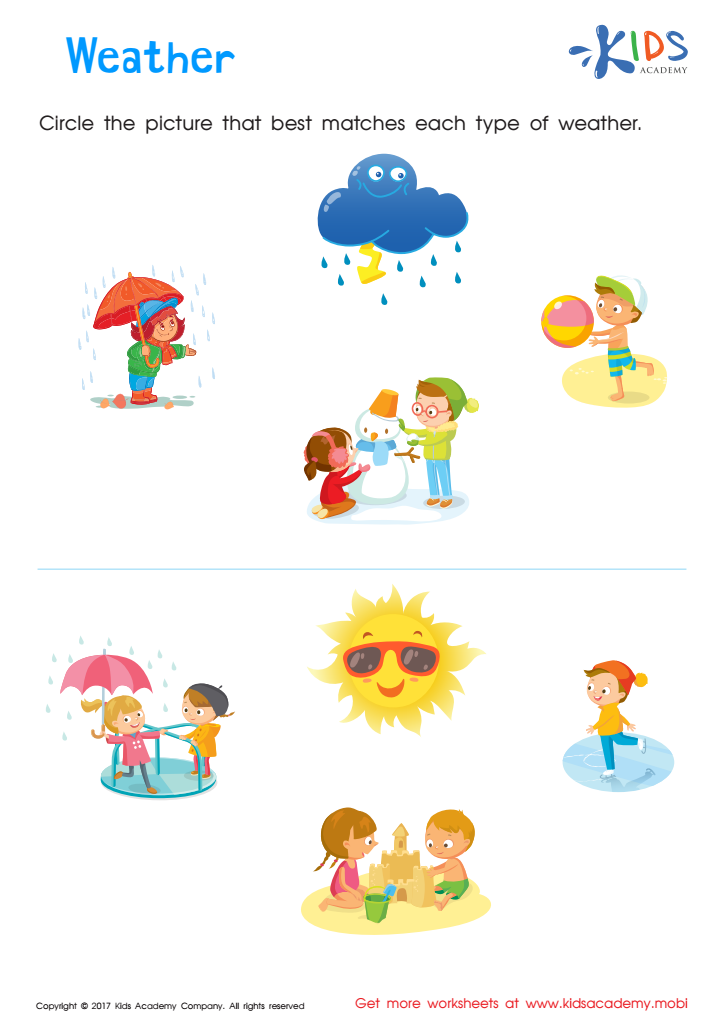
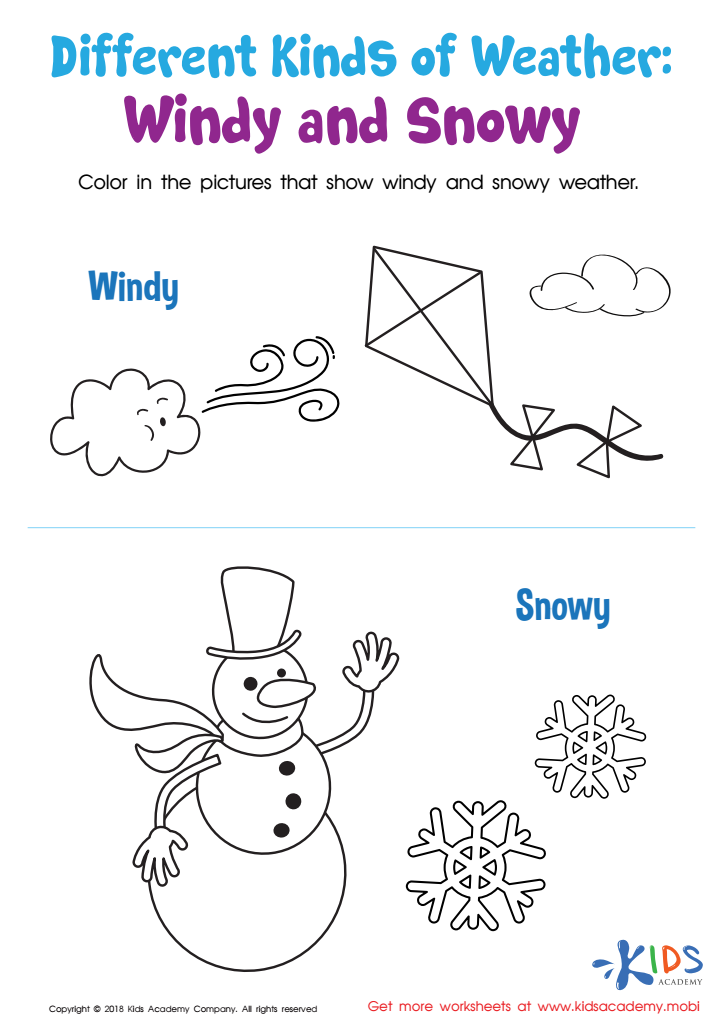
Different Kinds of Weather: Windy and Snowy Worksheet
Invite your little learner to practice their fine motor skills and learn about nature with this fun and charming PDF worksheet! Reinforce weather patterns and examine their environment as they color, giving them a foundation for understanding how weather affects them. No matter the weather, your learner will have a blast!
Download (PDF)
 Assign to My Students
Assign to My Students
Different Kinds of Weather: Windy and Snowy Worksheet
Worksheet
Join Kids Academy for Free
Who is primarily going to use this learning content?







Teaching weather vocabulary to children aged 5-6 is essential for several reasons. First, understanding weather terms like "sunny," "cloudy," "rainy," and "windy" helps young children make sense of their environment. This foundational knowledge enhances their observational skills, enabling them to describe and engage with the world around them.
Furthermore, weather vocabulary lays the groundwork for later scientific learning. As kids learn to associate specific words with weather phenomena, they develop literacy skills and a curiosity about science that can last a lifetime. Knowledge about weather also introduces concepts such as seasons, climate, and environmental changes, fostering an early understanding of our planet.
Moreover, recognizing different weather patterns can encourage safety awareness, teaching young kids when to wear appropriate clothing or seek shelter during storms. This practical application of vocabulary reinforces its importance in everyday life.
Lastly, engaging with weather through fun activities—like measuring rainfall or discussing how different weather affects animals—stimulates children’s creativity and critical thinking. Creating a dialogue about weather helps build a child's communication skills and confidence, making it a vital part of early education that parents and teachers should prioritize.







