Spatial awareness Normal Space Worksheets for Ages 5-6
3 filtered results
-
From - To
Boost your child's spatial awareness with our expertly designed Normal Space Worksheets for ages 5-6! These engaging activities from Kids Academy encourage young learners to explore and understand the concept of space and positioning through fun and interactive exercises. Perfect for preschool and kindergarten levels, these worksheets help children build essential cognitive skills, including recognizing objects' locations, understanding directional terms, and improving their visual perception. Ideal for early learners, our spatial awareness worksheets support cognitive development and foster a love for discovery and learning, ensuring that your child feels confident navigating their physical and visual space. Get started today!
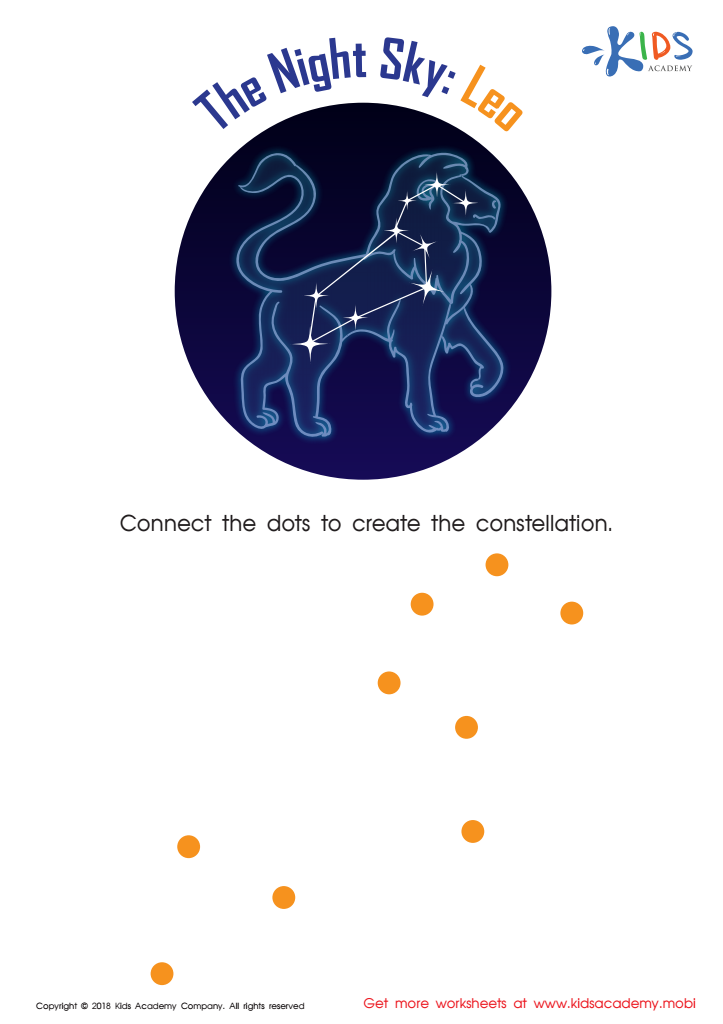
The Night Sky: Leo Worksheet
 Assign to My Students
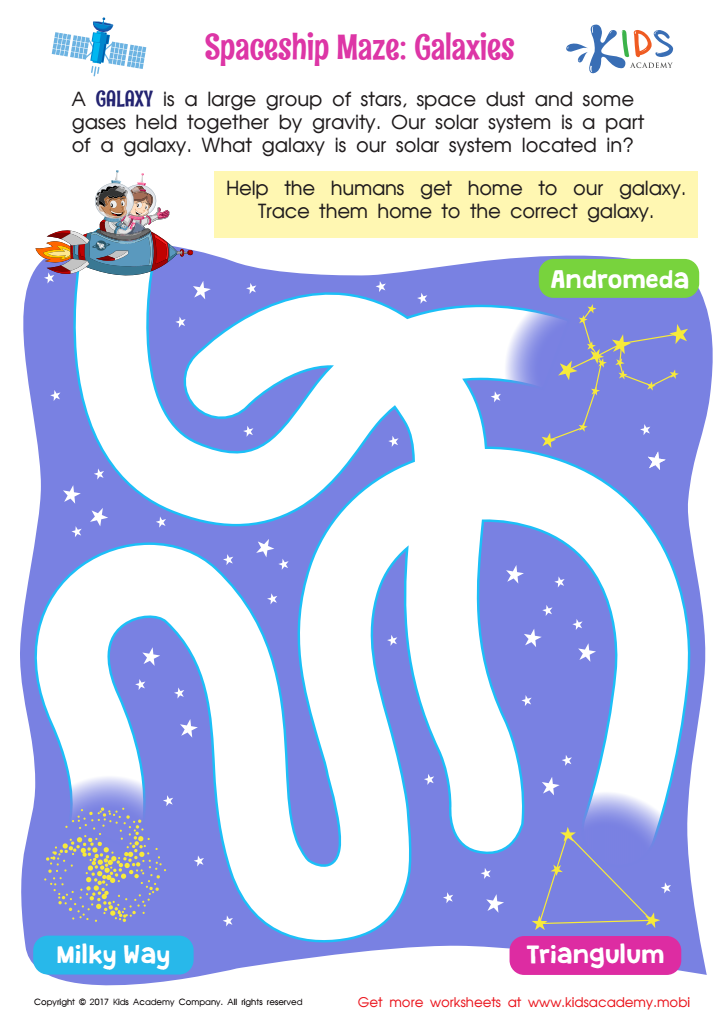
Spaceship Maze: Galaxies Worksheet
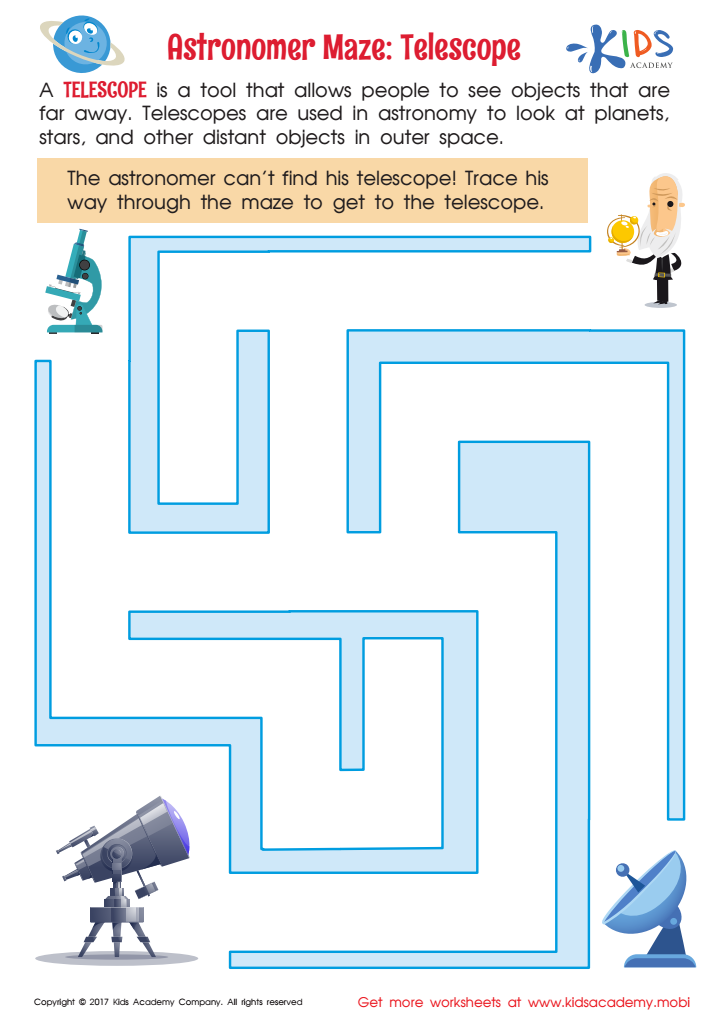
Astronomer Maze: Telescope Worksheet







Spatial awareness is a fundamental cognitive skill that significantly impacts a child's early learning and development. At ages 5-6, children are in a crucial developmental phase often referred to as early childhood, which lays the groundwork for their future academic, social, and physical capabilities.
Spatial awareness refers to the ability to understand and interact effectively with the environment around them, recognizing the position of objects and oneself within that space. For young children, this skill is important for several reasons:
-
Academic Learning: Mastering spatial concepts helps children with mathematics, especially geometry and problem-solving. Recognizing shapes, sizes, patterns, and the relationship between objects enhances their cognitive ability to tackle complex subjects later on.
-
Motor Skills: Strong spatial awareness aids in the development of both fine and gross motor skills. Activities like tying shoelaces, cutting with scissors, riding a bike, or playing sports all rely on this awareness.
-
Safety: Understanding spatial relationships helps children navigate their physical world safely. It allows them to judge distances and avoid obstacles, thus preventing injuries.
-
Social Interaction: Effective spatial awareness contributes to meaningful play and interactions with peers. It helps kids participate in group activities, understand personal space, and develop cooperative play habits.
Therefore, parents and teachers should nurture spatial awareness in children aged 5-6 through play, engaging activities, and focused educational practices to foster well-rounded development.







