Visual recognition Normal Community Worksheets for Ages 5-6
3 filtered results
-
From - To
Enhance your child's visual skills with our engaging Visual Recognition Normal Community Worksheets, specially designed for ages 5-6. Our worksheets are tailored to help young learners identify community members, objects, and settings through fun, interactive activities. Each printable resource encourages recognition, comprehension, and vocabulary building, all essential for early education. Kids will enjoy colorful illustrations and age-appropriate tasks that support their understanding of the world around them. Perfect for home or classroom use, these worksheets make learning enjoyable and effective. Explore our collection to develop your child's visual acumen and knowledge of their community.
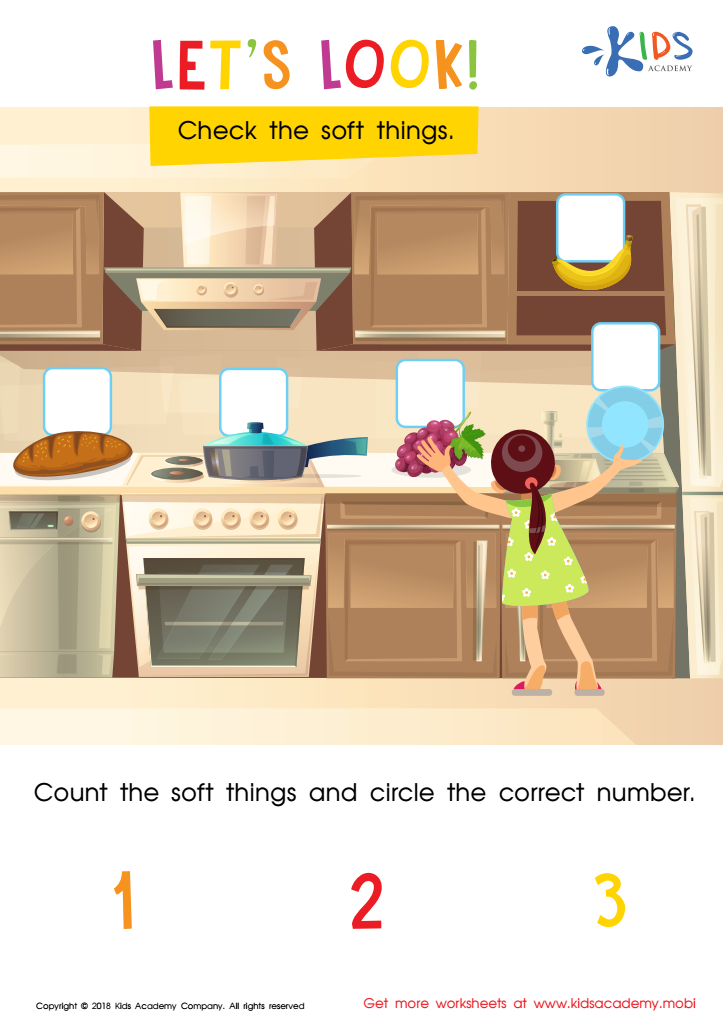
Let's Look! Assessment Worksheet
 Assign to My Students
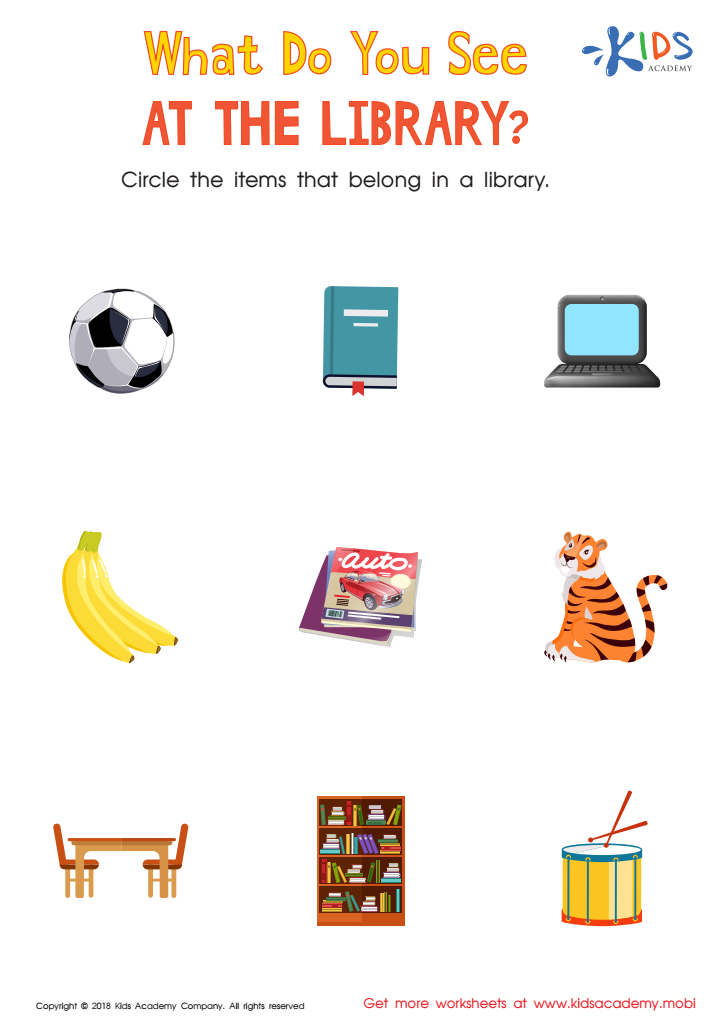
What Do you See at the Library? Worksheet
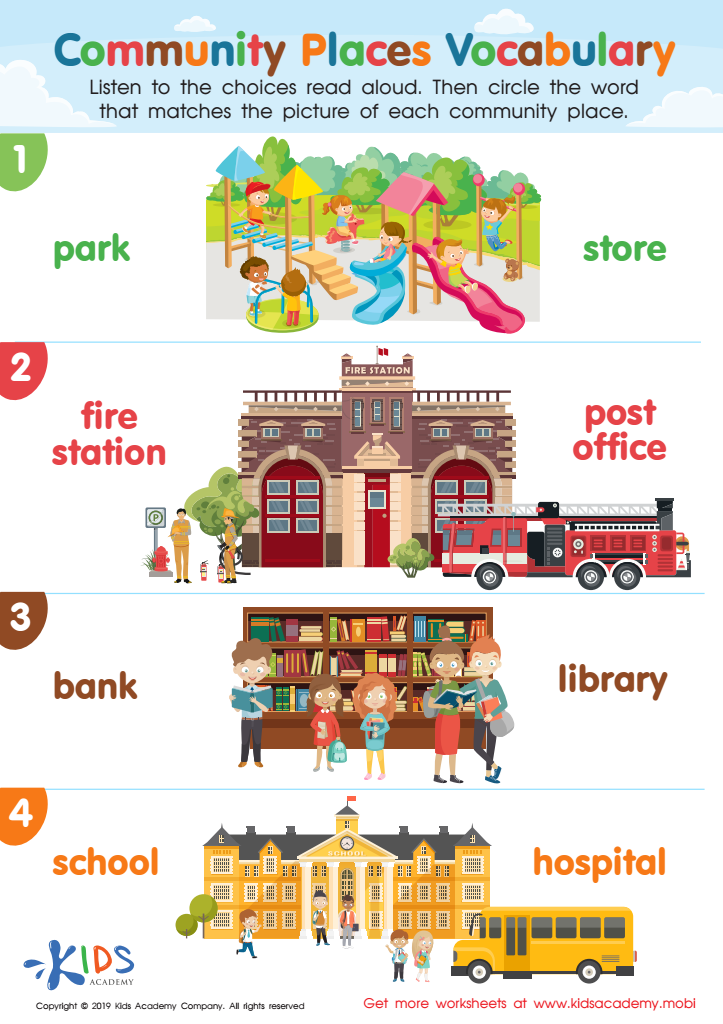
Community Places Vocabulary Worksheet








Visual recognition is a crucial developmental milestone for children ages 5-6, as it plays a significant role in their cognitive and social development. For parents and teachers, focusing on Visual recognition Normal Community, or the typical patterns through which children recognize and process visual information, is important for several reasons.
Firstly, visual recognition is foundational for academic success. Children at this age learn to read and write, which requires the ability to identify and differentiate between letters, numbers, and shapes. Recognizing common visual patterns helps them understand written language and mathematical concepts, thus facilitating smoother learning experiences.
Secondly, visual recognition supports the development of fine motor skills. Activities like copying shapes, drawing, and even playing with building blocks all rely on a child’s ability to recognize visual patterns and reproduce them, enhancing their hand-eye coordination.
Thirdly, social interactions are often guided by visual cues. Children learn to recognize facial expressions, body language, and social norms by observing those around them. This helps them develop empathy and appropriate social behaviors, which is critical for forming healthy relationships.
By paying attention to and nurturing visual recognition abilities, parents and teachers can provide tailored support to help children navigate these essential areas. Early identification of any atypical patterns can prompt timely interventions, ensuring each child reaches their potential.