Vocabulary development Normal Writing Worksheets for Ages 5-6
4 filtered results
-
From - To
Enhance your child's vocabulary with our engaging Normal Writing Worksheets designed for ages 5-6! Tailored to support early literacy, these worksheets help young learners expand their word banks through fun activities. With colorful illustrations and interactive exercises, kids will gain confidence in their writing skills while enjoying learning. Perfect for home or classroom use, each worksheet focuses on essential vocabulary development, allowing children to practice word association, spelling, and sentence formation. Equip your little ones with the tools they need for effective communication and creative expression. Start their learning journey today with our fun and educational vocabulary development worksheets!
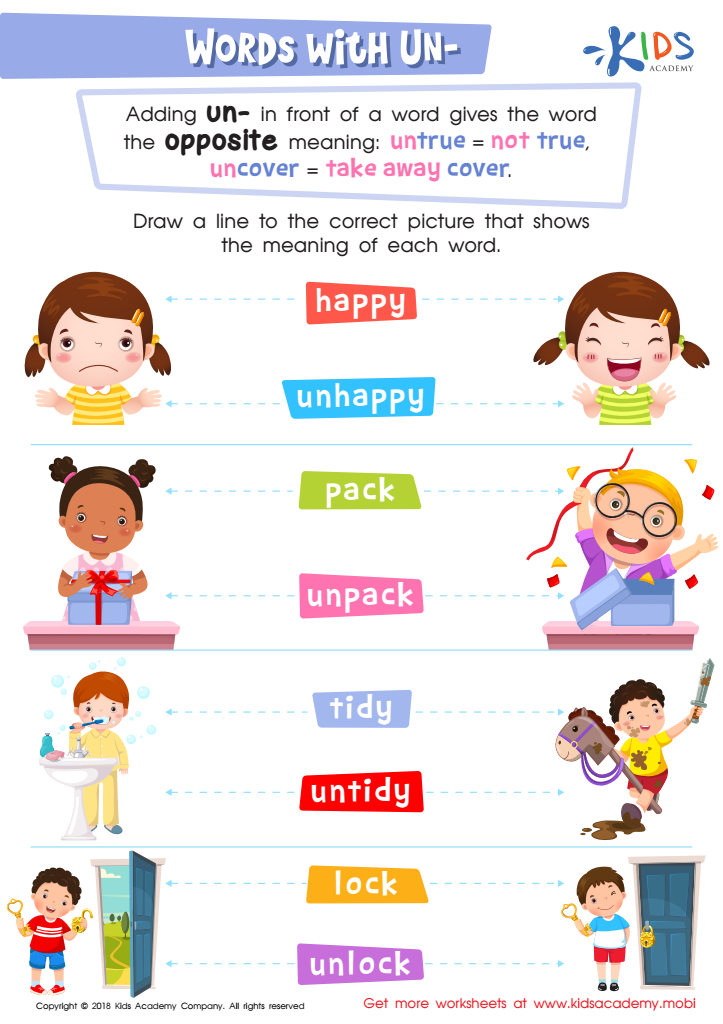
Words with Un– Worksheet
 Assign to My Students
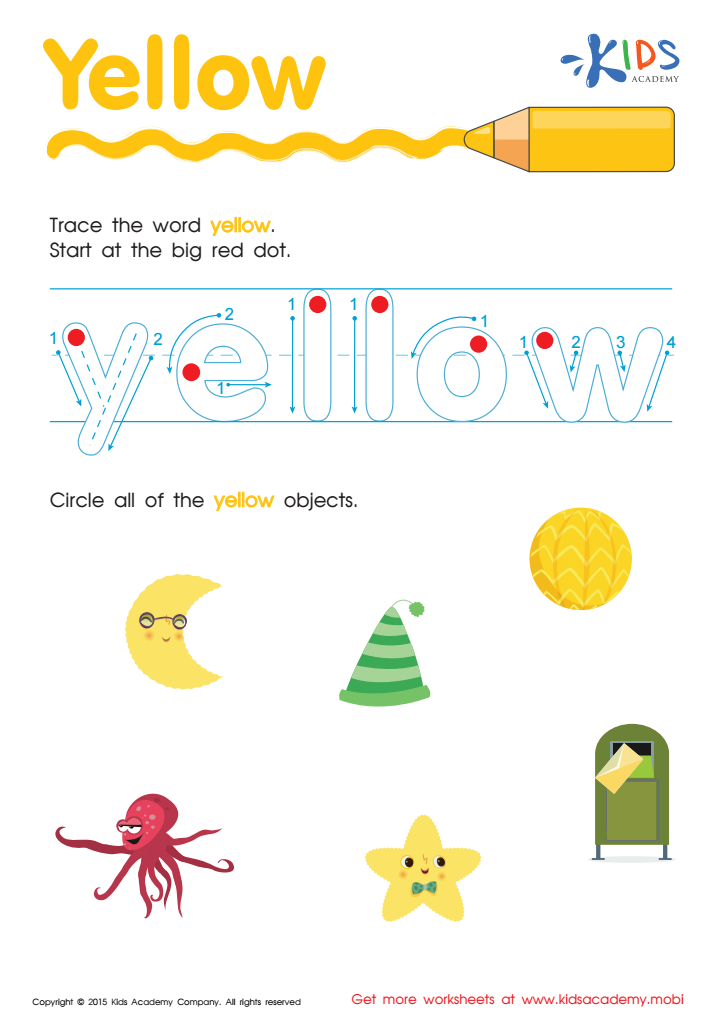
Yellow Tracing Color Words Worksheet
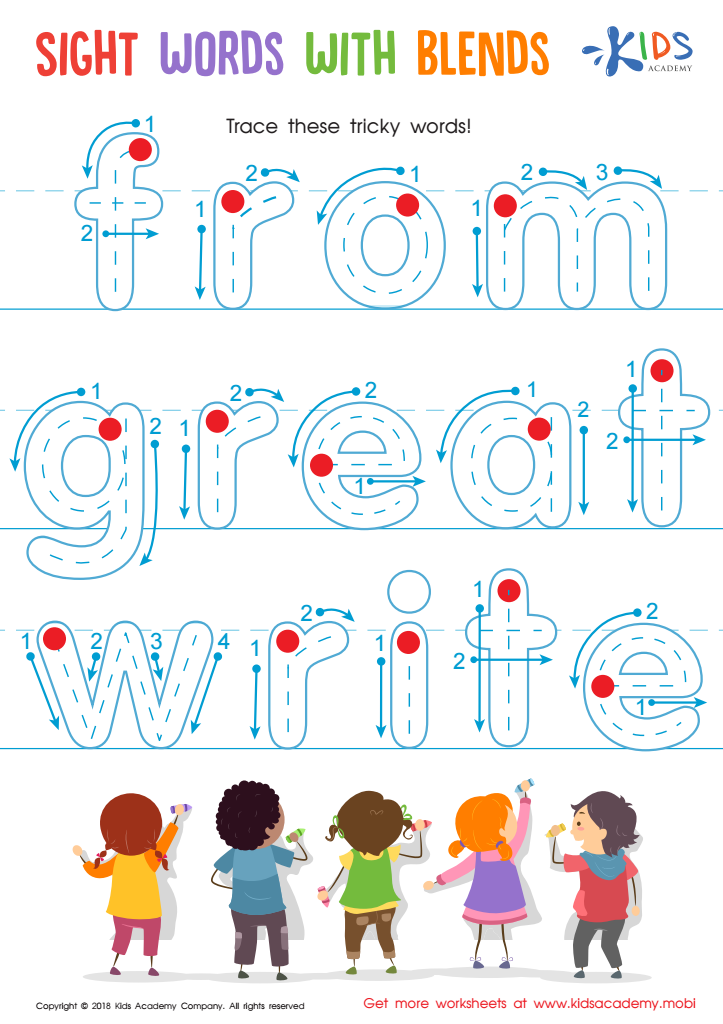
Sight Words with Blends Worksheet
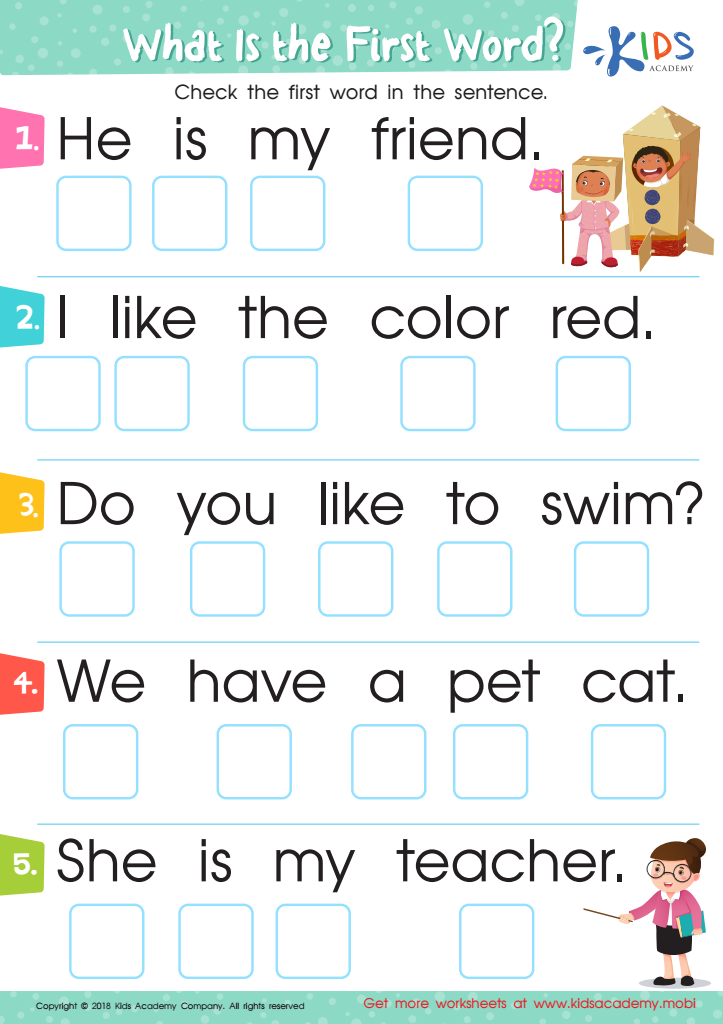
What is the First Word? Worksheet








Vocabulary development is a crucial aspect of a child's early education, especially for children ages 5-6. During this critical period, children are rapidly acquiring language skills, which serve as the foundation for successful communication and learning. A rich vocabulary enhances reading comprehension, allowing children to understand and enjoy stories and information presented to them. This, in turn, fosters a love for reading, which is essential for academic success.
Moreover, a strong vocabulary aids in self-expression. When children have the words they need, they can articulate their thoughts, needs, and emotions more effectively, leading to better social interactions and relationships with peers and adults. Teachers play a vital role in introducing new words through storytelling, discussions, and interactive activities, making learning engaging and fun.
Parents can reinforce vocabulary acquisition at home by engaging in conversations, asking open-ended questions, and reading together. These practices not only solidify a child's understanding of new vocabulary but also create a nurturing environment that values learning. Investing time and effort in vocabulary development during these formative years sets the stage for lifelong learning and can greatly impact a child's confidence and academic trajectory as they progress through school.