
Letter Tracing Normal ABC Letters Worksheets for Ages 5-7
4 filtered results
Difficulty Level
Grade
Age
-
From - To
Subject
Activity
Standards
Introducing our Letter Tracing Normal ABC Letters Worksheets, specially designed for children ages 5-7! These engaging worksheets provide young learners with the opportunity to practice their handwriting skills while familiarizing themselves with the alphabet. Ideal for preschool and early elementary students, each worksheet features both uppercase and lowercase letters, making it easy for kids to trace and learn in a fun environment. These printable resources promote fine motor skills, letter recognition, and boost confidence in writing. Perfect for home or classroom use, our worksheets are a fantastic tool to support your child's early literacy development. Start tracing today!
Favorites
With answer key
Interactive
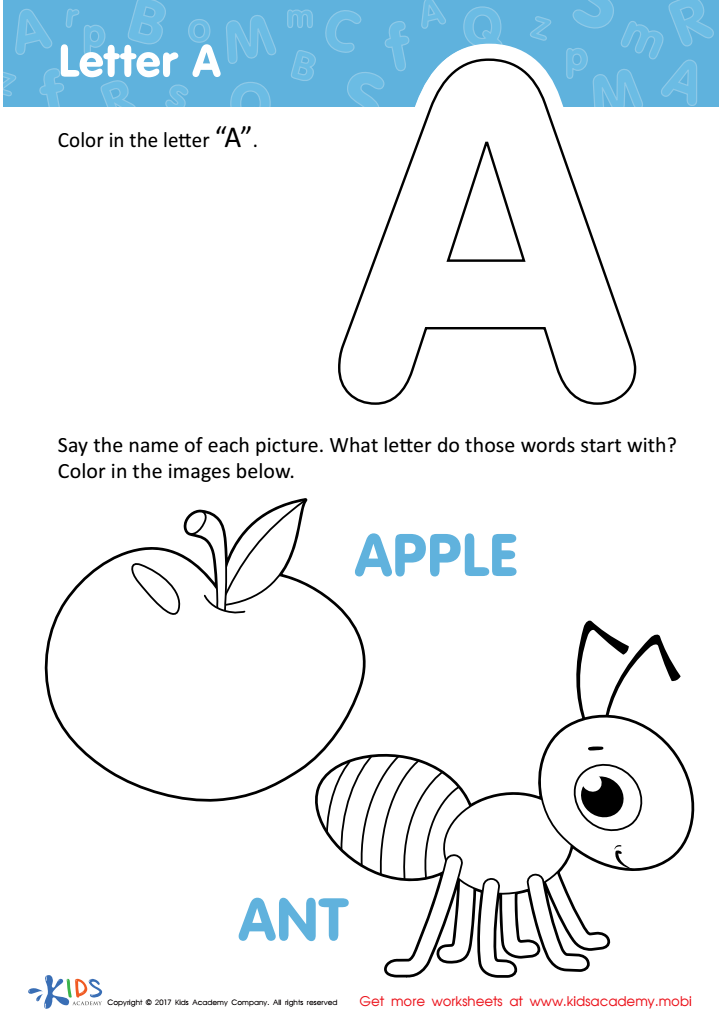
Letter A Coloring Sheet
This letter "A" coloring page is great for introducing kids to the alphabet! Let them exercise their creativity while they learn to recognize letters and sounds - it's a fun and easy way to help them get started.
Download (PDF)
 Assign to My Students
Assign to My Students
Letter A Coloring Sheet
Worksheet


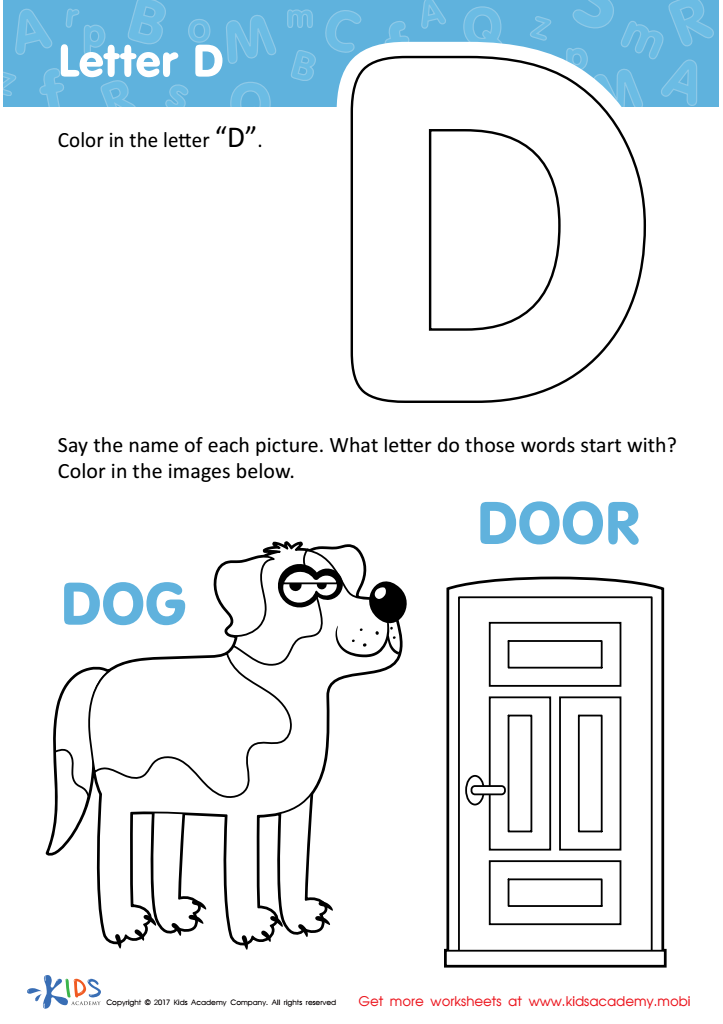
Letter D Coloring Sheet
Coloring with this letter "D" page is a great way to encourage your child's creativity while they learn the letter "D" and its sound. It's a fun activity to stimulate their imagination!
Download (PDF)
Assign to My Students
Assign to My Students
Letter D Coloring Sheet
Worksheet
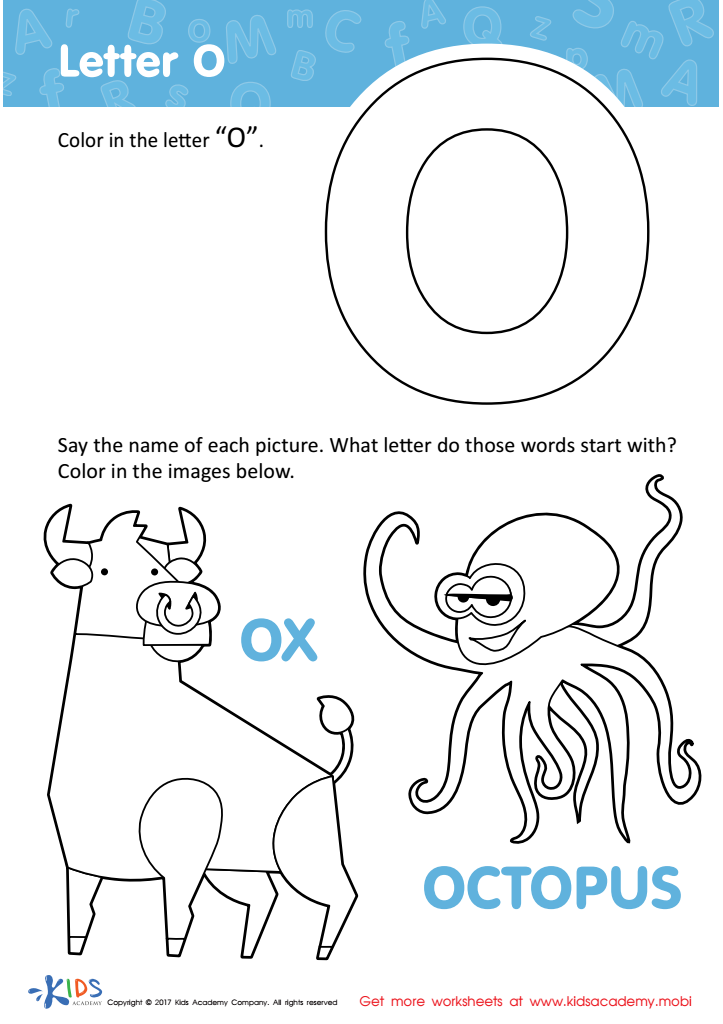
Letter O Coloring Sheet
Oh my! The letter "O" is so much fun. Coloring in the octopus and ox on this delightful letter "O" coloring page can help your child have fun while strengthening their recognition of the letter and sound.
Download (PDF)
Assign to My Students
Assign to My Students
Letter O Coloring Sheet
Worksheet
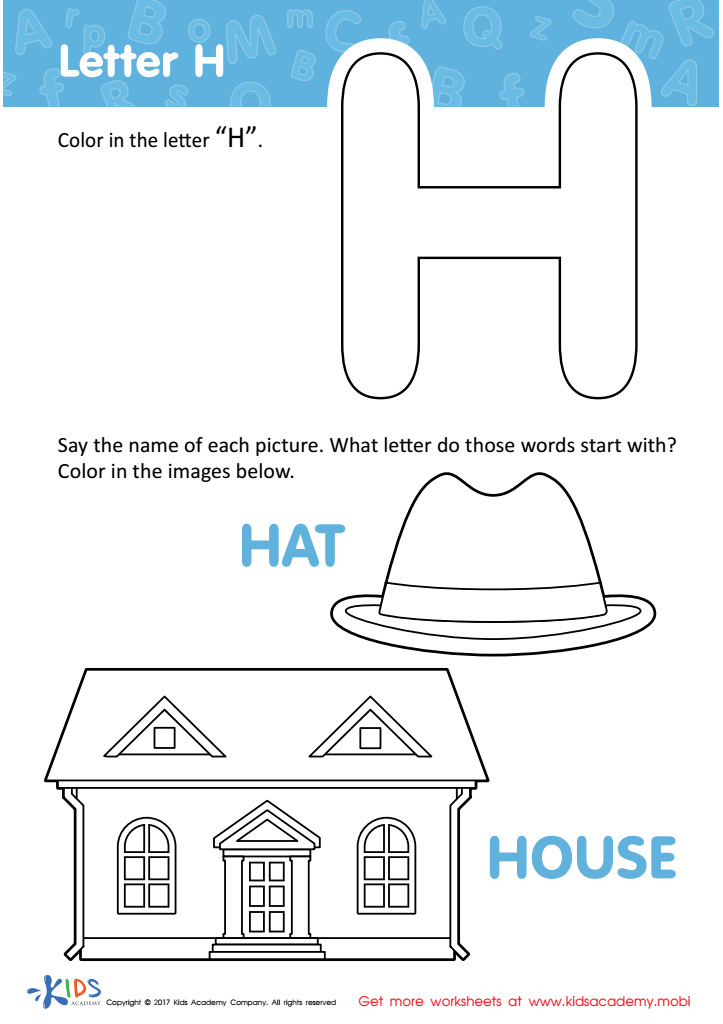
Letter H Coloring Sheet
This fun "H" coloring page will help your child recognize the letter and sound of "H"! With a hat and house to color, your little learner will have a blast picking colors and creating designs, all while learning about the letter "H"!
Download (PDF)
Assign to My Students
Assign to My Students
Letter H Coloring Sheet
Worksheet
Join Kids Academy for Free
Who is primarily going to use this learning content?







Letter tracing is a fundamental activity for children aged 5-7, as it plays a crucial role in their literacy development. Engaging in this activity helps develop fine motor skills, which are essential for writing, drawing, and other daily tasks. As children trace letters, they strengthen their hand-eye coordination, finger dexterity, and muscle control, preparing them for more complex writing tasks.
Moreover, letter tracing aids in letter recognition, as children visually and physically engage with each letter. This multisensory experience enhances retention, making it easier for them to identify and differentiate letters in various contexts, ultimately improving their reading abilities. Understanding the shapes and sounds related to each letter lays a strong foundation for phonics and spelling skills.
Additionally, letter tracing fosters a sense of accomplishment and confidence among young learners. As they successfully complete tracing activities, children build self-esteem and motivation, essential for their overall engagement in learning.
For these reasons, parents and teachers should prioritize letter tracing activities, integrating them into daily learning routines to ensure children develop essential skills that will benefit their academic journey and future communication abilities. In fostering these skills early on, adults play a pivotal role in setting the stage for lifelong learning.







