Fine motor skills development Normal Alphabet Worksheets for Ages 5-7
6 filtered results
-
From - To
Enhance your child's fine motor skills with our engaging Normal Alphabet Worksheets, designed specifically for ages 5-7. These worksheets provide a fun and interactive way to help young learners develop essential pre-writing skills. Each activity focuses on tracing letters and practicing writing, improving hand-eye coordination and grip strength. With colorful illustrations and captivating activities, your child will stay motivated while mastering the alphabet. Ideal for both home and classroom settings, our worksheets support early literacy and kindergarten readiness. Access our collection today and watch your child's confidence flourish as they strengthen their fine motor skills in a playful environment!

I Stands High Worksheet
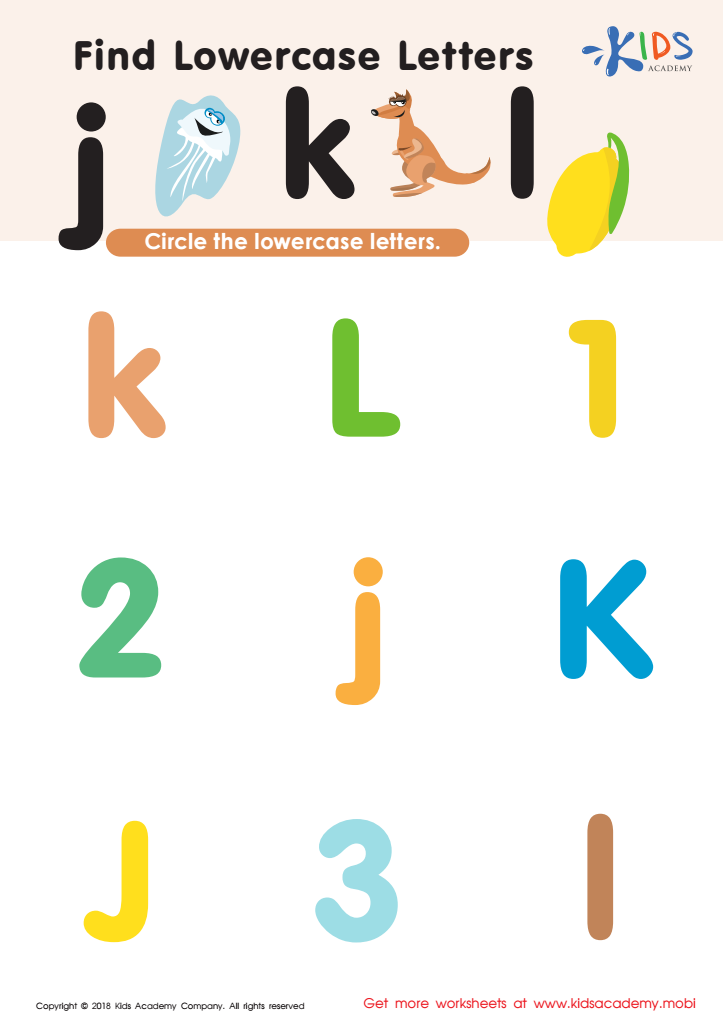
Find Lowercase Letters j k l Worksheet
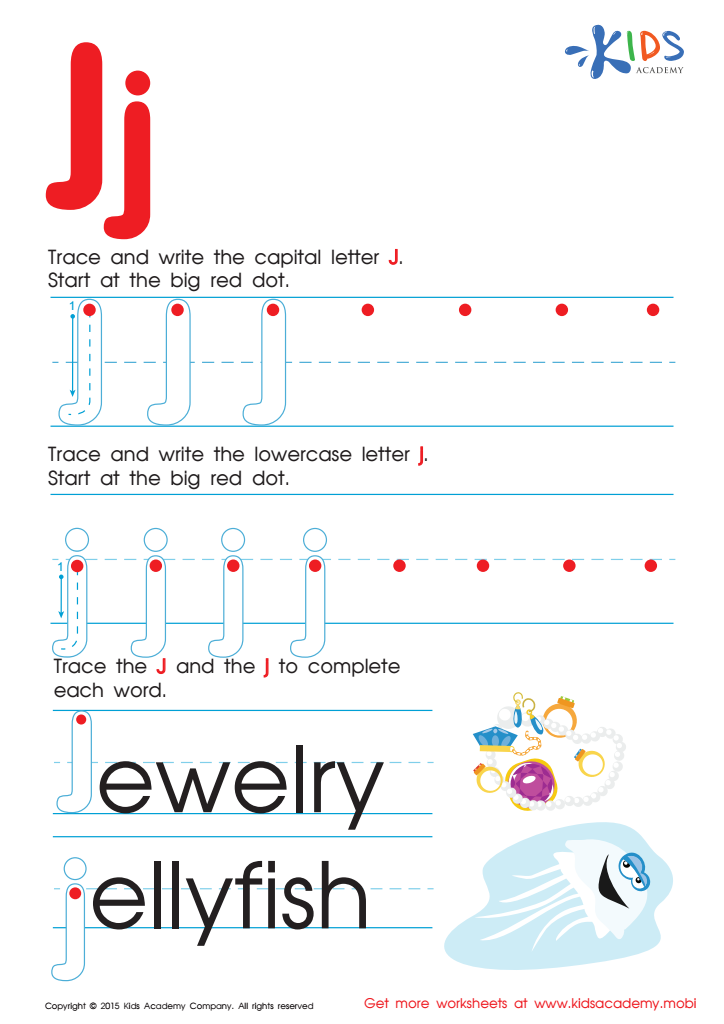
Letter J Tracing Page
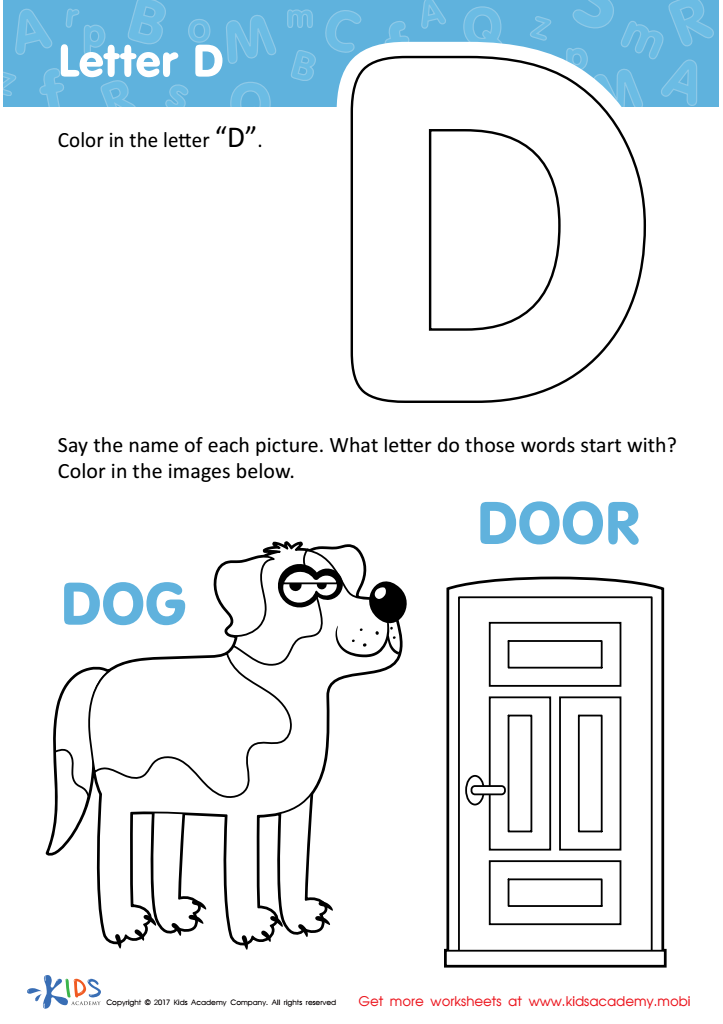
Letter D Coloring Sheet
 Assign to My Students
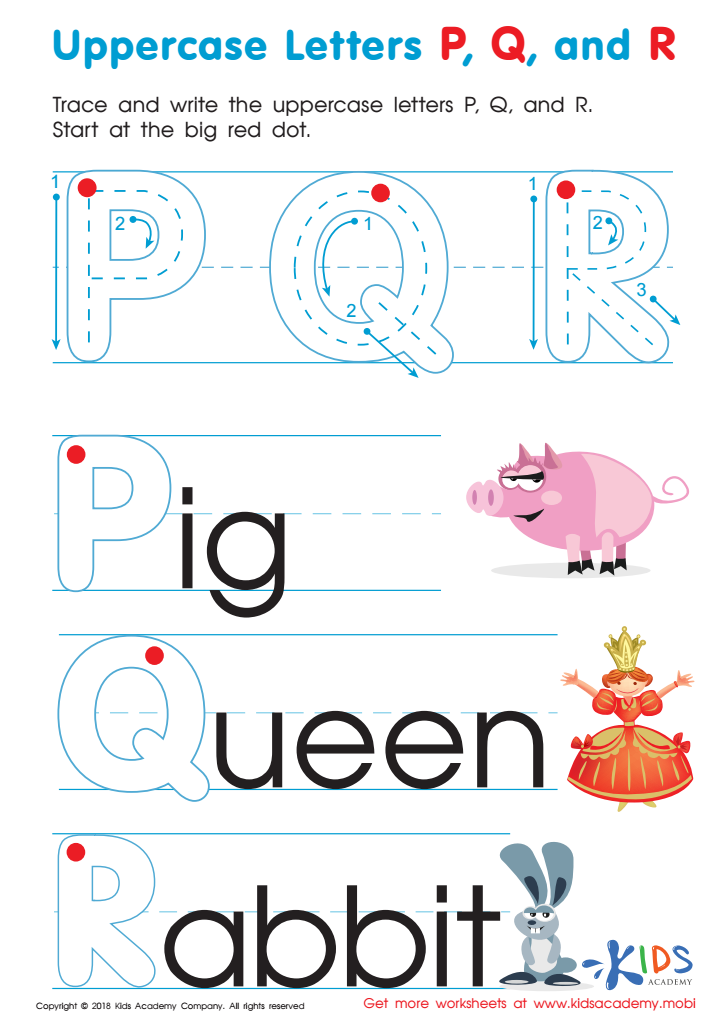
Uppercase Letters P, Q, and R Worksheet

Tracing Horizontal Lines Worksheet








Fine motor skills are essential for young children, particularly for those aged 5 to 7 years, as they form the foundation for many vital activities and learning experiences. Parents and teachers should prioritize the development of these skills because they significantly impact a child's daily functions and overall academic success.
At this age, children are often learning to write, draw, and manipulate objects, and strong fine motor skills lead to improved handwriting and better control over writing instruments. This is crucial for effective communication and self-expression in school and beyond.
Moreover, fine motor skills aid in self-care tasks, such as buttoning shirts, tying shoelaces, and using utensils, fostering independence and self-esteem. These abilities also enhance cognitive skills by encouraging problem-solving and hand-eye coordination during play and other activities.
Additionally, children who struggle with fine motor skills may experience frustration or anxiety, potentially hindering their academic progress and social interactions. By paying attention to fine motor development, parents and teachers can create enriching opportunities that promote practice and enhance confidence, paving the way for successful learning experiences in the classroom and overall life skills. Thus, supporting fine motor skills is vital for holistic child development.







