Motor skills development Normal Alphabet Worksheets for Ages 5-7
3 filtered results
-
From - To
Enhance your child's motor skills while they learn the alphabet with our engaging Normal Alphabet Worksheets designed for ages 5-7. These worksheets provide a fun and interactive way for young learners to practice writing letters, thereby improving their fine motor skills and hand-eye coordination. Each worksheet features colorful designs and playful activities that strike a balance between educational excellence and enjoyable learning experiences. Perfect for parents and teachers, our printables make it easy to support early literacy development at home or in the classroom. Encourage your child's growth with our expertly crafted resources that foster creativity and foundational skills.

Letter H Tracing Page
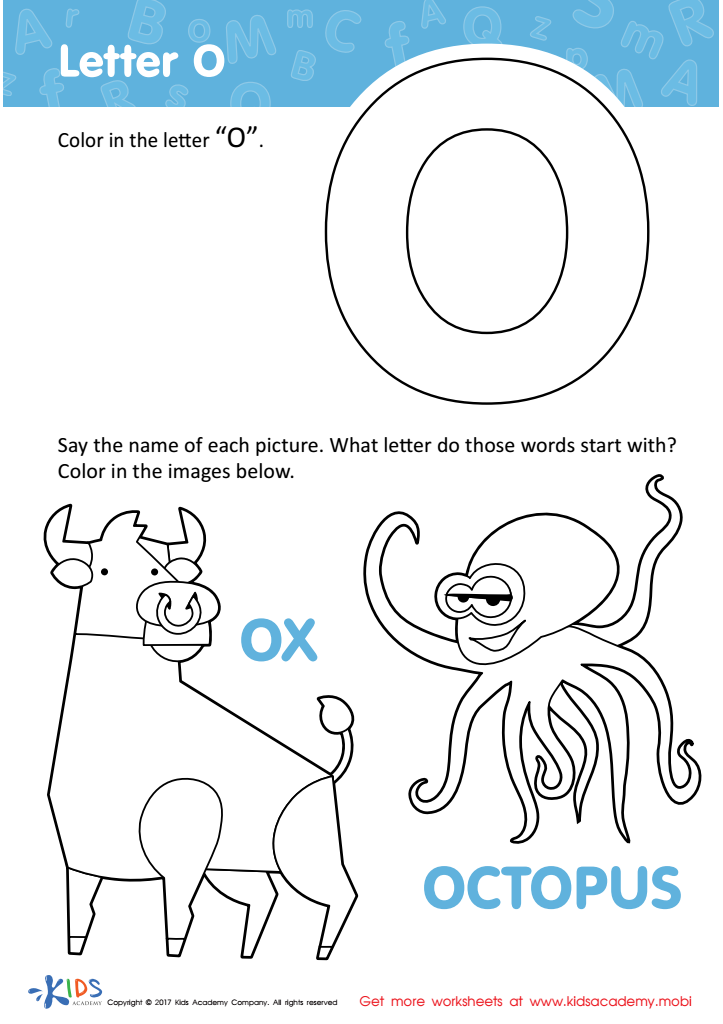
Letter O Coloring Sheet
 Assign to My Students
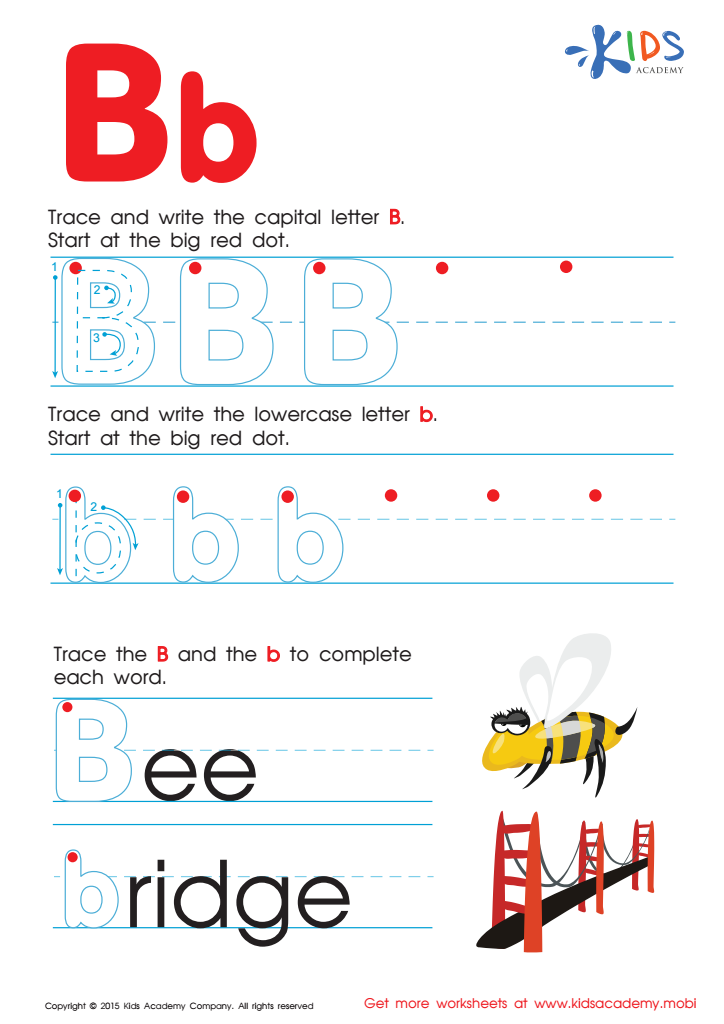
Letter B Tracing Page








Motor skills development in children aged 5-7 is crucial for several reasons. During this stage, children are refining their fine and gross motor skills, which are vital for everyday activities. Fine motor skills involve small movements, such as those used in writing, drawing, and manipulating small objects. These skills lay the foundation for academic success. When children can comfortably hold a pencil or use scissors, they gain confidence in their ability to complete school tasks.
Gross motor skills, on the other hand, involve larger movements like running, jumping, and climbing. Physical activity during these years helps children develop strength, coordination, and balance, all of which are key to overall health and well-being. Motor skills also heavily influence social interactions; children with well-developed motor skills are often more confident in playing games and participating in group activities, fostering friendships and teamwork.
Lastly, motor skills development can be linked to cognitive growth. Activities that engage physical development also promote problem-solving and spatial awareness. For parents and teachers, supporting motor skills through play, art, and physical activities can lead to well-rounded, successful children who are prepared for both academic challenges and social environments. Encouraging this development is an investment in a child's overall future.







