Reading development Normal Alphabet Worksheets for Ages 5-7
5 filtered results
-
From - To
Discover our "Reading Development Normal Alphabet Worksheets" designed specifically for ages 5-7 to enhance early literacy skills. These engaging worksheets provide a fun and interactive way for children to learn the alphabet while improving their reading abilities. Each worksheet focuses on letter recognition, phonics, and basic vocabulary, making learning enjoyable and effective. Aligned with educational standards, our worksheets foster a love for reading and help boost confidence in young learners. Perfect for homeschooling or classroom use, these resources are an essential tool to support your child's reading journey. Start nurturing their reading skills today with our comprehensive worksheets!
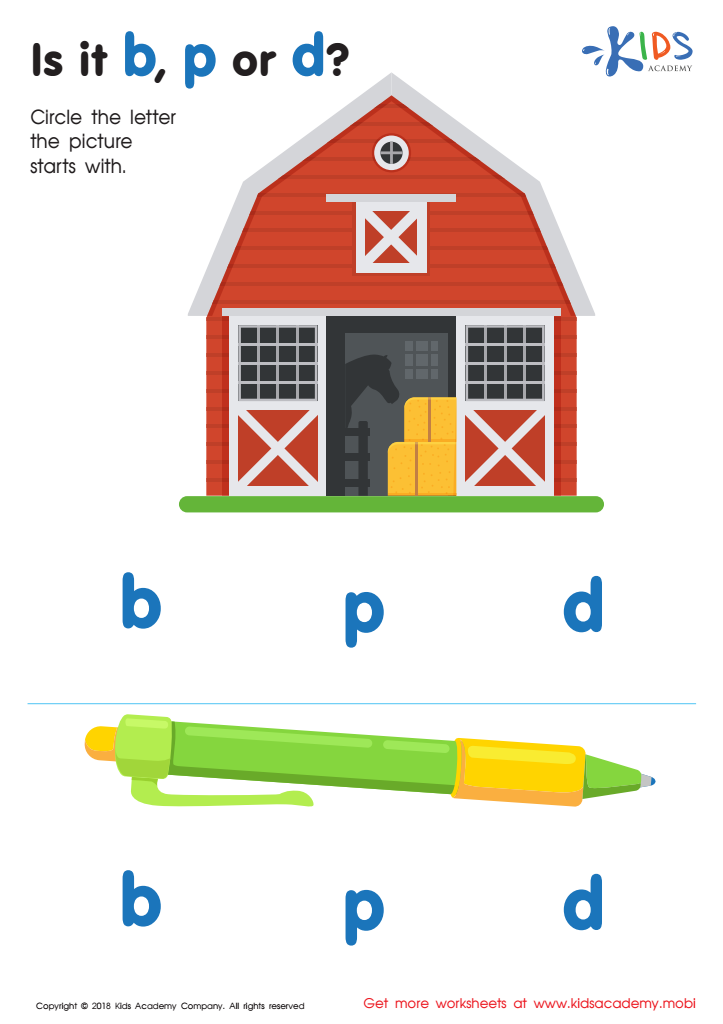
Is it b, p or d? Worksheet
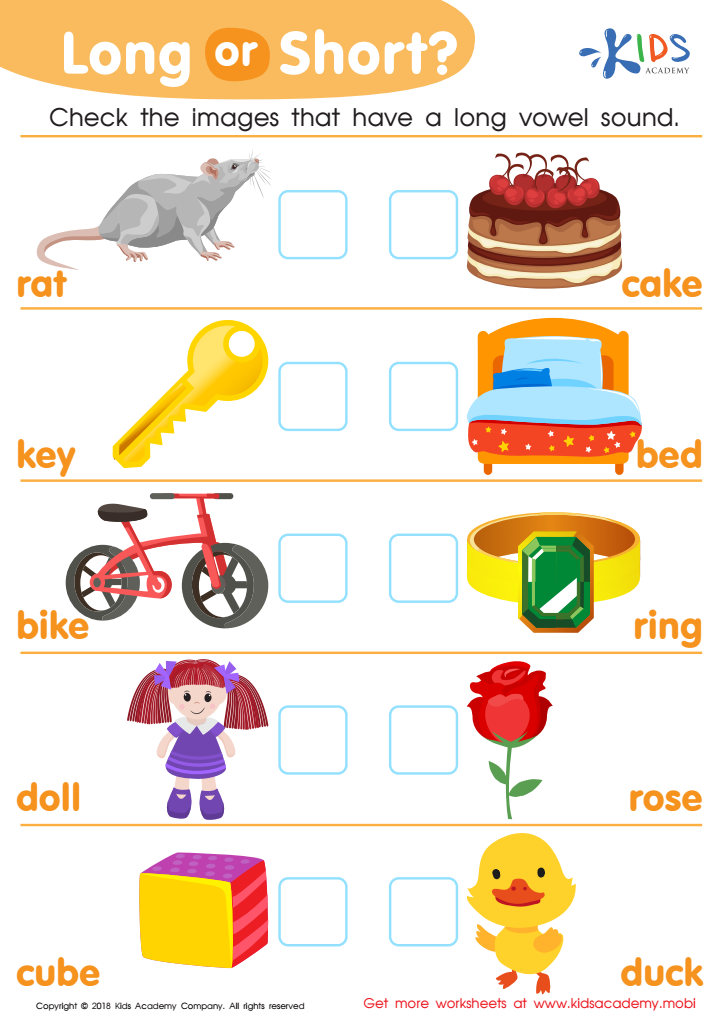
Long or Short Reading Worksheet
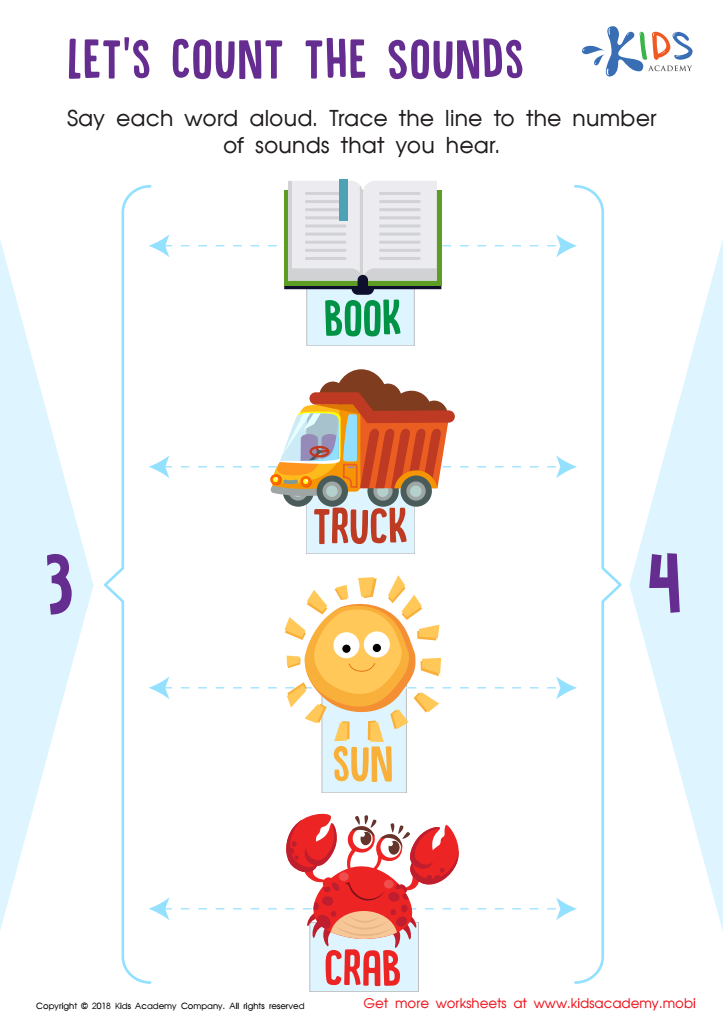
Let's Count the Sounds Worksheet
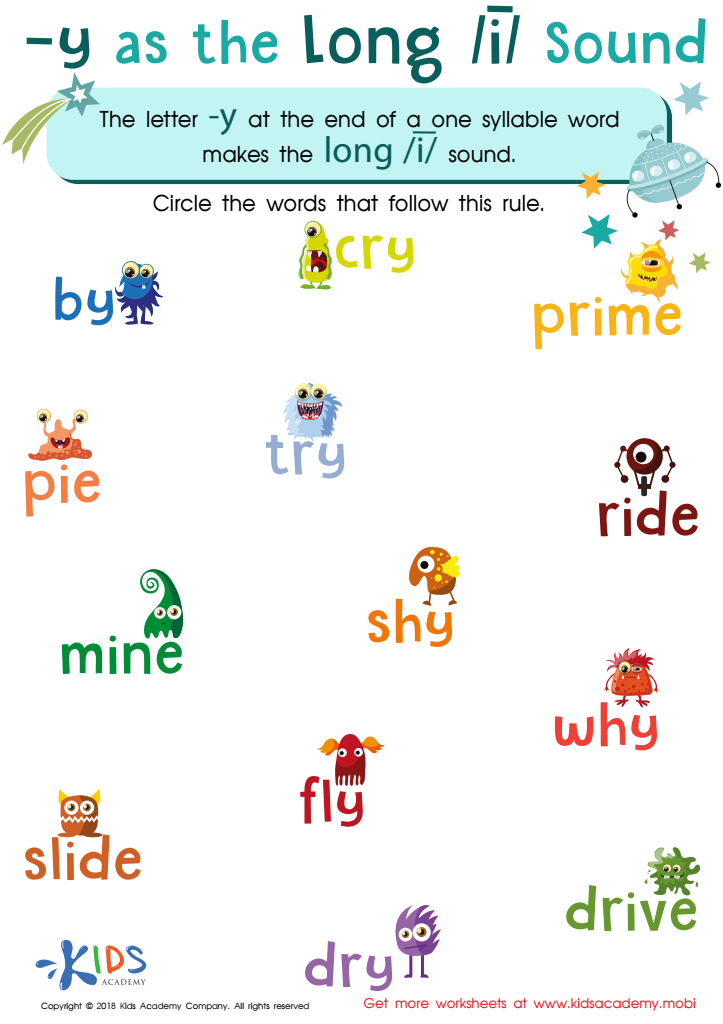
Reading: Y as Long I Worksheet
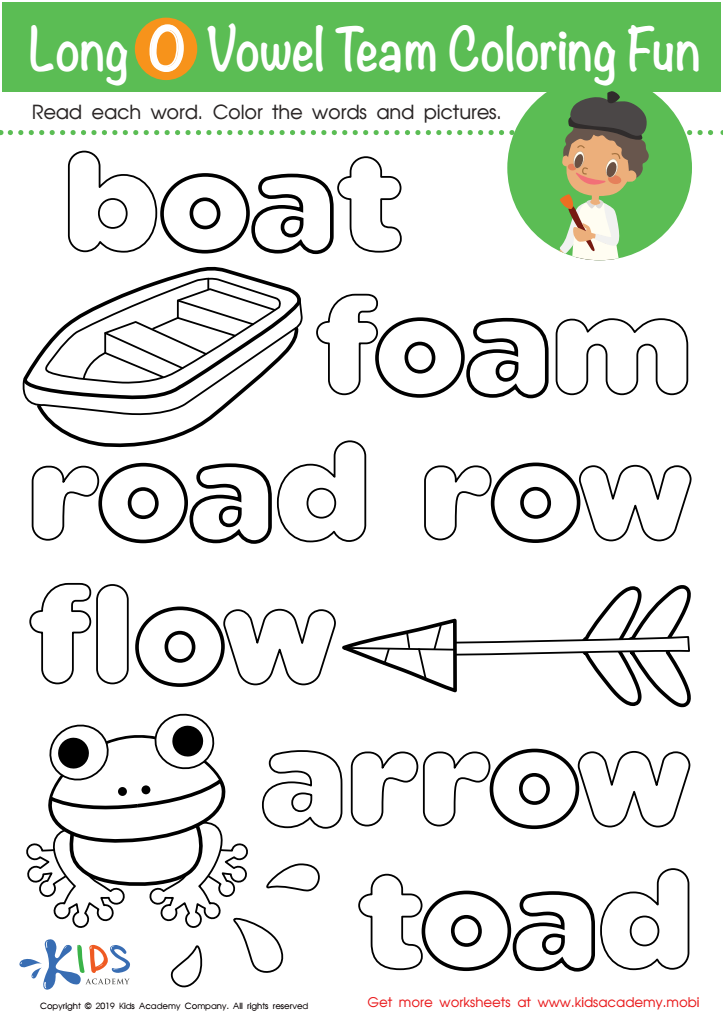
Long O Vowel Team Coloring Worksheet
 Assign to My Students








Reading development in children aged 5-7 is crucial, as this period lays the foundation for their future academic success and overall cognitive skills. At this age, children begin to grasp the connection between letters and sounds (phonemic awareness), which is essential for reading. Understanding the normal alphabet helps them recognize words, improve vocabulary, and enhance comprehension skills.
Parents and teachers play a vital role in this developmental stage. When they engage children with interactive reading activities and phonics, they foster a love for reading, making the learning process enjoyable. Building a strong reading foundation not only boosts literacy but also instills confidence in children, enabling them to engage more fully in classroom activities and discussions.
Additionally, children who develop strong reading skills early tend to perform better in other subjects as reading is a key component of learning across the curriculum. Language proficiency improves their communication skills, preparing them for social interactions and fostering emotional intelligence.
In essence, supporting reading development from ages 5-7 is not just about academic achievement; it is about equipping children with essential life skills for effective communication and critical thinking, paving the way for lifelong learning.







