Visual discrimination skills Normal Letter Recognition Worksheets for Ages 5-7
5 filtered results
-
From - To
Enhance your child's visual discrimination skills with our engaging Normal Letter Recognition Worksheets, designed for ages 5-7. These worksheets provide fun and interactive activities that help young learners identify and differentiate letters, an essential step in developing reading abilities. By focusing on both uppercase and lowercase letters, children will practice recognizing shapes and sounds effectively. Our carefully crafted exercises promote concentration, hand-eye coordination, and critical thinking, ensuring a well-rounded approach to letter recognition. Perfect for classroom settings or at-home learning, these worksheets empower young learners to build confidence in their literacy skills while having fun! Download now to unlock their potential!
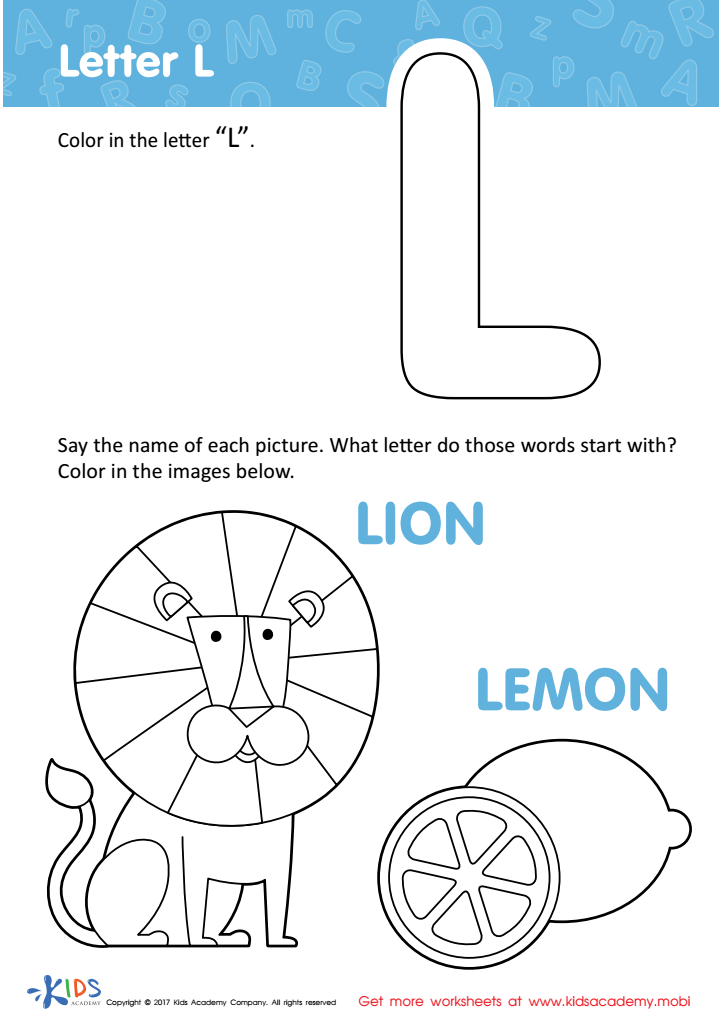
Letter L Coloring Sheet
 Assign to My Students

Find Uppercase Letters A, B, and C Worksheet
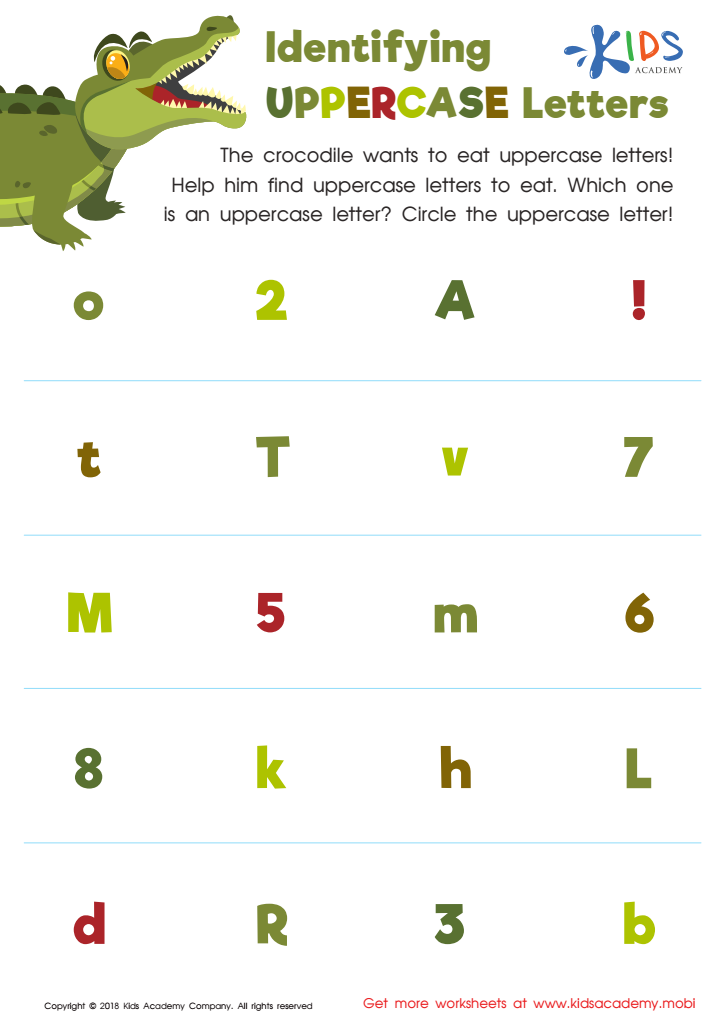
Identifying Uppercase Letters Worksheet

Find lowercase letters a b c Worksheet

Find Lowercase Letters v w x Worksheet








Visual discrimination skills and normal letter recognition are vital for children aged 5-7 as they are foundational for literacy and overall academic success. These skills enable children to distinguish between different letters, shapes, and symbols, which is crucial as they begin to learn how to read and write. Mastering letter recognition fosters confidence and fluency in reading, allowing children to take meaning from texts and develop their comprehension.
When parents and teachers focus on enhancing visual discrimination, they support children’s ability to recognize differences and similarities in letters, which is essential for identifying words. Proficient letter recognition contributes to spelling and vocabulary development, critical skills for effective communication.
Moreover, strengthening these skills during this early developmental stage can prevent future academic difficulties. Children who struggle with visual discrimination may face challenges in reading, leading to frustrations that can affect their self-esteem and willingness to engage in learning activities. By investing time and resources into improving visual discrimination and letter recognition, parents and educators can set a solid foundation for lifelong learning, encourage a positive attitude toward academics, and help ensure children are prepared for the next steps in their educational journey.








