
Number Recognition Normal Phonics Worksheets for Ages 5-7
3 filtered results
Difficulty Level
Grade
Age
-
From - To
Subject
Activity
Standards
Unlock your child's potential with our Number Recognition Normal Phonics Worksheets, tailored for ages 5-7. These engaging and educational sheets combine phonics learning with number identification, boosting both literacy and numeracy skills. Perfect for young learners, each worksheet includes fun activities that develop critical thinking and reinforce foundational concepts. Aligned with educational standards, these printables support classroom learning and at-home practice. Additionally, charming illustrations and interactive exercises keep kids motivated and entertained. Help your child achieve academic success while enjoying the process. Explore our collection today and make learning fun and effective!
Favorites
With answer key
Interactive
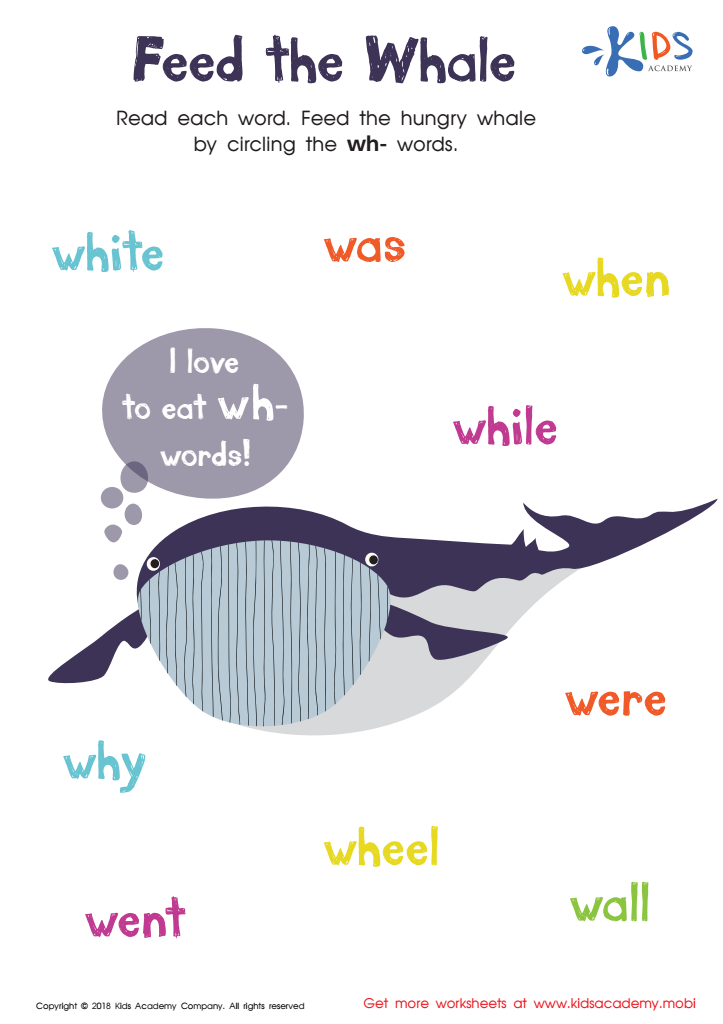
Feed the Whale Worksheet
Help your early reader build beginning consonant and blend recognition with this fun whale worksheet! They'll feed the whale wh- words, circle sight words, and build fine motor skills—all while discriminating between differently colored words.
 Assign to My Students
Feed the Whale Worksheet
Worksheet
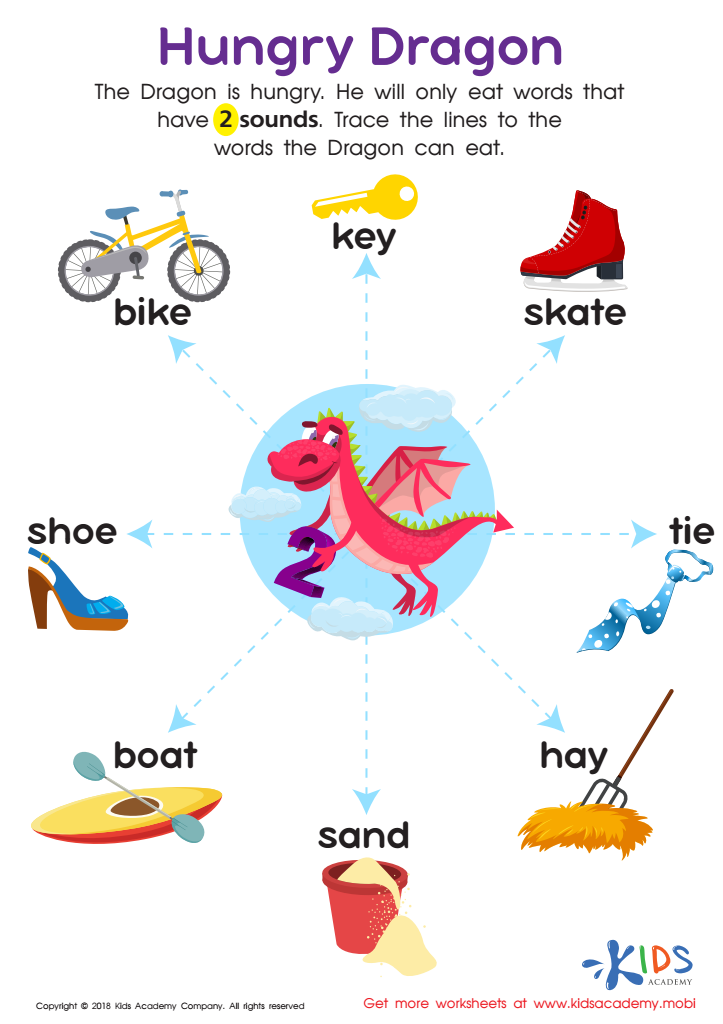
Hungry Dragon Worksheet
Feed the dragon words and watch your child strengthen their phonological awareness and auditory discrimination skills! Download this free PDF for tracing exercises that build their fine motor skills too. Kids will love spending time with the cute dragon while they unwittingly learn reading skills!
Hungry Dragon Worksheet
Worksheet
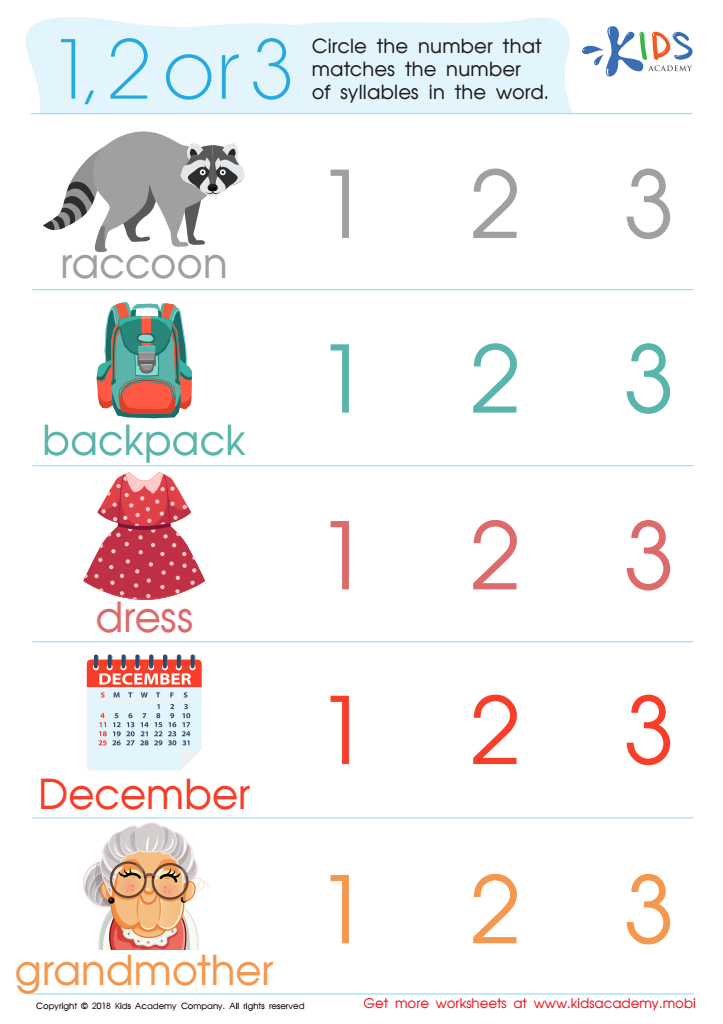
1, 2 or 3? Worksheet
Do your kids know about syllables? Test their understanding with this worksheet. Read the words aloud and ask them to say them with you. Help them circle the number that matches the number of syllables in each word. Perfect for expanding knowledge or testing how much they've already learned.
1, 2 or 3? Worksheet
Worksheet
Join Kids Academy for Free
Who is primarily going to use this learning content?








Number recognition and normal phonics are foundational skills crucial for young children, ages 5-7, as they prepare for more advanced learning in reading and math. At this formative stage, children’s brains are highly receptive to learning patterns, symbols, and sounds that provide the basis for literacy and numeracy.
Understanding numbers helps children grasp basic math concepts such as counting, addition, and subtraction. This foundational numerical knowledge is critical for their later success in more complex math problems and everyday tasks that involve measuring, comparing, and reasoning.
On the other hand, phonics, which is the relationship between sounds and their written symbols, is the key to learning to read fluently. Normal phonics instruction enables children to decode new words by understanding letter-sound relationships, boosting their reading confidence and comprehension skills. These reading skills allow children to access vast information and engage meaningfully with a wide array of texts, supporting their academic progress across all subjects.
For parents and teachers, fostering these skills early on ensures that children develop a strong educational foundation. Number recognition and phonics are not just academic milestones; they are critical tools that empower children to navigate their world with competence and confidence. Ignoring these skills at an early age could lead to struggles later in their academic journey and affect their overall learning experience.







