Filters

6 filtered results

Clear all filters
Favorites
With answer key
Interactive

6 filtered results

Difficulty Level

Grade


Explore our engaging Vocabulary Expansion Normal Short Vowels Worksheets designed for children ages 5-7! These fun and interactive worksheets help young learners enhance their vocabulary while mastering short vowel sounds. Through colorful exercises and creative activities, kids will expand their language skills by connecting words to pictures and practicing decoding. Our thoughtfully designed resources encourage active participation, making learning enjoyable and effective. Ideal for classroom or home use, these worksheets foster essential phonetic knowledge and boost confidence in reading and writing. Discover a world of learning fun as your child develops a strong vocabulary foundation with our captivating short vowel activities!

Check out this FREE Trial Lesson on Short Vowels for age 5-7!

Distinguish between Long U and Short U

Favorites
With answer key
Interactive
  • 5-7
  • Vocabulary expansion
  • Short Vowels
  • Normal
Reading: Long O and Short O Sounds Worksheet

Reading: Long O and Short O Sounds Worksheet

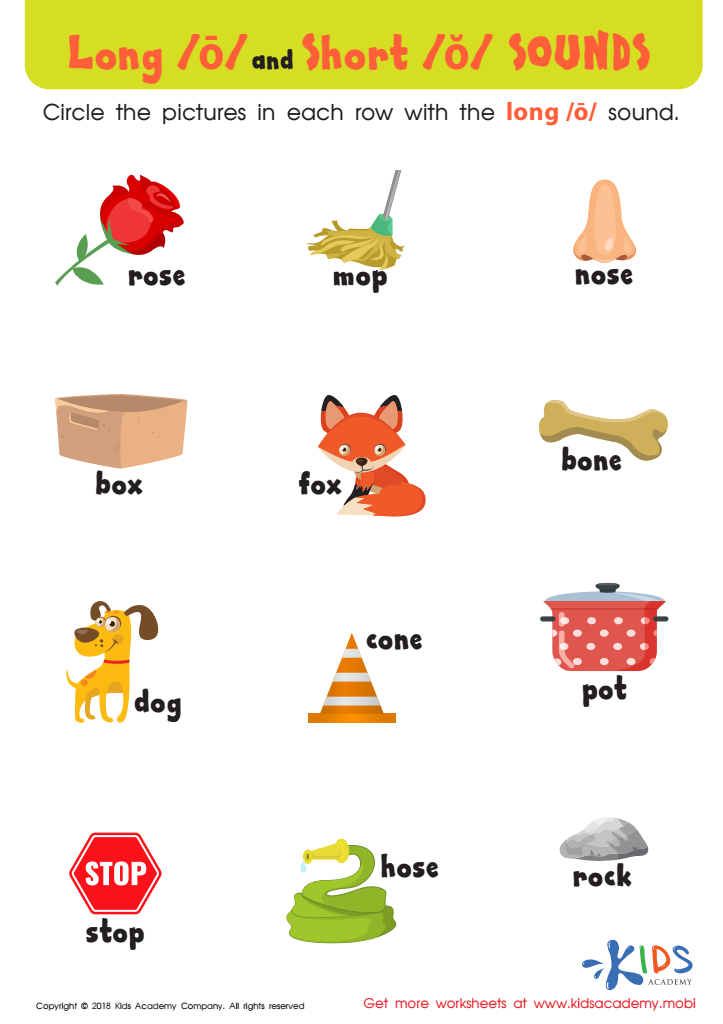
Students practice distinguishing between short and long O sounds with this reading worksheet. They sound out each word, then circle the pictures with the long O sound. Perfect for individual practice or to work with peers! Improves understanding of this skill and helps avoid confusion.
Reading: Long O and Short O Sounds Worksheet
Worksheet
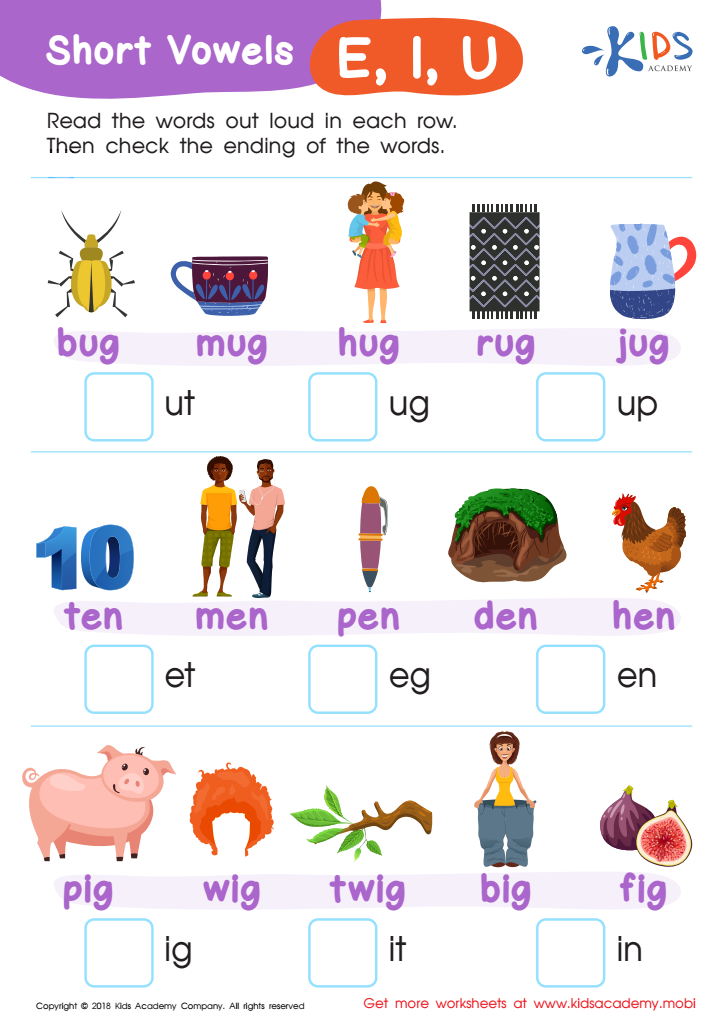
Short Vowels /e/, /i/, and /u/ Worksheet

Short Vowels /e/, /i/, and /u/ Worksheet

Your emergent reader can have fun while practicing their short vowel sounds with this free, brightly colored worksheet. They'll identify one-syllable words by their pictures, then match the correct ending for each. They'll gain an understanding of how short vowel sounds vary in closed syllables with different endings, without even realizing it!
Short Vowels /e/, /i/, and /u/ Worksheet
Worksheet
Long and Short U Worksheet

Long and Short U Worksheet

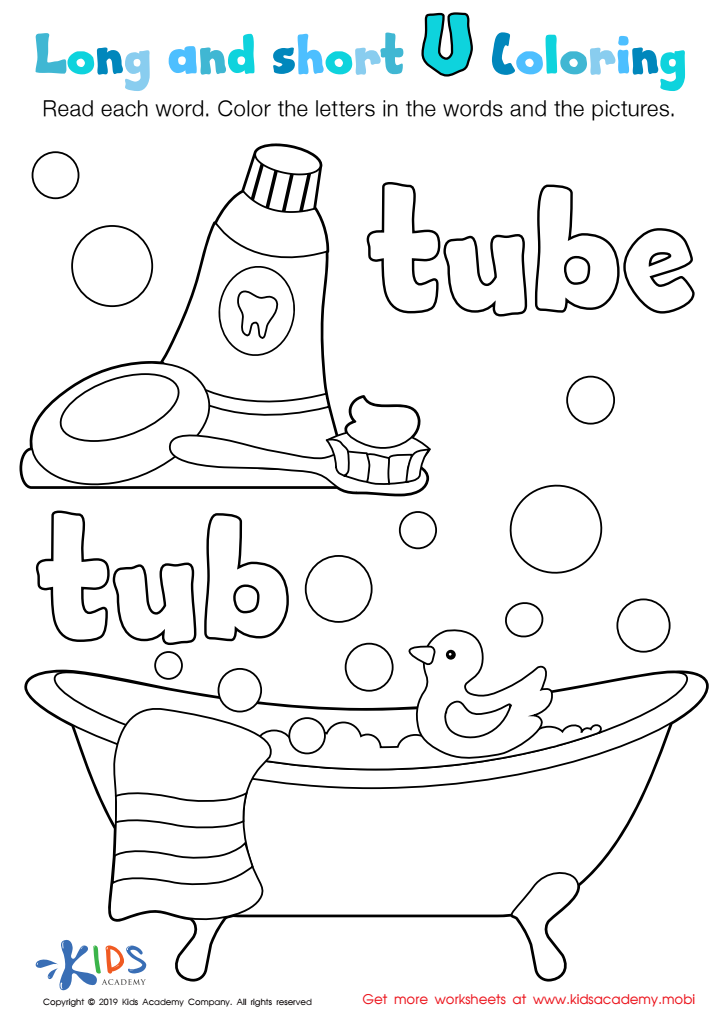
Revised: Spice up your lesson on long and short vowels with this fun printout! Kids read the words "tube" and "tub," then reinforce the sound by coloring in the words and pictures. It's a great way to make phonics class enjoyable!
Download (PDF)
Assign to My Students
Long and Short U Worksheet
Worksheet
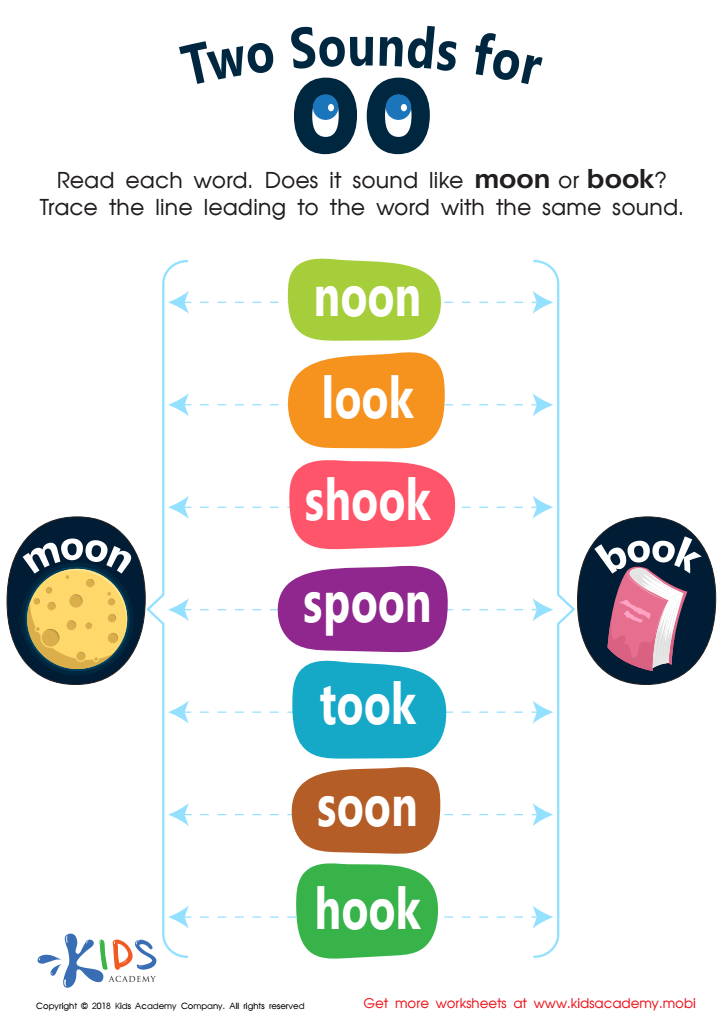
Two Sounds for OO Worksheet

Two Sounds for OO Worksheet

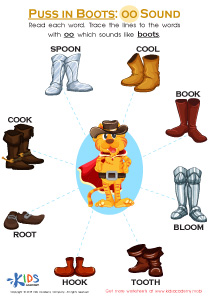
This worksheet helps kids learn the different sounds of the -oo digraph. They match words based on whether they sound like moon or book, plus practice fine motor skills tracing lines. Fun and educational!
Two Sounds for OO Worksheet
Worksheet
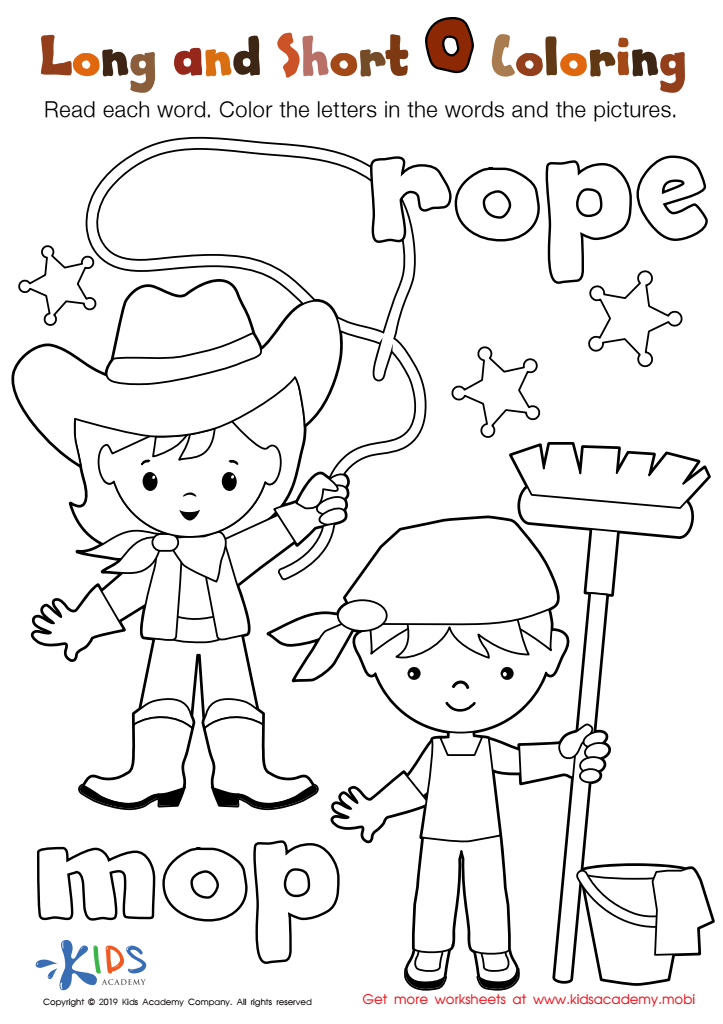
Long and Short O Worksheet

Long and Short O Worksheet

Help your students recognize the difference between long and short «Os» with this fun printout. Let them read and color-in "rope" and "mop" simultaneously. Listen to the different sounds, then color the words and pictures. Great for classes, it'll make your phonics lesson memorable and enjoyable.
Download (PDF)
Assign to My Students
Long and Short O Worksheet
Worksheet
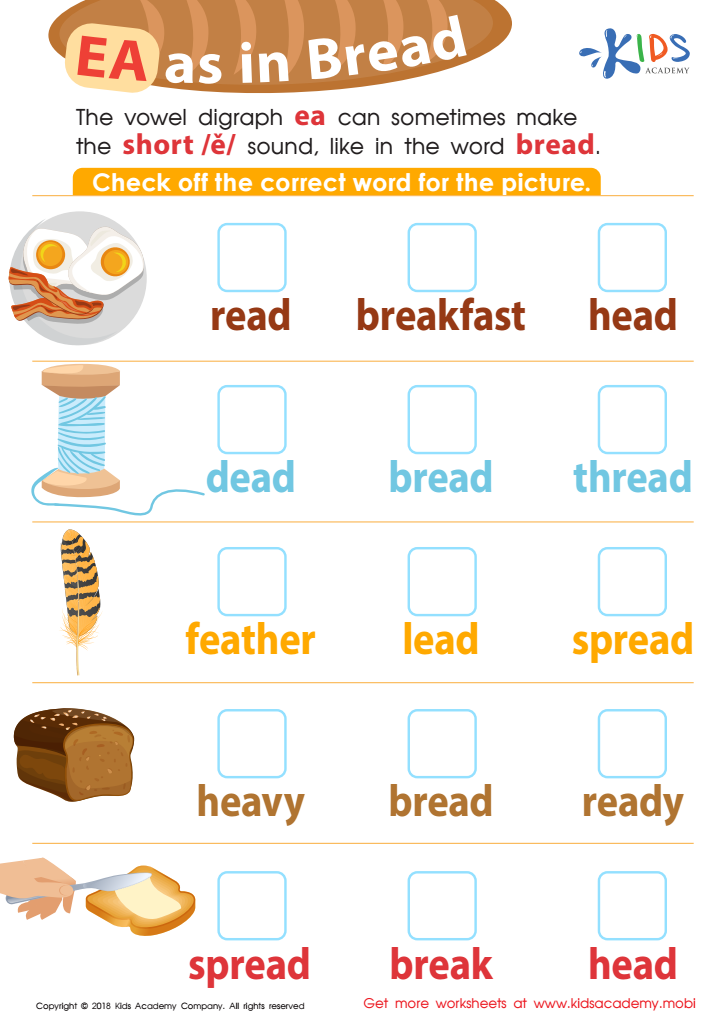
Reading: EA as in Bread Worksheet

Reading: EA as in Bread Worksheet

The vowel digraph ea can be read in two ways. Examples of the long sound are "read" and "lead"; examples of the short sound are "bread" and "head". Ask your kids to give you more examples and then have them check off the correct word for the pictures on this worksheet. This will help them understand the ea sound.
Reading: EA as in Bread Worksheet
Worksheet


Vocabulary expansion is crucial for children aged 5-7, particularly when it comes to understanding short vowel sounds. During these developmental years, children are laying the groundwork for their reading and communication skills. Mastering short vowels helps them decode words, which is essential for reading fluency. When parents and teachers focus on vocabulary expansion that includes short vowels, they create a rich linguistic environment that fosters early literacy.

Short vowels, such as the sounds in “cat,” “bed,” “pig,” “dog,” and “fun,” are foundational to English phonics. They are commonly found in numerous words that children encounter daily. Introducing a variety of vocabulary that emphasizes short vowel sounds helps children develop phonemic awareness—a critical skill for reading comprehension.

Moreover, a robust vocabulary influences children's ability to express their thoughts and emotions effectively. It enhances their conversations, aids in storytelling, and boosts their self-confidence in communication. Engaging children in activities centered around short vowel words, such as rhymes, games, and interactive reading, makes learning enjoyable and interactive. Overall, vocabulary expansion linked to short vowel sounds equips children with essential tools for successful early learning and social interaction. Investing in these skills now supports their future academic achievements.