Phonics Skills Normal Two Letter Phonics Worksheets for Ages 5-7
6 filtered results
-
From - To
Our "Phonics Skills Normal Two Letter Phonics Worksheets for Ages 5-7" offer a fun and engaging way to strengthen essential reading abilities for early learners. Crafted to improve letter sound recognition and blending skills, these worksheets are perfect for children within this crucial developmental stage. Each sheet features vibrant illustrations, straightforward tasks, and interactive exercises that make learning phonics enjoyable and comprehensive. By consistently practicing with our worksheets, children will build a strong phonics foundation, which is vital for future reading success. Whether at home or in the classroom, our resources support effective, enjoyable early reading practice.
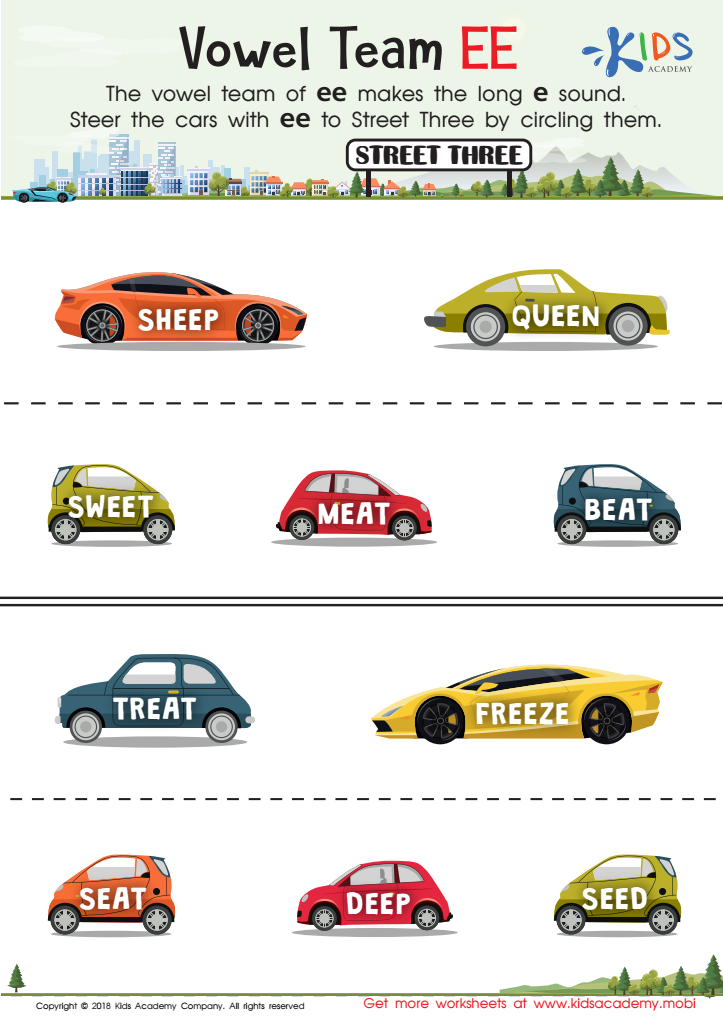
Vowel team ee Worksheet
 Assign to My Students
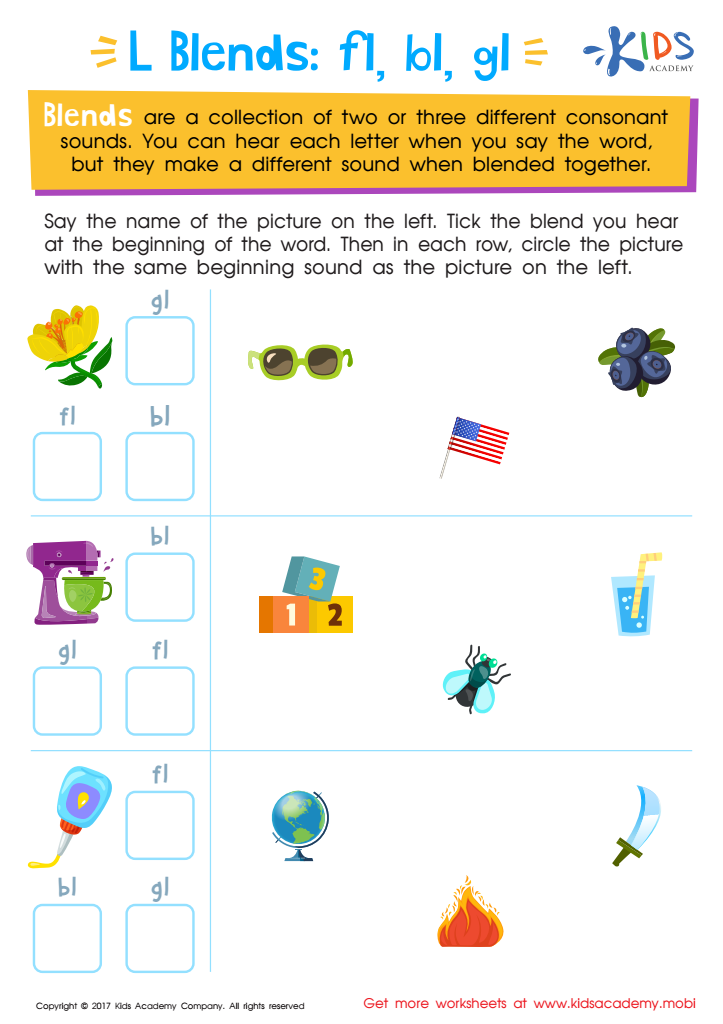
Blending Consonants: "Fl", "Bl" and "Gl" Printable
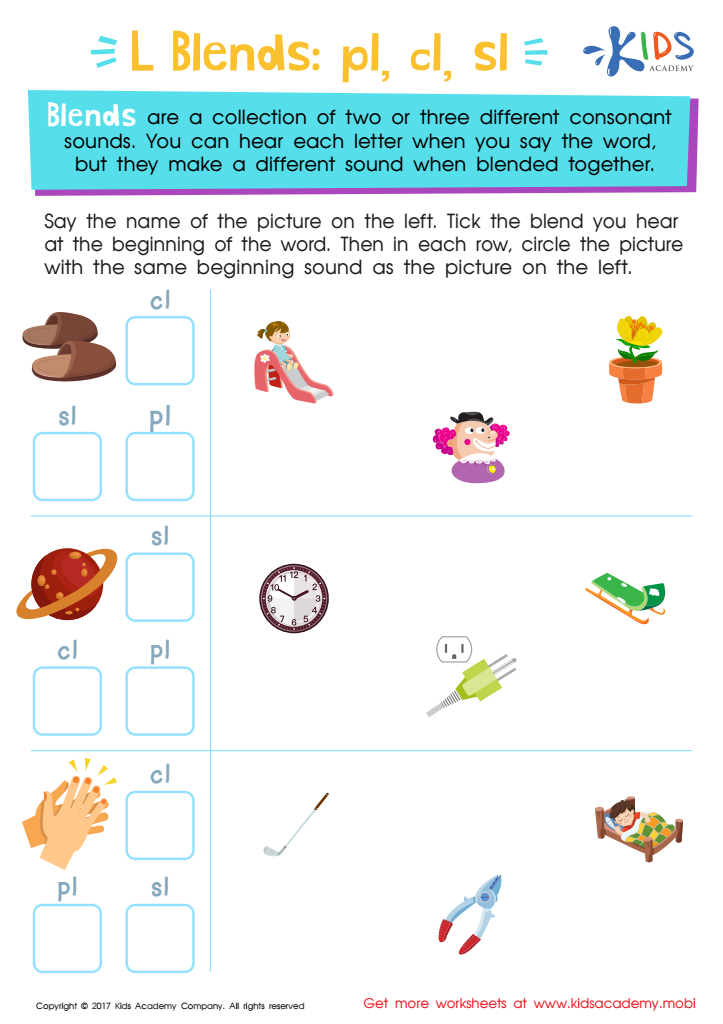
L Blends: "Pl", "Cl" and "Sl" Printable
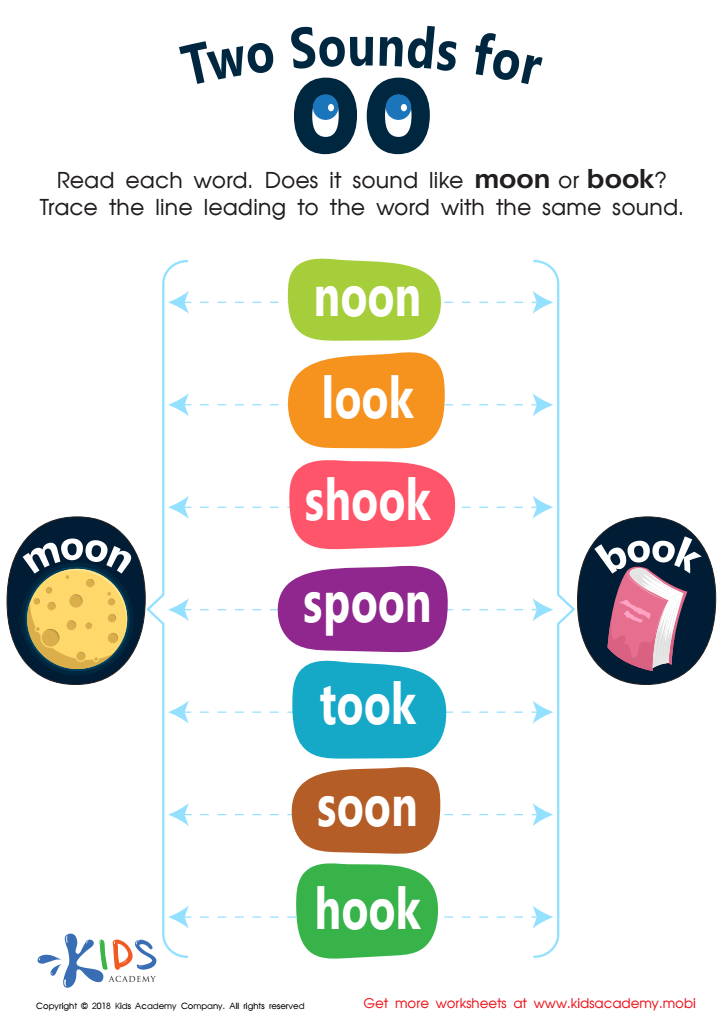
Two Sounds for OO Worksheet
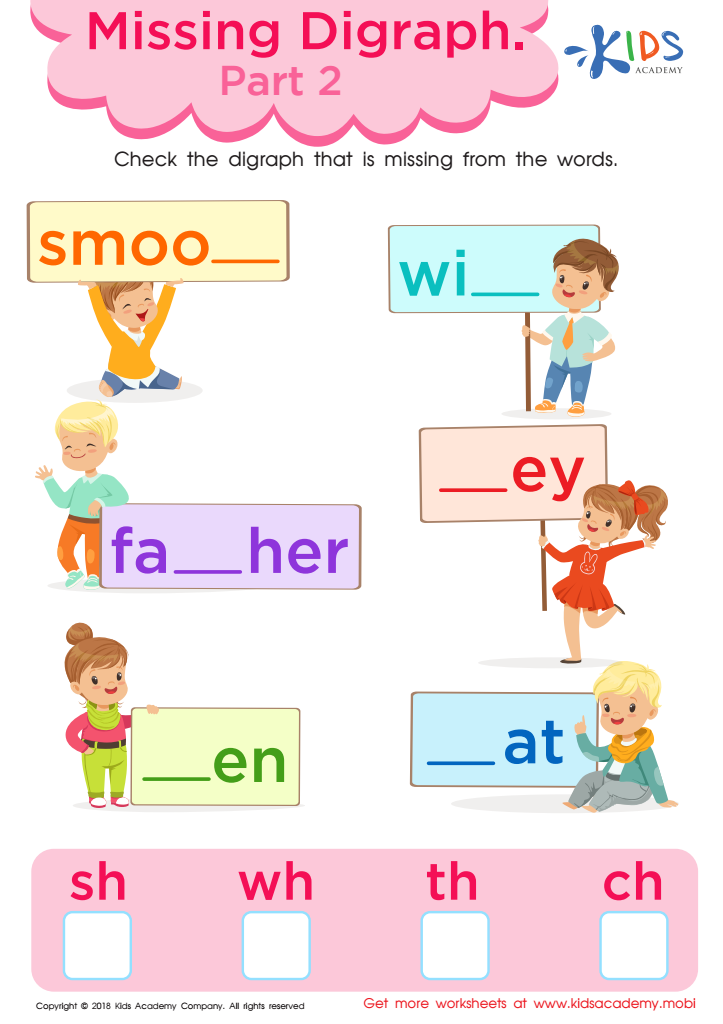
Missing Digraph: Part 2 Worksheet
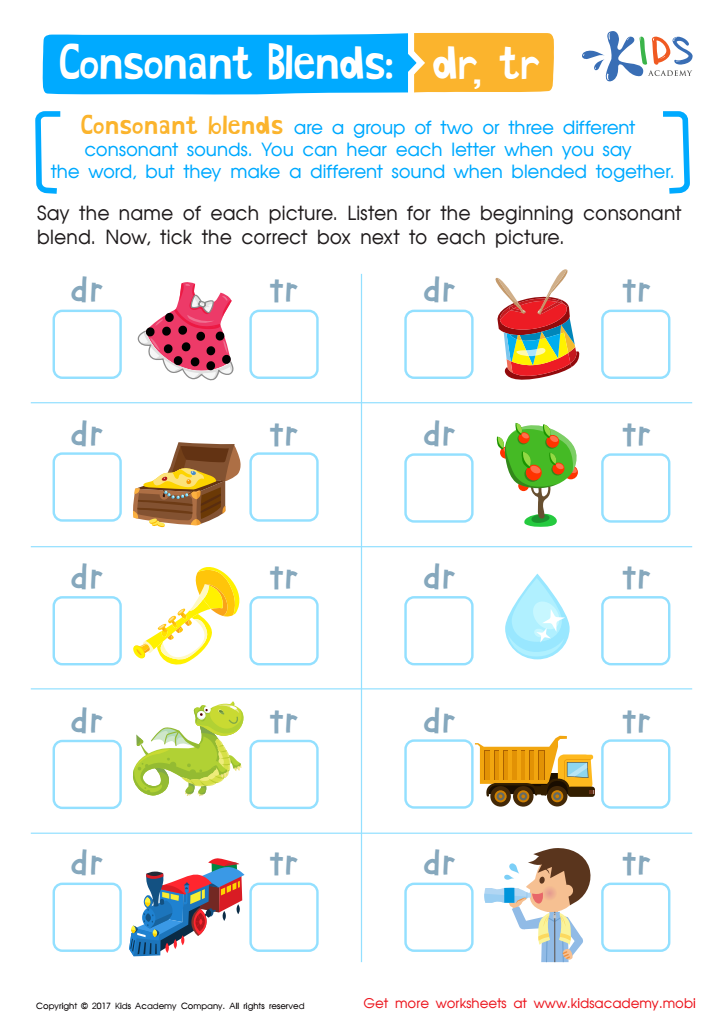
Consonant Blends: "Dr" and "Tr" Printable



Parents and teachers should prioritize Phonics Skills, particularly Normal Two Letter Phonics, for children aged 5-7 because these early years are a critical period for literacy development. Phonics involves the relationship between sounds and their corresponding letters or groups of letters, and mastering these skills lays the groundwork for fluent reading and effective spelling.
Understanding two-letter phonics combinations, like "sh," "ch," "th," and "wh," helps children decode words more efficiently. This ability not only speeds up word recognition but also builds their confidence and enthusiasm for reading. Reading fluency, which is essential for comprehension, is greatly enhanced when children can seamlessly blend these common letter pairs. If early learners grasp phonics concepts, they can better tackle more complex words and texts as they progress in their education.
Moreover, strong phonics skills contribute to better spelling and writing abilities. When children know how letters together produce specific sounds, they can apply this knowledge to write words correctly, thus improving their communication skills.
Ultimately, early phonics instruction supports a robust foundation for academic success, lifelong learning, and a love for reading. By investing time and effort in teaching phonics, parents and educators play a crucial role in fostering a child’s overall literacy and cognitive development.






