Uppercase identification Normal Uppercase Letters Worksheets for Ages 5-7
5 filtered results
-
From - To
Welcome to our Uppercase Identification Worksheets, designed specifically for children aged 5-7! These engaging and interactive printables will help your child recognize and identify normal uppercase letters confidently. Each worksheet features vibrant images and fun exercises that enhance letter recognition skills while making learning enjoyable. Perfect for home or classroom use, our worksheets encourage independent practice and improve literacy skills at an early age. With varying levels of difficulty, these resources cater to both beginners and advanced learners. Celebrate your child's progress and create a solid foundation for reading and writing with our engaging uppercase letter worksheets today!
Find Uppercase Letters Worksheet
 Assign to My Students
Find Uppercase Letters J, K, and L Worksheet

Find Uppercase Letters A, B, and C Worksheet
Find Uppercase Letters V, W, X Worksheet
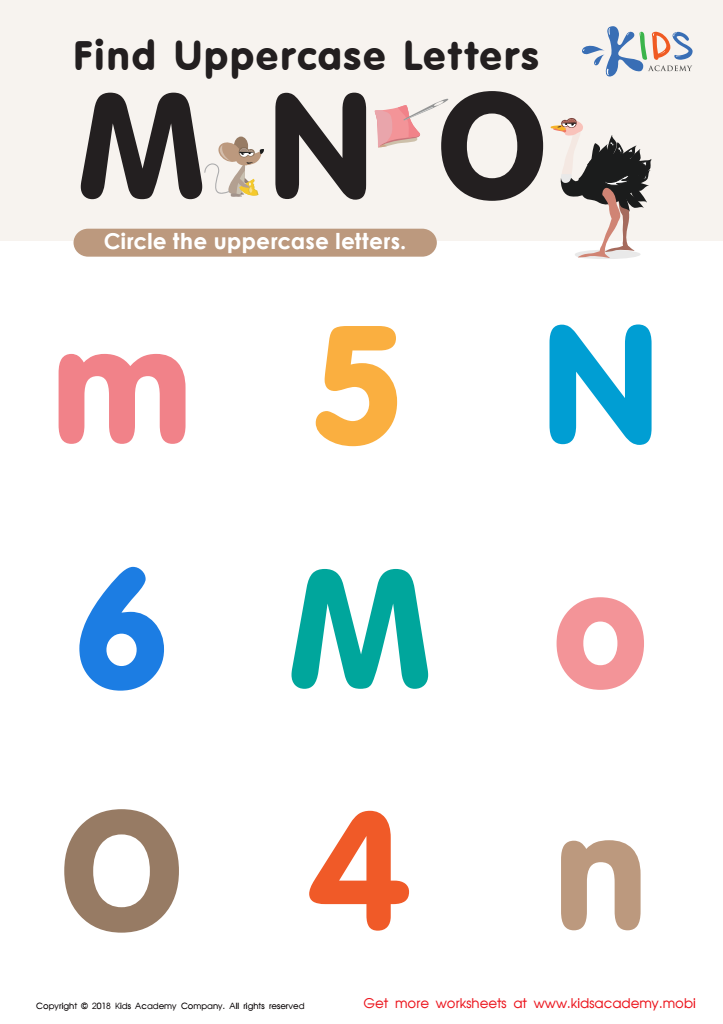
Find Uppercase Letters M, N, and O Worksheet








Uppercase letter identification is an essential skill for children aged 5-7, as it lays the foundation for literacy development. Recognizing uppercase letters helps young learners understand the alphabet, which is crucial for reading and writing. These letters are often the first that children encounter in print, such as in books, signs, and everyday materials.
Parents and teachers should care about uppercase letter identification because it significantly impacts children's early literacy skills. Mastery of these letters enables children to transition smoothly into reading and writing, fostering their ability to form words and sentences. Without a solid grasp of uppercase letters, children might struggle with literacy tasks, which can lead to frustration and diminished motivation.
Additionally, uppercase letters are commonly used at the beginning of sentences and with proper nouns. Teaching children to identify them helps improve their comprehension skills and prepares them for the rules of grammar and punctuation. Encouraging recognition through engaging activities, such as games, songs, and hands-on materials, makes learning enjoyable and effective.
Ultimately, fostering uppercase letter identification not only supports children's literacy development but also boosts their confidence and enthusiasm for learning, setting them on a path towards academic success.