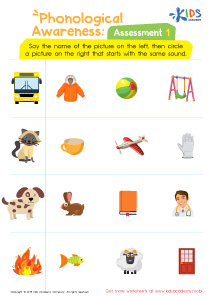
Hand-eye Coordination Normal Vowels Worksheets for Ages 5-7
4 filtered results
-
From - To
Enhance your child's learning with our Hand-eye Coordination Normal Vowels Worksheets designed for ages 5-7. These fun, engaging worksheets help young learners master vowels while developing crucial hand-eye coordination skills. Each activity is crafted to align with early learning standards, enriching your child's understanding of vowels through tracing, matching, and coloring exercises. These worksheets not only boost literacy skills but also fine motor abilities, making them an excellent resource for parents and educators alike. Give your child a head start in reading and writing with our dynamic and interactive vowel worksheets. Explore now and watch them thrive!
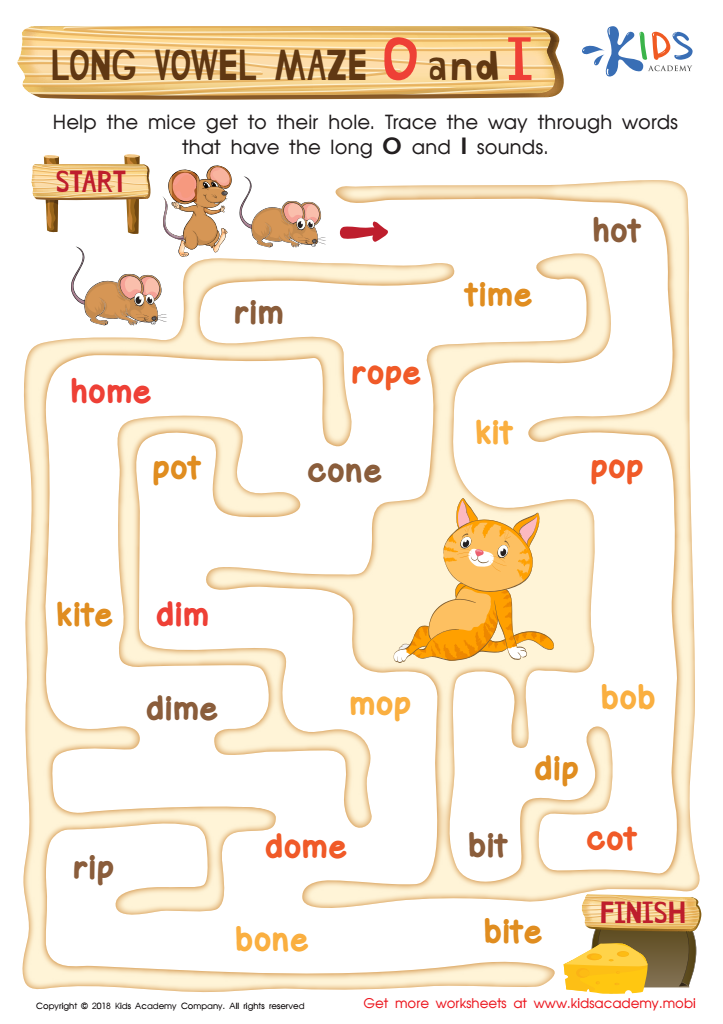
Long Vowel Maze /o/ and /i/ Worksheet
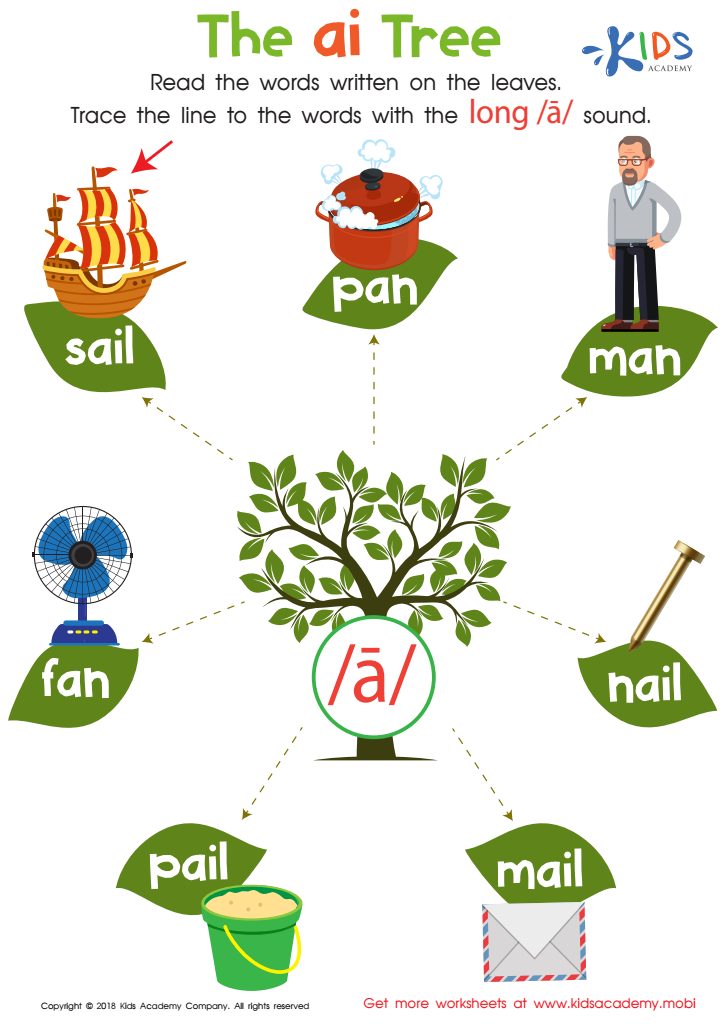
The AI Tree Worksheet

Long and Short U Worksheet
 Assign to My Students

Long and Short E Worksheet
Assign to My Students





Hand-eye coordination and understanding normal vowels are foundational skills crucial for children aged 5-7, impacting their overall development and academic success.
Hand-eye coordination is necessary for performing everyday tasks, from simple activities like tying shoes and dressing to more complex ones such as writing, drawing, and playing sports. This skill enhances fine motor control, allowing children to execute tasks efficiently and confidently. For example, good hand-eye coordination helps children learn proper pencil grip and letter formation, which are fundamental for their handwriting. Furthermore, coordination activities support cognitive development by improving focus, spatial awareness, and the ability to follow directions.
Understanding normal vowels is equally critical. It forms the basis of phonics, essential for reading fluency and comprehension. Phonemic awareness, the ability to hear and manipulate vowel sounds, helps children decode unfamiliar words by sound, facilitating smoother reading transitions. Grasp of vowels also enhances spelling abilities, as vowel recognition assists in identifying word patterns and predicting spelling structures.
Together, these skills foster confidence in children as they navigate the early stages of literacy and daily life activities. Parents and teachers should prioritize activities that develop hand-eye coordination and vowel recognition to enable a strong educational foundation and smoother progression into more advanced learning stages.