
Reading fluency Normal Vowels Worksheets for Ages 5-7
4 filtered results
Difficulty Level
Grade
Age
-
From - To
Subject
Activity
Standards
Elevate your child's reading skills with our Reading Fluency Normal Vowels Worksheets for ages 5-7. These engaging and expertly designed worksheets aim to boost your child's confidence in recognizing and pronouncing vowels through fun, interactive exercises. Each worksheet targets key reading skills, helping young readers enhance their fluency, understanding, and enjoyment of written language. Perfect for young learners, these printable resources provide a solid foundation in vowel sounds and reading competence, setting the stage for lifelong literacy success. Discover a nurturing and effective way to support your child's early reading journey today!
Favorites
With answer key
Interactive
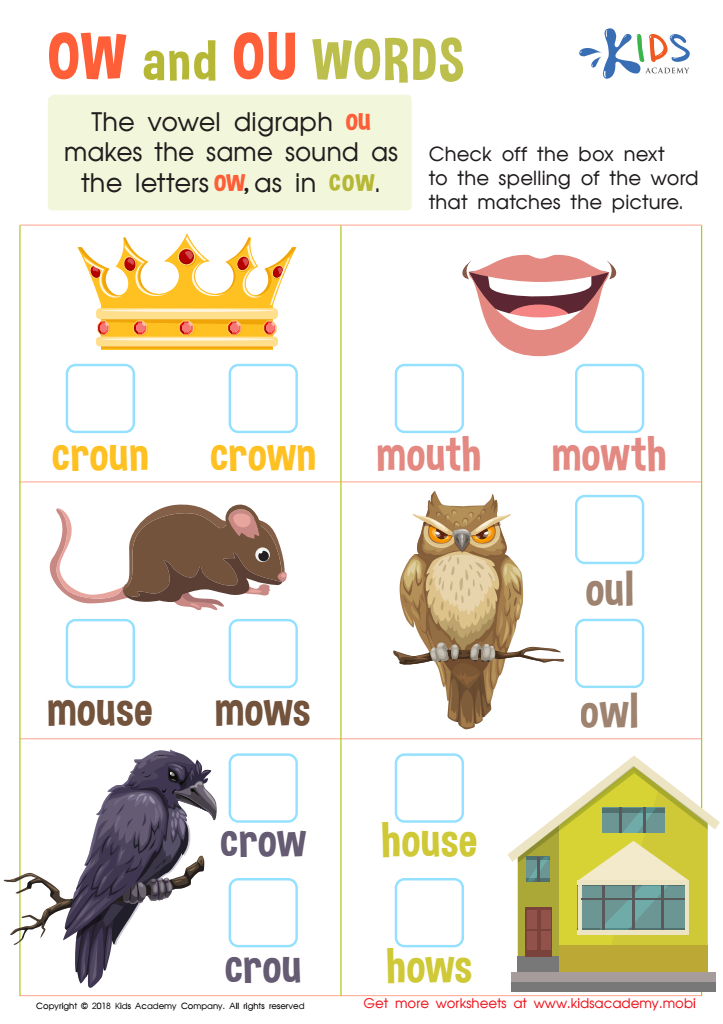
Reading: OW and OU Words Worksheet
Help your kids learn phonetics! Explain the different sounds and long/short variations. Emphasize that some vowel sounds are the same, e.g. ou = ow in cow. For practice, have them read aloud the words in the worksheet and check the box next to the spelling that matches the picture.
 Assign to My Students
Reading: OW and OU Words Worksheet
Worksheet
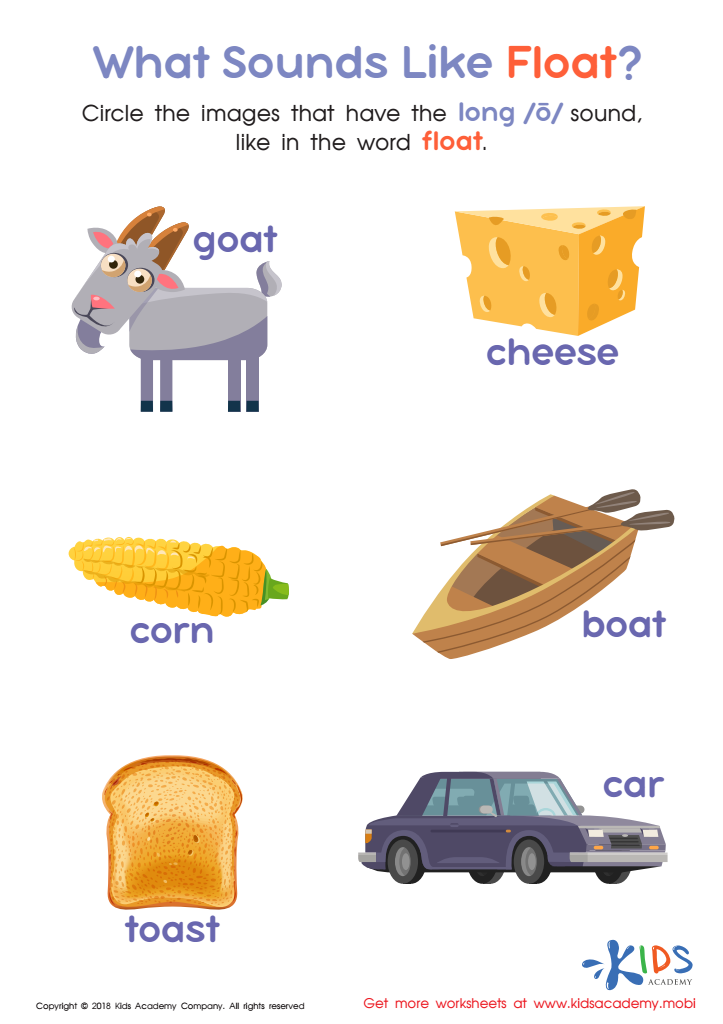
What Sounds Like Float? Worksheet
Help your kids practice the long /o/ sound with words such as 'boat', 'goat' and 'float'. Ask them to identify and circle the images in the worksheet that have the same sound. Award bonus points if they come up with more words with 'oa' spelling!
What Sounds Like Float? Worksheet
Worksheet
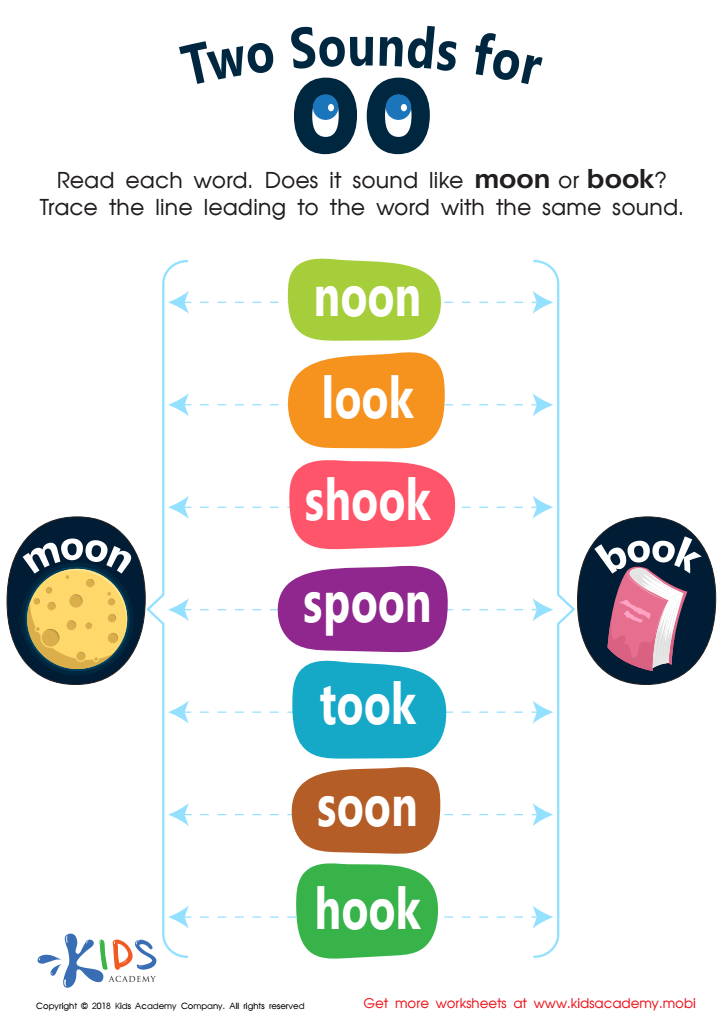
Two Sounds for OO Worksheet
This worksheet helps kids learn the different sounds of the -oo digraph. They match words based on whether they sound like moon or book, plus practice fine motor skills tracing lines. Fun and educational!
Two Sounds for OO Worksheet
Worksheet
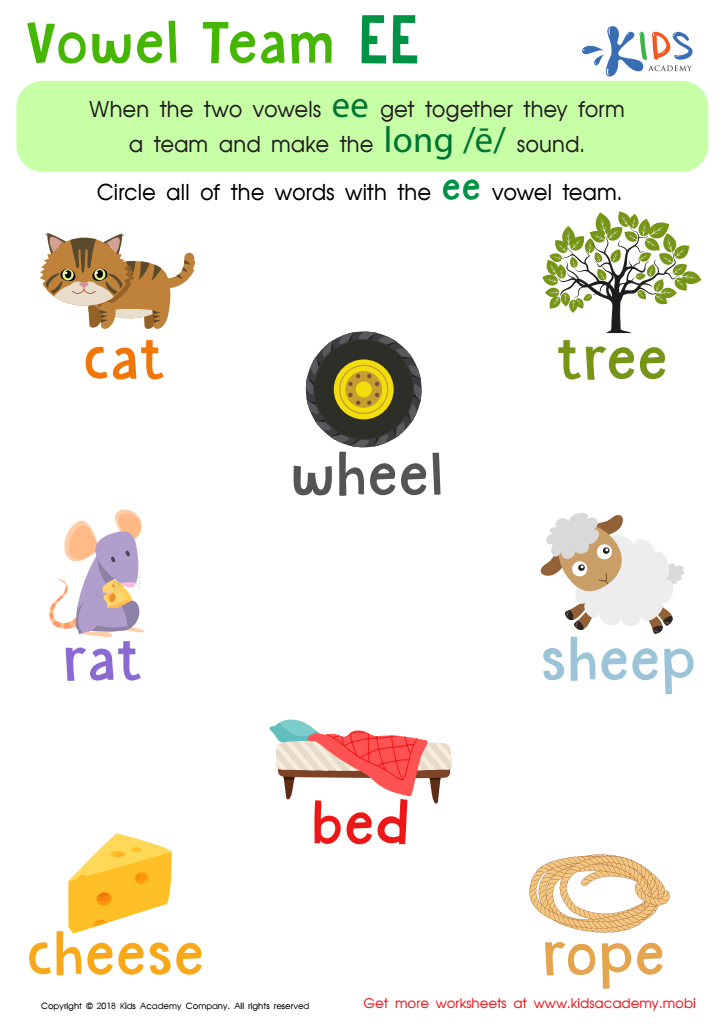
Reading: Vowel Team EE Worksheet
This worksheet is perfect for helping young learners master the /ee/ vowel team. It shows the first vowel with a long sound and the second vowel silent. It also provides pictures for unfamiliar words for readers of all levels. It's an ideal resource for teaching phonics skills.
Reading: Vowel Team EE Worksheet
Worksheet
Join Kids Academy for Free
Who is primarily going to use this learning content?





Reading fluency, especially in the context of normal vowel recognition and usage, plays a crucial role in the developmental stages of children aged 5-7. At this formative age, children are typically in kindergarten through second grade, where foundational literacy skills are established. The ability to read fluently with correct vowel sounds enables children to decode words more accurately and efficiently.
Fluency involves the ability to read smoothly with speed, accuracy, and proper expression. When children are confident in recognizing normal vowels, they can string together sounds to form words more seamlessly. This fluency is vital as it directly impacts reading comprehension. When children do not struggle with decoding each word, they can focus more on understanding and interpreting the text, thereby enhancing their overall learning experience.
Moreover, reading fluency with normal vowels promotes confidence and motivation in young readers. Struggling with vowels and reading fluently can lead to frustration and a disinterest in reading. On the other hand, fluent reading can foster a love for books and enable kids to engage with a broad array of texts.
In essence, parents and teachers should emphasize reading fluency and vowel usage because they are foundational to academic success, promoting comprehension, confidence, and a lifelong love of reading. Such skills are not only central to language arts but also critical across all subjects that require reading and interpretation.






