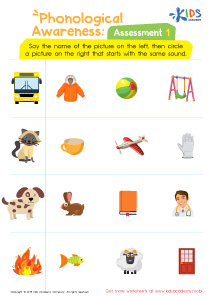
Vocabulary development Normal Vowels Worksheets for Ages 5-7
6 filtered results
-
From - To
Introduce your young learners to the essential building blocks of language with our "Vocabulary Development Normal Vowels Worksheets for Ages 5-7". These thoughtfully designed printable worksheets from Kids Academy guide children through recognizing, pronouncing, and using normal vowels, which are crucial for reading and vocabulary enhancement. Suitable for early learners in kindergarten and first grade, these engaging activities balance educational development with fun challenges. Nurture your child's phonetic abilities while expanding their vocabulary as they practice spelling and constructing words featuring normal vowels. Build a solid language foundation today with these powerful, age-appropriate learning resources.
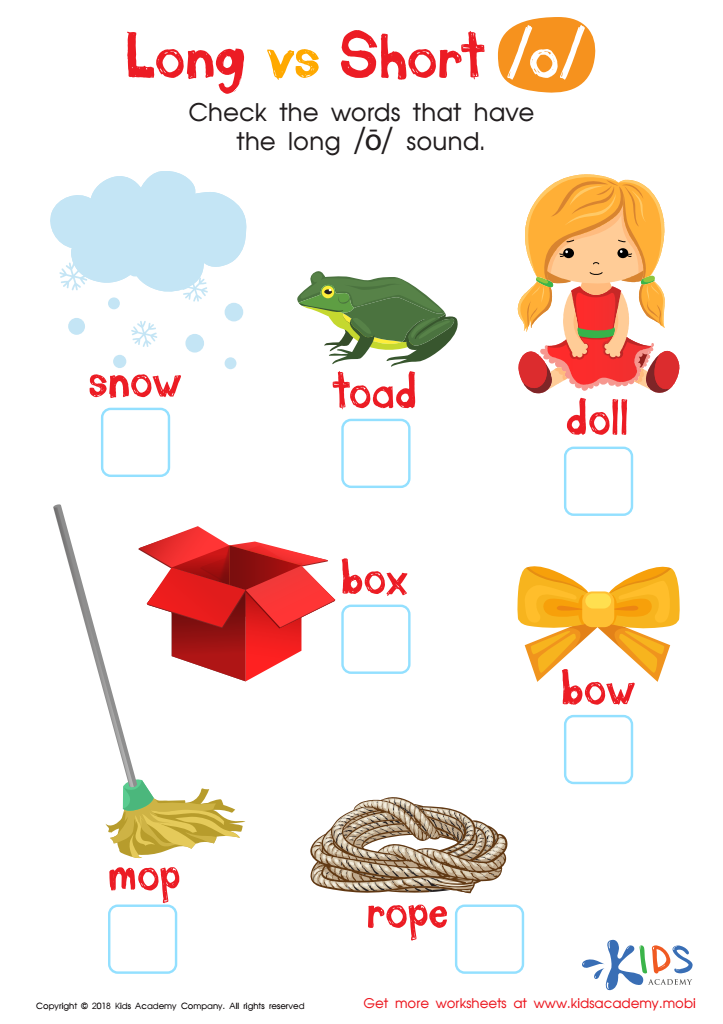
Long vs Short O Reading Worksheet
 Assign to My Students
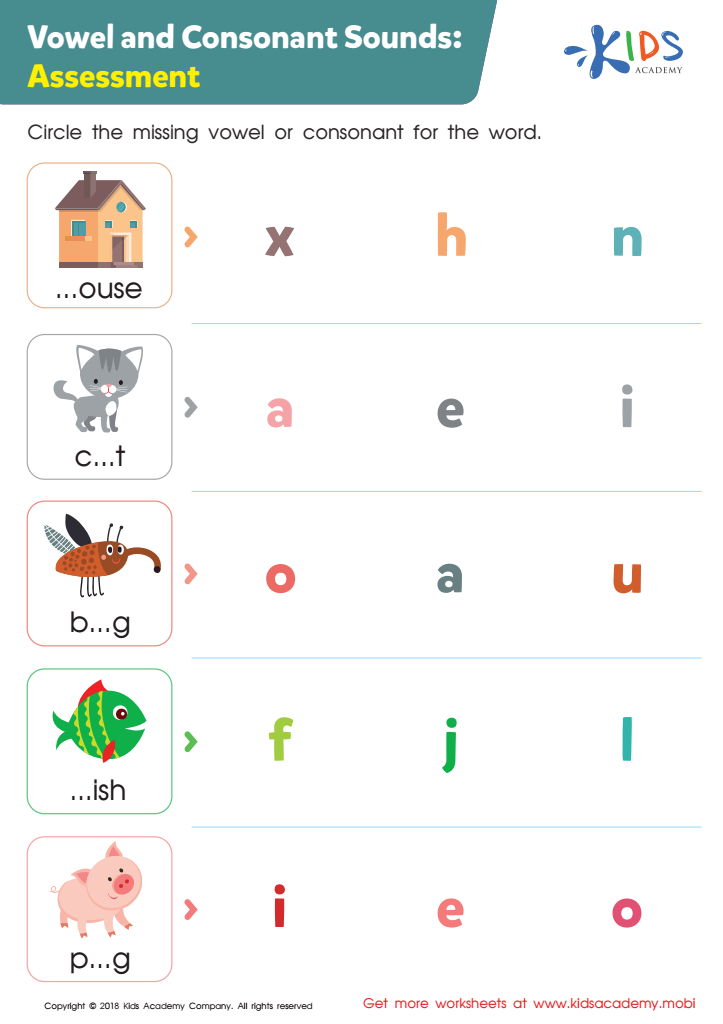
Vowel and Consonant Sounds: Assessment Worksheet
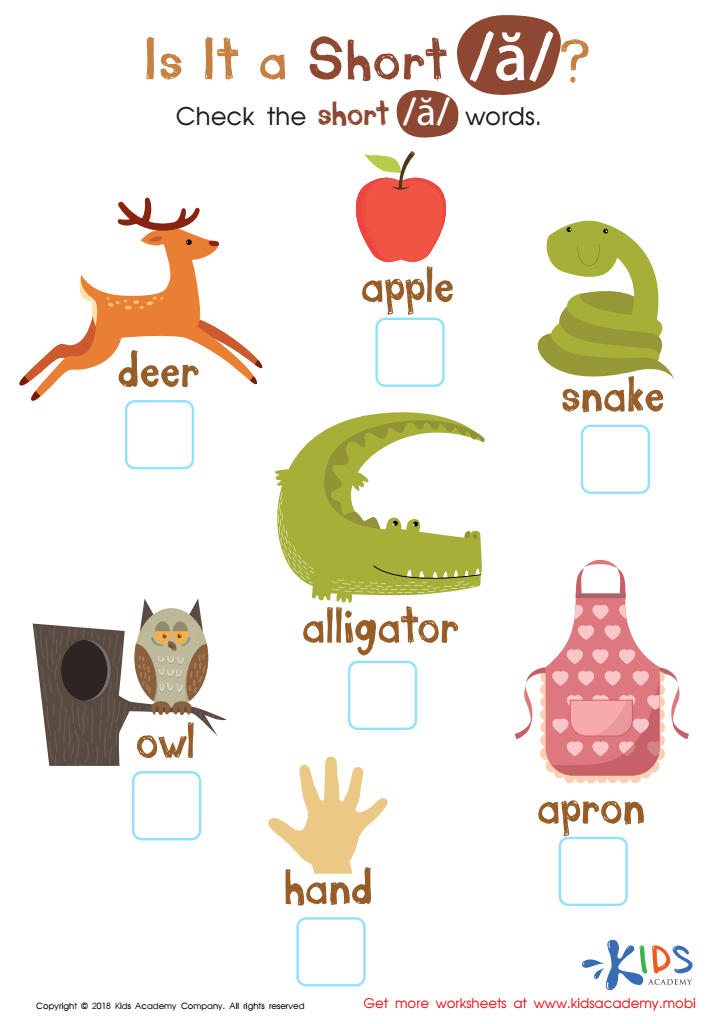
Is It Short A? Reading Worksheet
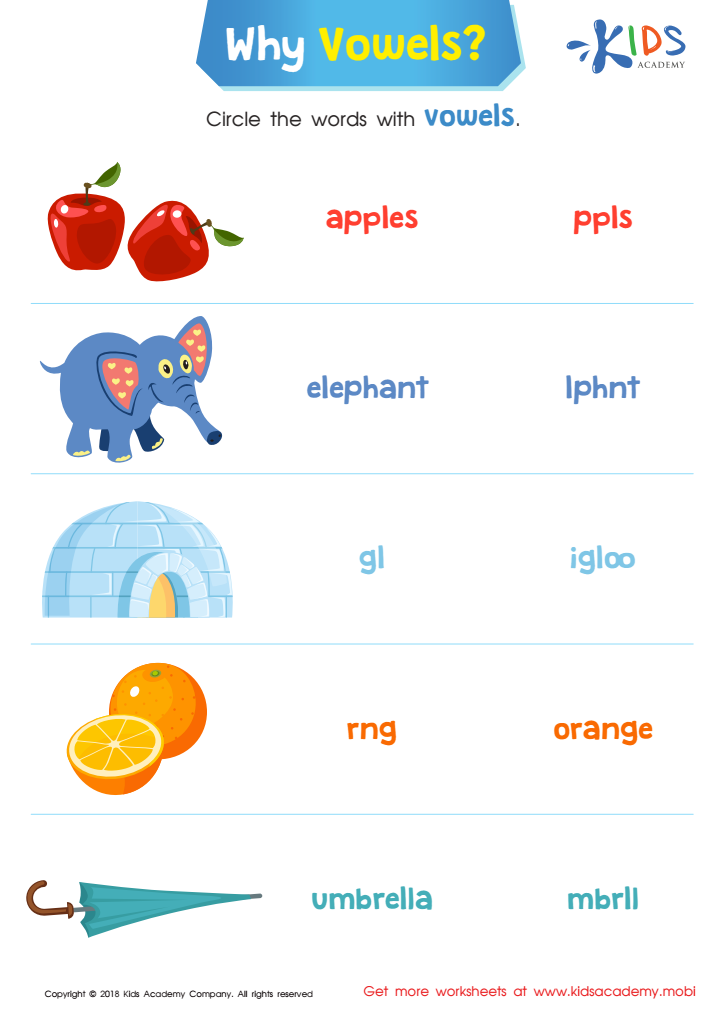
Why Vowels? Reading Worksheet
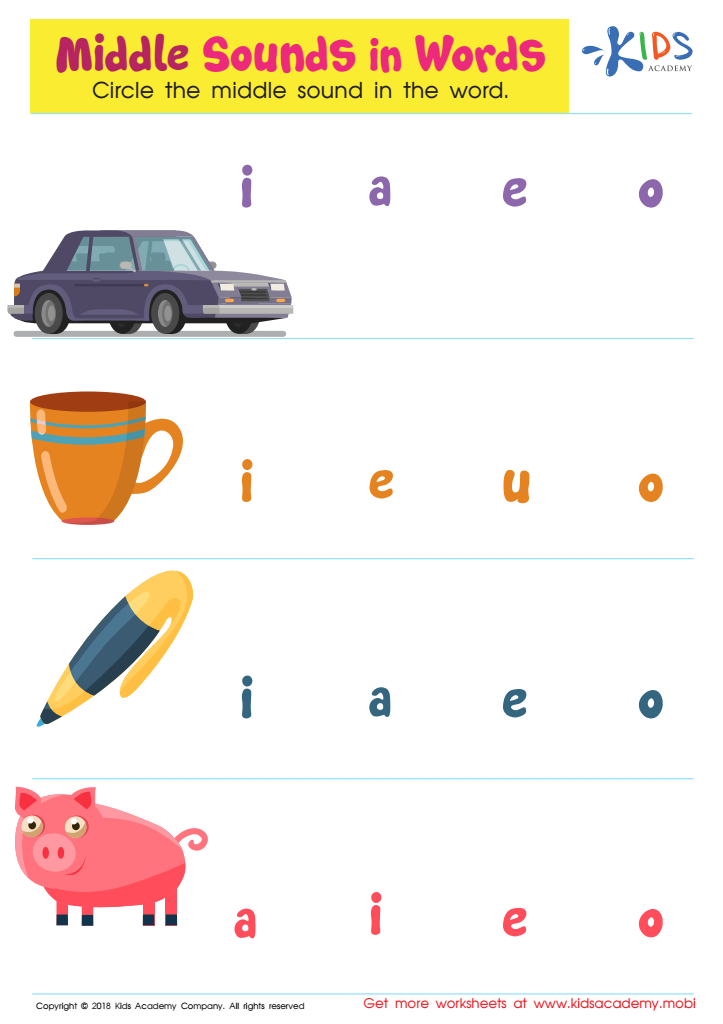
Middle Sounds in Words Worksheet
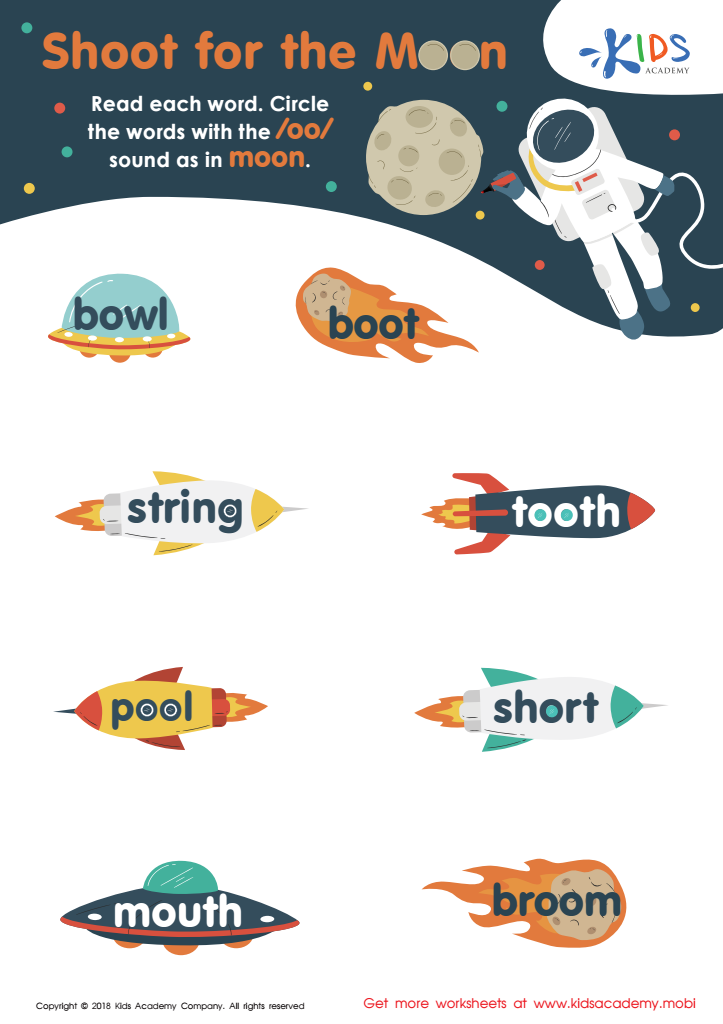
Reading: Shoot for the Moon Worksheet





Vocabulary development in early childhood, particularly for ages 5-7, plays a crucial role in language acquisition and overall cognitive development. During these formative years, children are rapidly absorbing new words and concepts, which are essential for effective communication and comprehension. Parents and teachers who prioritize vocabulary development can significantly enhance a child's reading skills, comprehension abilities, and expressive language.
Introducing a rich and diverse vocabulary early on helps children make connections between words and ideas, building a solid foundation for academic success. For instance, a child with a broad vocabulary is better equipped to grasp new reading materials, understand complex instructions, and engage in meaningful discussions. This ease in learning bolsters confidence and fosters a love for language and reading.
Focusing on normal vowels is equally essential, as vowels form the core of many words and influence pronunciation. Proper vowel articulation is linked to clearer speech and better literacy skills. Activities that support vowel recognition and articulation, such as phonetic games and reading exercises, can significantly improve a child's reading fluency and spelling accuracy.
In summary, prioritizing vocabulary development and vowel articulation in ages 5-7 sets the stage for lifelong learning, effective communication, and academic achievement. Parents and teachers who invest in this area give children a valuable toolkit for future success.