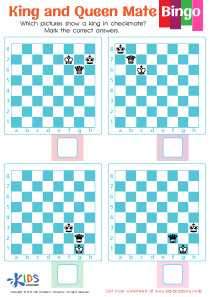
Memory enhancement Normal Chess Worksheets for Ages 5-7
3 filtered results
-
From - To
Unlock young minds' potential with our engaging "Memory Enhancement Normal Chess Worksheets" designed for children ages 5-7. These meticulously crafted worksheets blend fun and learning to boost memory skills through interactive chess activities. Tailored specifically for early learners, our worksheets encourage strategic thinking, improve focus, and foster cognitive growth. With vibrant illustrations and age-appropriate challenges, children grasp fundamental chess concepts while enhancing their memory and learning abilities. Perfect for use at home or in the classroom, these worksheets provide a solid foundation in memory enhancement and logical reasoning essential for future success. Dive into a world of chess and watch young minds flourish.
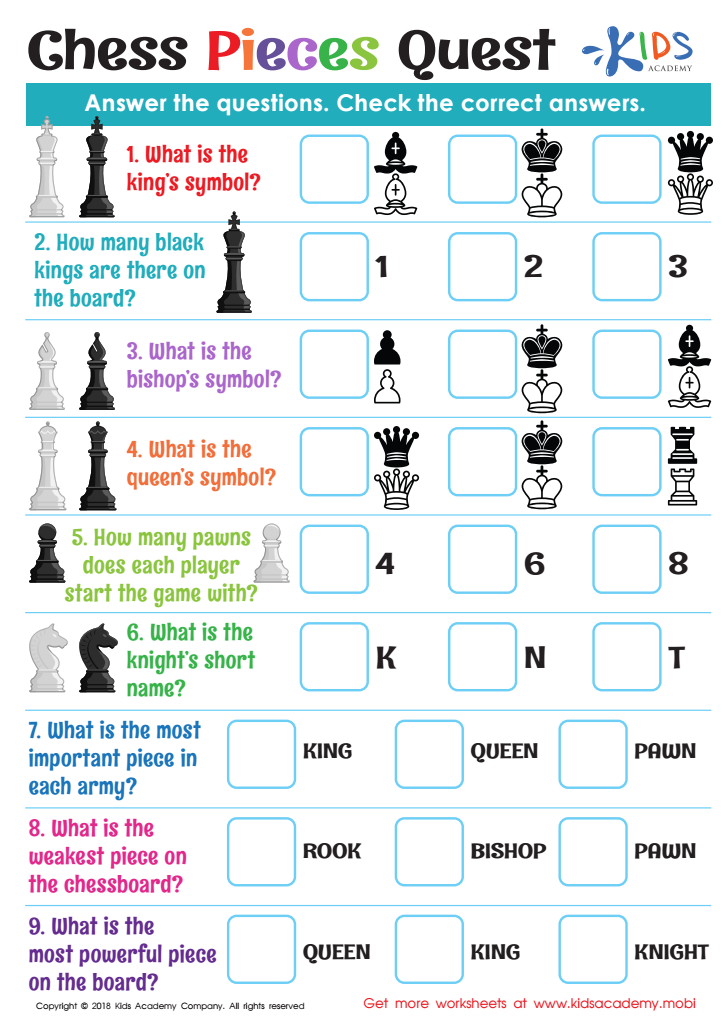
Chess Pieces Quest Worksheet
 Assign to My Students
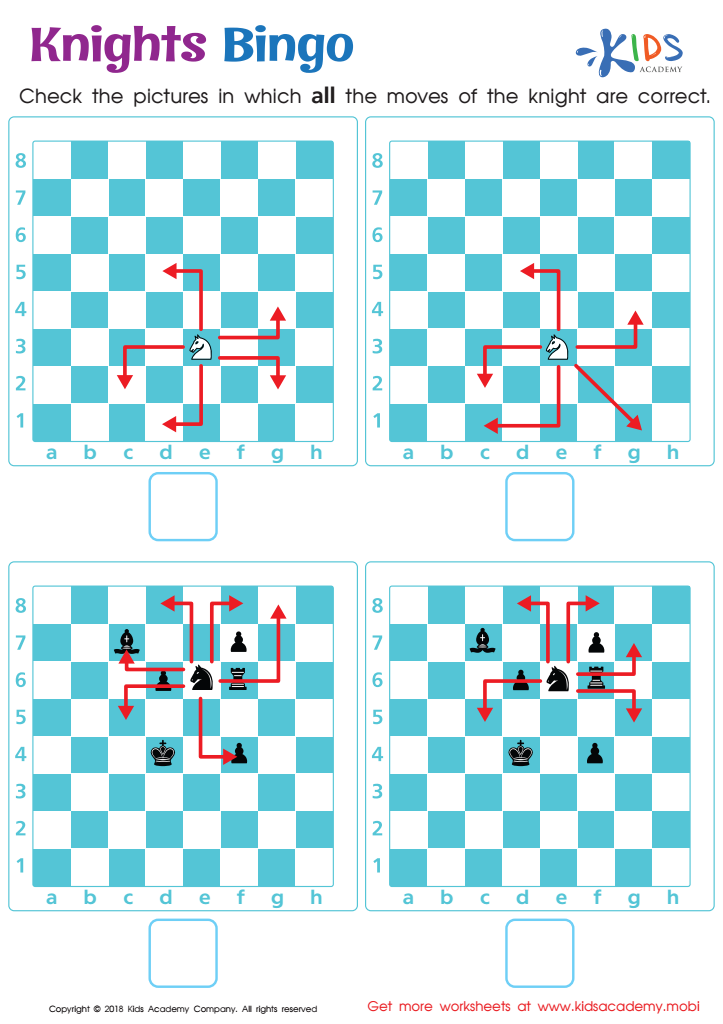
Knights Bingo Worksheet
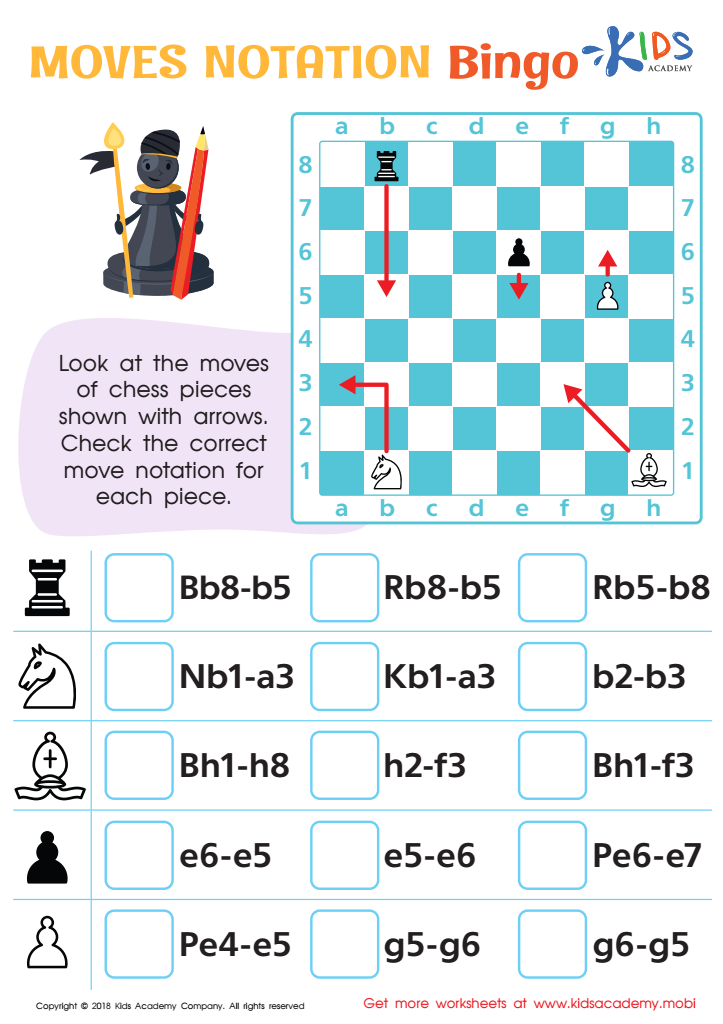
Moves Notation Bingo Worksheet







Parents and teachers should care about Memory Enhancement Normal Chess for children aged 5-7 because it provides substantial cognitive and developmental benefits. First, chess demands the use of memory to recall rules, strategies, and the layout of the board, thereby enhancing memory skills in young learners. Improved memory aids in better recall of information in other academic areas as well.
Secondly, chess promotes critical thinking and problem-solving. Young players learn to anticipate their opponent's moves and develop strategies, which enhances their reasoning and analytical skills. These cognitive benefits extend beyond chess, improving abilities in subjects like math and science.
Furthermore, playing chess encourages patience, attention to detail, and concentration. Young children learn to focus on the game, practice self-control, and take turns, which are valuable skills both in and out of the classroom.
Chess also fosters social interaction and communication when played with others, helping children develop essential social skills such as sportsmanship, negotiation, and respectful competition. These social and cognitive skills contribute to a child’s overall growth, giving them a strong foundation for future learning and interpersonal interactions. Hence, incorporating Memory Enhancement Normal Chess in early childhood can be a critical tool for educators and parents aiming to nurture well-rounded, intellectually capable, and socially adept children.